
Table of Contents
ToggleAuthor: SmileBottles Editorial Team
Estimated Reading Time: About 15 Minute
If you are sourcing packaging for olive oil, you have probably noticed one thing right away: many of the most trusted oils come in green glass. That is not an accident, and it is not only about appearance. The main reason why are olive oil bottles green is simple: green glass helps protect olive oil from light, and light speeds up quality loss. When olive oil is exposed to light, it starts to break down faster. Its fresh aroma can fade, its taste can flatten, and its shelf life can shorten. That is why many brands choose green olive oil bottles or other dark-colored glass options. At the same time, green glass also supports a premium look, which matters when you want your product to feel authentic, high quality, and trustworthy in the eyes of buyers.
If you are choosing packaging for your own brand, you need more than a short answer. You need to know how green, amber, and clear glass compare, what happens during olive oil oxidation, and how to select the right bottle for your oil, your market, and your brand position. In this guide, you will find the practical details you need to make a better packaging decision.
Why Olive Oil Is Usually Sold in Green Glass Bottles
The short answer
If you want the short version, here it is: green glass reduces light exposure, and that helps preserve olive oil better than clear glass. That is the main reason so many brands choose olive oil glass bottles in green tones.
Olive oil is sensitive. Even when the bottle is sealed, light can still start damaging the oil inside. That damage affects freshness, taste, aroma, and overall quality. This is especially important if you are packing extra virgin olive oil, because extra virgin olive oil is less processed and more delicate than many other edible oils.
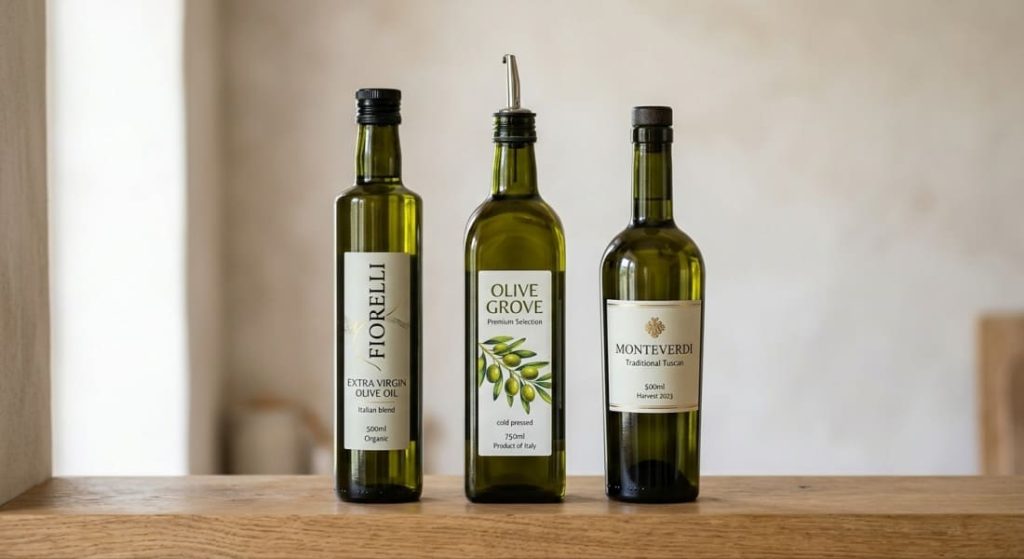
So when you see olive oil in green bottle packaging, the bottle color is doing real work. It is not just there for style.
What green glass protects
When you choose green glass, you are helping protect several parts of the oil at the same time.
First, you protect sensory quality. This means the oil is more likely to keep its fresh smell, balanced taste, and natural character over time.
Second, you improve oxidative stability. Olive oil naturally reacts with oxygen and light. If you can reduce one of those pressures, you help the oil stay stable longer.
Third, you help preserve nutritional compounds. Good olive oil contains natural antioxidants and beneficial compounds that buyers care about, especially in premium categories.
Fourth, you support better shelf performance over time. Even if your bottle sits in retail, in storage, or in a customer’s kitchen for weeks, green glass gives the oil better protection than clear packaging.
Why this matters for premium olive oil brands
If you are selling premium oil, packaging is not only about holding the product. It is part of your quality system. Many buyers already connect dark glass bottles for olive oil with better protection and better product care. That means the bottle supports both actual preservation and customer confidence.
This matters even more for premium and export products. If your oil is traveling long distances, sitting in warehouses, going through customs, and then landing under strong store lighting, every part of the packaging has to work harder. That is one reason dark green olive oil bottles have become such a common choice in the market.
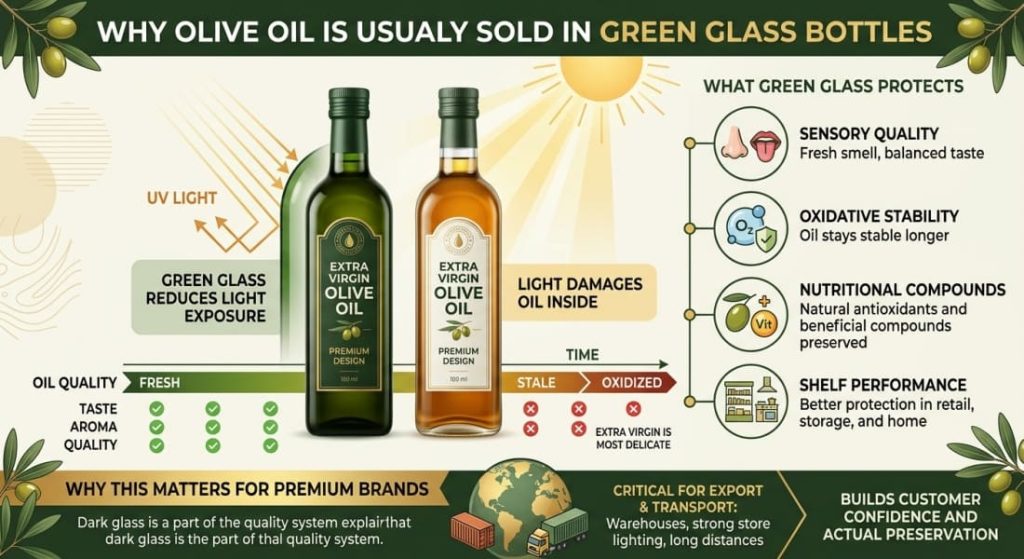
How Light Exposure Reduces Olive Oil Quality
What happens when olive oil is exposed to light
Light can trigger chemical changes in olive oil. This process is often called photo-oxidation, and it is one of the key reasons quality declines over time. In practical terms, light pushes the oil to age faster than it should.
This means the chemical profile of the oil starts changing even if the bottle has never been opened. Many buyers assume that a sealed bottle is safe from quality loss, but that is not fully true. A good seal helps with oxygen control, but it does not stop light from passing through the bottle wall if the glass is too transparent.
That is the technical answer to why is olive oil stored in dark bottles. The darker bottle helps slow down this damage.
Which parts of olive oil are most sensitive
Olive oil is not a simple product. It contains unsaturated fatty acids, pigments, phenolic compounds, and aroma compounds. Many of these elements are sensitive to light.
The unsaturated fats are important because they help define the oil’s nutritional profile. But they are also vulnerable to oxidation.
The pigments, including chlorophyll and other natural color compounds, can react under light exposure. The same goes for phenolic compounds, which contribute to bitterness, pungency, and antioxidant value.
Then there are the volatile aroma compounds. These are especially important if you are selling a fresh, high-quality oil. Once they degrade, the oil can lose the fresh notes that buyers expect.
Signs of light-damaged olive oil
If olive oil has been damaged by light, the signs are usually easy to notice over time. The flavor can turn flat, stale, or rancid. The aroma becomes weaker. The oil may feel less fresh overall. Even if the consumer cannot explain the chemistry, they can usually tell that something is missing.
For you as a buyer or brand owner, this matters because packaging problems show up as product quality problems. If your oil reaches the market in poor condition, your customer will not blame light exposure. They will blame the brand.
Why retail shelves and kitchen storage matter
Retail lighting matters more than many people think. A bottle may sit for weeks or months under supermarket lights. It may then go into a home kitchen and stay near a sunny window or on an open shelf. That repeated light exposure adds up.
So while bottle color helps, storage advice still matters. You should encourage buyers to keep olive oil in a cool, dark place and limit heat and air exposure after opening. But you cannot control everything that happens after sale. That is why your bottle choice matters so much from the beginning.
The Science Behind Green Glass Protection
How colored glass filters light
Glass color changes how much light can pass through the bottle. Clear glass lets in the most light. Darker glass reduces the amount that reaches the oil. Green glass sits in the middle of a practical balance: it offers strong protection while still fitting the visual expectations of the olive oil category.
This is one reason glass bottles for olive oil are often produced in green or amber rather than clear. The color itself is a functional feature, not just a branding choice.
Green glass vs UV and visible light
Not all light is equally harmful. UV light is especially damaging, but some visible light wavelengths also speed up degradation. Green glass helps reduce that exposure. It does not block every harmful wavelength as completely as some darker materials might, but it performs much better than clear glass.
That is why many brands choose green bottle oil packaging for standard commercial use. It offers meaningful protection without moving too far away from the traditional olive oil look that buyers already recognize.
Why glass is preferred for olive oil
Glass remains one of the best materials for olive oil for several reasons. It is non-reactive, which means it does not interact with the oil. It gives the product a premium feel. It is recyclable. It is also widely accepted by consumers for food-grade packaging.
When you compare different packaging materials, glass often performs well in both quality and image. That is especially true in the premium segment, where the package has to support shelf life and brand value at the same time.
Closure quality also matters here. Even the best bottle color will not solve everything if your closure allows too much oxygen in. A good packaging system must manage both light and oxygen.
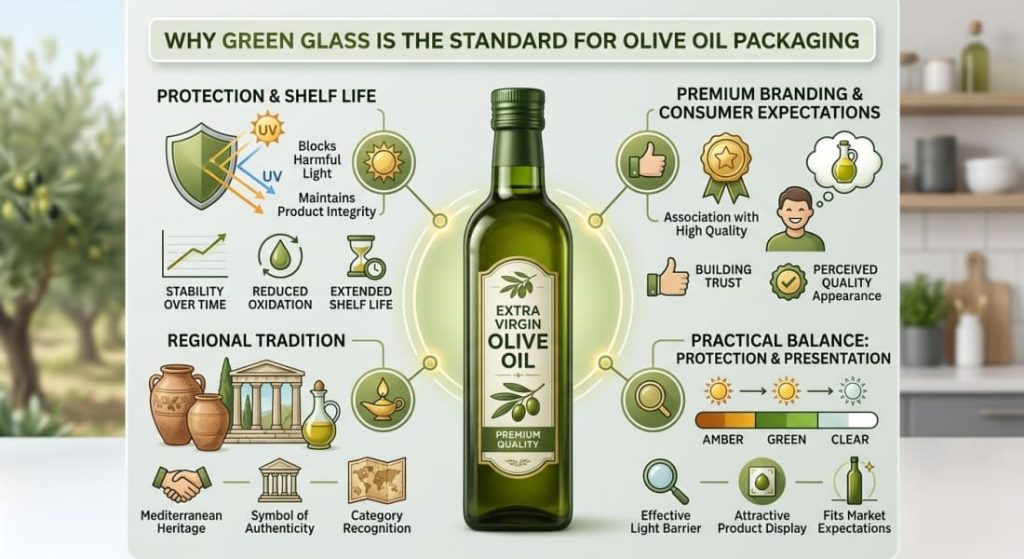
Why Green Glass Became the Standard for Olive Oil Packaging
Protection and shelf life
Green glass became common in olive oil packaging because it solved a real problem. Producers needed more stable packaging for transport, warehouse storage, retail shelves, and home use. Green glass offered a practical answer.
If you are packing oil for wide distribution, shelf life protection is not optional. It is part of product quality management. A bottle that supports stability helps you reduce complaints, protect your reputation, and keep the oil closer to its intended condition.
Tradition in olive oil producing regions
There is also a historical side to this. In many Mediterranean olive oil regions, darker bottles became part of the category long ago. Over time, consumers started connecting green and dark glass with authenticity and heritage.
That tradition still matters today. When buyers see green bottles in the olive oil aisle, the packaging feels familiar. It tells them the product belongs to the category.
Premium branding and consumer expectations
Bottle color influences perception. Many customers believe dark bottles hold better oil, and in many cases that belief is reasonable because darker bottles usually do protect better. So the package does more than contain the oil. It helps build trust.
A practical balance between protection and presentation
Amber may offer stronger protection in some cases, but green often gives you a better overall balance for olive oil. It protects well, looks natural, and fits category expectations. That balance is one reason green has remained so dominant.
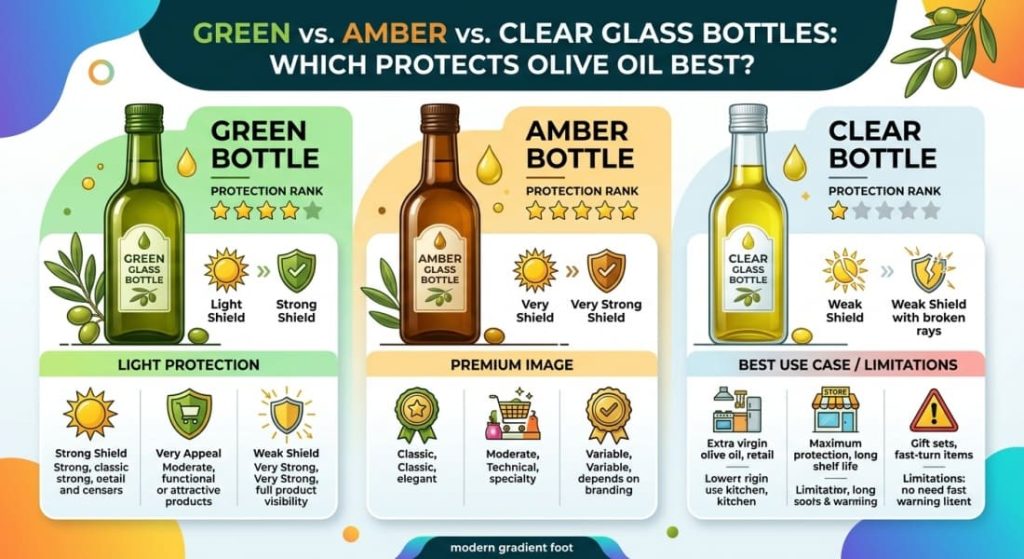
Green vs. Amber vs. Clear Glass Bottles: Which Protects Olive Oil Best?
If you are comparing bottle colors, it helps to look at them side by side. When green glass is the best choice
Green is often the most practical option for extra virgin olive oil, especially when the product will go through normal retail conditions. If you want strong protection plus broad market acceptance, green olive oil bottles are usually the safest choice.
When amber glass may be better
If your first priority is the highest possible light protection, amber glass olive oil bottles may be the better option. Amber is common in industries where UV protection matters a lot, and it can be a smart choice for highly sensitive oils or specialty products.
When clear glass can work
Clear glass olive oil bottles are the least protective option, but they are not always wrong. In some situations, they can still make sense. If your product has a fast sales cycle, stays in controlled environments, or is protected by cartons, full labels, or other secondary packaging, clear glass may be acceptable.
This is also where the comparison of olive oil in tin vs glass becomes useful. Tin gives stronger light protection than clear glass, and sometimes even better protection than tinted glass, but it does not provide the same premium visual and tactile experience that many glass packages offer. So the right answer depends on your product goals.
How to Choose the Best Bottle Color for Olive Oil
Consider the type and quality level of the oil
If you are packing extra virgin olive oil, you should usually choose stronger light protection. The higher the oil quality, the more important it becomes to protect it well. This is why bottle selection is a key part of extra virgin olive oil packaging.
A lower-grade or faster-turn product may allow more flexibility, but premium oils deserve better protection.
Consider sales channel and display conditions
Retail stores with strong lighting require more protective packaging. E-commerce has different risks, but once the product arrives, it may still spend weeks in a home kitchen. Foodservice has its own requirements, especially for bottle size, ease of pouring, and durability.
If you are supplying private label products, you may also need to match retailer standards or customer requests. In all of these cases, bottle color should be chosen based on real conditions, not only appearance.
Consider brand identity and consumer perception
If your brand wants a classic olive oil image, green is usually the natural fit. If you want a more technical or protective look, amber may be better. If your brand story focuses on product visibility, clarity, or infused ingredients, clear glass may support that idea.
So when you ask what color bottle is best for olive oil, the answer is not exactly the same for every business. But for many brands, green is the best combination of protection and market fit.
Consider bottle size, closure, and full packaging system
Bottle color is only one part of the full packaging system. You also need to think about bottle size, neck finish, cap type, tamper evidence, anti-drip pouring options, and outer carton protection.
A smaller bottle may reduce the time the oil stays open after purchase. A better closure can help reduce oxygen exposure. A stronger shipping carton can protect the bottle during export. All of these choices affect quality in real life.
Consider sustainability goals
Many buyers also care about sustainability. Glass is recyclable and widely accepted in circular packaging systems. Lightweight bottle development can also lower freight weight and reduce transport impact. If sustainability is part of your brand strategy, this should be part of your bottle selection process too.
Beyond Bottle Color: Other Packaging Factors That Affect Olive Oil Quality
Closure performance and oxygen exposure
Light is important, but oxygen is just as important. Once oxygen enters the package, it can accelerate olive oil oxidation. That is why you should pay close attention to caps, liners, and pourers.
A poor closure can weaken the benefits of a good bottle. If you are sourcing packaging, always evaluate the bottle and closure together.
Bottle shape and filling conditions
Bottle shape affects more than appearance. It influences how the bottle runs on your filling line, how much headspace remains after filling, and how practical the package is for consumers.
A good filling process should be clean, stable, and consistent. If you can reduce headspace and control filling conditions well, you can better protect the oil from oxygen exposure during packing.
Secondary packaging and logistics
Outer cartons, dividers, pallets, and warehouse conditions all matter. If your bottles travel long distances, logistics can affect both breakage risk and product quality. Secondary packaging is not just for transport efficiency. It can also reduce light exposure and improve protection during export and retail handling.
That is one reason buyers looking for olive oil packaging bottles should think beyond the bottle itself. The full packaging chain matters.
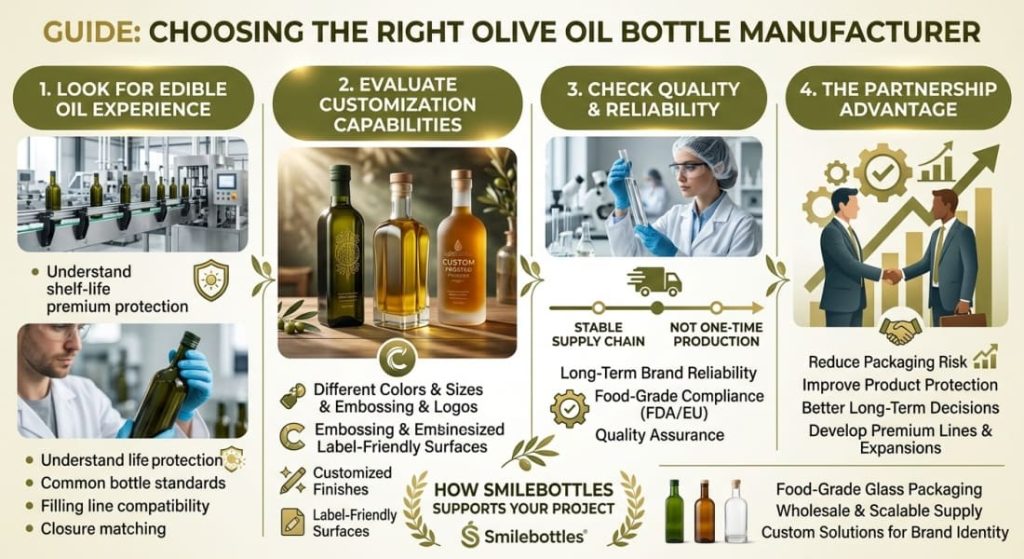
How to Choose the Right Olive Oil Bottle Manufacturer
Look for experience in food and edible oil packaging
Not every supplier understands olive oil well. If you are selecting a glass olive oil bottle manufacturer, look for real experience in edible oil packaging. The supplier should understand shelf-life protection, common bottle standards, filling line compatibility, and closure matching.
Evaluate customization capabilities
Many brands need more than a standard stock bottle. You may need different colors, multiple sizes, embossing, customized finishes, or label-friendly surfaces. If your brand wants a unique look, custom olive oil bottles can help you stand out while still meeting practical packaging needs.
Check quality, compliance, and supply reliability
A good olive oil bottle manufacturer should be able to support stable supply, not just one-time production. If you are building a long-term brand, reliability matters as much as design.
Why packaging partnership matters for olive oil brands
A good partner helps you reduce packaging risk, improve product protection, and make better long-term decisions. That matters when you are developing a premium line, expanding into new markets, or launching private label projects.
How Smilebottles can support your project
If you are looking for an olive oil bottle supplier for food-grade glass packaging, Smilebottles can support a wide range of needs. You can source green, amber, and clear bottle options, explore customization for sizes and shapes, and develop packaging that fits both protection goals and brand positioning.
For buyers who need scalable supply, wholesale olive oil bottles are often part of the conversation. For brands that want a stronger identity, custom solutions may be the better route.
FAQ Frequently Asked Questions About Olive Oil Bottle Colors
Q1:Are green bottles better for olive oil?
A1:Yes. Green bottles offer better light protection than clear bottles, so they help preserve freshness, flavor, and aroma more effectively in normal market conditions.
Q2:Is amber or green glass better for olive oil?
A2:Amber can provide stronger light protection, but green often gives you the best balance between protection and category fit. That is why green remains more common for olive oil.
Q3:Can olive oil go bad in clear glass bottles?
A3:Yes. Clear glass allows more light through, which can speed up oxidation and quality loss. That does not mean clear glass can never be used, but it does mean you should use it carefully.
Q4:Why do premium olive oils use dark bottles?
A4:Because dark bottles help preserve freshness and also support a premium image.
Conclusion
If you are choosing between different glass bottles for olive oil, think beyond color alone. You should also consider closure quality, logistics, shelf conditions, branding, and long-term supply reliability. When all of those factors work together, you get closer to the best packaging for olive oil for your specific market.
And if you are reviewing suppliers, working with an experienced olive oil bottle manufacturer can make the process much easier. The right partner can help you choose practical, attractive, and protective packaging that supports both product quality and buyer confidence.
 English