
Table of Contents
ToggleAuthor: SmileBottles Editorial Team
Estimated Reading Time: About 16 Minute
Maple syrup traditionally comes in glass because glass doesn’t react with the syrup, it keeps air out over long storage, and it lets your customer see the color and clarity of what they’re buying. Over time, that clear amber look in a glass bottle has also become a signal of quality and authenticity in the market.
If you’re a syrup producer, a private label brand, or a distributor planning your next order of maple syrup glass bottles, this guide will help you make a better decision. We’ll cover why glass works so well, where it has limits, how shape and size affect sales, and what to check before you buy glass bottles for maple syrup in volume.
Why Is Maple Syrup Traditionally Packaged in Glass Bottles?
Maple syrup is a natural product made from boiled sap, with no preservatives in pure syrup. That simple ingredient list is one of its biggest selling points, so the container you choose matters more than it would for many other foods.
The Historical Connection Between Maple Syrup and Glass
In the early days, producers stored and sold syrup in whatever worked: wooden barrels, metal cans, and heavy stoneware jugs. Metal cans are still common in some regions for larger volumes. As syrup moved from a farm staple to a retail product sold in stores and to tourists, producers needed a container that could be sealed well, would keep the syrup tasting the way it should, and looked good on a shelf. Glass met all three needs.
By the twentieth century, glass had become standard for retail maple syrup packaging, especially in Canada and New England. Many of the bottle styles you see today, including the maple leaf bottle and the round flat-sided flask, come from that period. Buyers got used to them, and the look stuck.
Why Your Customers Associate Glass with Authentic Syrup
Color matters a lot with maple syrup. The grading system describes syrup by color and taste, from golden with a delicate flavor to very dark with a strong flavor. When your customer can see the syrup through the bottle, they can judge it before they open it. That’s a big part of why glass still leads in specialty and gift markets.
There’s also a trust factor. Many shoppers feel that a producer who chooses glass is taking more care with the product. Whether that’s always fair or not, it’s a real buying signal, and it’s one reason maple syrup bottles made of glass still sell at higher price points than plastic in many stores.

How Glass Helps Preserve the Taste and Quality of Maple Syrup
If you only remember one practical benefit of glass, make it this one. Glass is non-porous and chemically inert, so it won’t add flavors to your syrup or take anything away from it.
Why Non-Reactive Packaging Matters for Your Syrup
Pure maple syrup has a delicate flavor profile, especially in the lighter grades. Packaging that lets air in slowly over time can cause the syrup to darken and lose some of its fresh maple taste. Many maple extension programs point out that syrup stored long-term in some plastic containers can darken faster than syrup kept in glass, because certain plastics allow small amounts of oxygen to pass through.
Glass blocks oxygen almost completely. When your glass syrup bottles are filled correctly and sealed with a good cap, the syrup inside should hold its color and flavor well for a long shelf life. That’s useful if your product sits in a warehouse, on a store shelf, or in a customer’s pantry for months.
Glass also doesn’t absorb odors. If you reuse or refill containers in a farm setting, or if bottles are stored near strong-smelling products, glass won’t pick up those smells the way some materials can.
Packaging Is Only Part of the Picture
To be fair, glass alone doesn’t guarantee quality. How you fill and seal the bottle matters just as much. Maple syrup is usually hot-packed at around 180–185°F (about 82–85°C) to prevent mold growth. If the syrup is too cool when it goes into the bottle, or if the cap doesn’t seal properly, you can still run into problems.
So when you choose a bottle, think about the whole system: the glass, the cap, the liner, and your filling process. A well-made bottle paired with the wrong closure can let you down.

Why Glass Bottles Are Reliable for Maple Syrup Storage and Shipping
People sometimes assume glass is a poor choice for shipping because it can break. It’s true that glass needs more care than plastic. But with the right bottle design and the right outer packaging, glass handles storage and transport well.
What Makes a Glass Bottle Suitable for Hot-Fill Syrup
Since syrup goes into the bottle hot, your bottles need to handle heat without cracking. Good syrup glass bottles have even wall thickness and a well-formed base, which helps them deal with temperature changes. Many producers also warm their bottles before filling to reduce thermal shock. If your bottles are stored in a cold barn or warehouse, this step becomes even more important.
A thicker base also helps your bottles stand steady on the filling line and on store shelves. Bottles that tip easily slow down production and cause more breakage.
How to Reduce Breakage Risks in Transit
If you ship your syrup to retailers or sell online, plan your outer packaging carefully. Cartons with cardboard dividers, molded pulp inserts, or partition sleeves keep bottles from knocking into each other. For e-commerce, many brands use individual protective sleeves or fitted boxes.
It’s worth doing a few test shipments before you scale up. Send a full carton through your normal carrier and see how it arrives. That small step can save you a lot of trouble later.
Glass is heavier than plastic, so your shipping costs per unit will be higher. If most of your sales are long-distance or online, factor that into your pricing from the start.
How Glass Packaging Supports a Premium Maple Syrup Brand Image
Your bottle is often the first thing a customer judges. Before they taste your syrup, they pick up the bottle, feel the weight, and look at the color. Glass gives you an advantage in that moment.
Why Packaging Shapes How Customers Value Your Product
A solid glass bottle feels substantial in the hand. That weight quietly tells your customer the product inside is worth something. It’s the same reason fine olive oil, craft spirits, and specialty sauces are so often sold in glass.
If your brand story is about a family sugarhouse, small-batch production, or a specific region, glass fits naturally with that story. It looks traditional without looking old-fashioned, and it lets the syrup speak for itself.
How Glass Improves Shelf Appeal
On a crowded shelf, clear glass lets light pass through the syrup and brings out that warm amber tone. Your label, the bottle shape, and the syrup color work together. With an opaque plastic jug, you lose that visual effect completely.
This is especially useful if you sell more than one grade. When customers can see the difference between a golden syrup and a dark one side by side, they’re more likely to try a second bottle.
Why Unique Glass Bottle Shapes Matter in Maple Syrup Packaging
Bottle shape is one of the easiest ways to set your brand apart. It’s also tied closely to maple syrup history, which is why some shapes feel “right” to buyers even if they can’t say why.
Why Are Maple Syrup Bottles Shaped Like That?
Customers sometimes pick up a maple leaf bottle and ask, why are maple syrup bottles shaped like that? The answer is mostly tradition and identity. The maple leaf shape ties the product directly to Canada and the sugar maple tree, which makes it a favorite for tourist shops and souvenirs. You know what’s inside before you read the label.
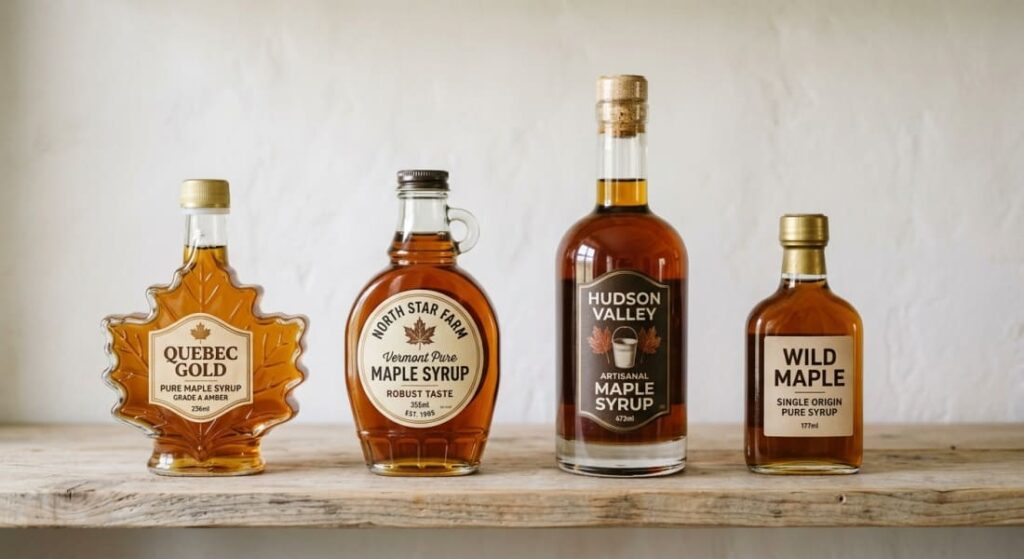
The round, flat-sided flask style, often called a woozy bottle, has a different story. It’s a classic sauce and syrup bottle shape with a flat front and back, which makes labeling easy. It became common in New England and is now one of the most recognized shapes in the category.
Other popular styles include tall round bottles, square bottles that pack efficiently in cartons, and small jug-style bottles with a finger loop.
Why Do Maple Syrup Bottles Have Handles?
A question buyers ask us a lot is this: why do maple syrup bottles have handles? On many small bottles, the handle is so small it’s barely useful. That’s because it’s mostly a design tradition.
Before glass bottles became common, syrup was often stored in large stoneware or earthenware jugs. Those jugs were heavy, so they needed real handles for carrying and pouring. When smaller glass bottles took over, makers kept the handle as a nod to that history. Today, the little loop on glass maple syrup jugs tells customers “this is traditional maple syrup” at a glance. On larger sizes, like half-gallon jugs, the handle still does its original job and makes pouring easier.
Decorative and Custom Shapes for Your Brand
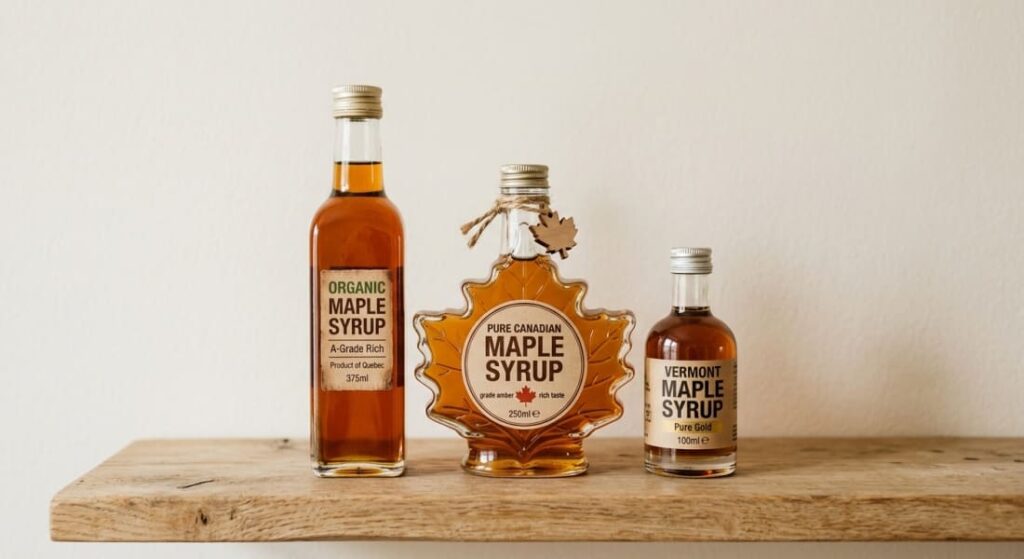
If you want your syrup to stand out, decorative maple syrup bottles are worth considering. These can include embossed leaf patterns, unusual silhouettes, or elegant tall shapes aimed at upscale gift buyers.
You can also go one step further with custom maple syrup bottles. Embossing your logo or farm name into the glass, or developing a shape only your brand uses, can make your product instantly recognizable. Keep in mind that custom molds usually involve a higher upfront cost and a larger minimum order, so this works best when you’re confident in your volumes.
Whatever shape you choose, check the practical side too. Make sure it runs well on your filling line, stands steady, has a flat area for your label, and fits standard cartons without wasting space. A beautiful bottle that slows down your production isn’t a good trade.
How Glass Bottles Support Retail and Gift Market Sales
Maple syrup isn’t only a pantry item. For many buyers, it’s a gift, a souvenir, or a seasonal treat. Glass fits well with all of these.
Why Glass Works Well for Gourmet and Gift Packaging
Maple syrup gift bottles are a strong category for many producers, especially around the holidays, during sugaring season, and in tourist areas. A small maple leaf bottle, a set of three mini bottles in different grades, or a tall elegant bottle in a gift box can all sell at good margins.
Gourmet food stores, farm markets, airport shops, and corporate gift companies tend to prefer glass. If you want to sell into these channels, glass is often expected rather than optional.
How Packaging Can Support Your Pricing
Pricing is where packaging really earns its cost. Customers generally accept higher prices for syrup in attractive glass than for the same volume in a plastic jug. That doesn’t mean you should charge more just because of the bottle, but good packaging helps your price feel fair to the buyer.
Seasonal or limited-edition bottles can also help. A special bottle shape or label for the holidays gives regular customers a reason to buy again and gives stores something new to feature.
Are Glass Maple Syrup Bottles a Sustainable Packaging Choice?
More customers now ask about packaging and the environment, and retailers ask too. Glass has a good story here, but it’s worth being accurate about it.
Recyclability and Reusability of Glass
Glass can be recycled many times without losing quality, and it’s accepted in recycling programs in many regions. Glass bottles are also easy to wash and reuse at home. Plenty of customers keep pretty maple syrup bottles for oil, homemade dressings, or small flower arrangements.
Many shoppers see glass as the more eco-friendly choice, and that perception can matter for your brand.
What You Should Weigh Honestly
Glass isn’t automatically the greenest option in every case. It’s heavier than plastic, so it uses more fuel to transport. Recycling rates also vary a lot by country and city. If your bottles travel long distances, that weight adds to the overall footprint.
When you talk about sustainability on your labels or website, keep your claims clear and realistic. Saying your bottles are recyclable and reusable is accurate and helpful. Saying they’re the most sustainable option in every case is hard to support. A careful, honest message builds more trust with buyers and retailers.
Glass vs. Plastic Maple Syrup Bottles: Which Is Better for Your Brand?
There’s no single right answer. The best choice depends on your brand position, your sales channels, and your budget. Here’s how the two compare in practice.
Appearance and Customer Perception
Glass looks and feels more premium. It lets the syrup color show through and fits well with gift and specialty markets. Plastic jugs are practical and familiar, but they usually signal everyday value rather than a special product. If you sell mainly to grocery shoppers looking for a good price on a large volume, plastic may suit that buyer fine.
Product Protection and Shelf Life
Glass keeps oxygen out and doesn’t react with the syrup, which helps protect color and flavor over long storage. Plastic performance depends on the type of plastic and how long the syrup will sit. For syrup that sells quickly, the difference may be small. For syrup that sits on shelves or in pantries for a long time, glass has a clear advantage.
Shipping, Handling, and Cost
Plastic is lighter and doesn’t break, so it costs less to ship and is easier to handle in large volumes. Glass costs more per unit and more to ship, and it needs protective packaging. If your margins are tight or most of your sales are online, these costs matter.
Making the Decision
Choose glass if your brand is built on quality, tradition, and visible product appeal, or if you sell into gift, tourist, or gourmet channels. Choose plastic if your focus is lower cost, high-volume sales, and lighter shipping. Many producers use both: glass for retail and gift lines, and plastic or metal containers for bulk or food service customers.
amber glass dropper bottles
What Should Brands Consider When Buying Bulk Maple Syrup Bottles?
Once you’ve decided on glass, the next step is sourcing. Ordering bulk maple syrup bottles is a bigger commitment than it looks, and a few early checks can save you from costly mistakes.
Choosing the Right Maple Syrup Bottle Sizes
Start with your product line. Common maple syrup bottle sizes include 50 ml (about 1.7 oz) and 100 ml (about 3.4 oz) for samples, favors, and gift sets. The 250 ml (about 8.45 oz) and 375 ml (about 12.7 oz) sizes are popular for standard retail and gift bottles, while 500 ml (about 16.9 oz) and 1 liter sizes work for family use and value buyers. Larger jug formats are less common in glass but are still available.
Think about where each size will sell. Small sizes do well in tourist and gift markets. Mid sizes are the backbone of retail. Larger sizes appeal to regular syrup users who want better value. Many brands start with two or three sizes and add more as they learn what sells.
Closure Compatibility and Sealing
Check the neck finish of the bottle and make sure it matches the caps you plan to use. Metal screw caps with a plastisol or foam liner are common for hot-fill syrup. Tamper-evident caps can add confidence for retail buyers. Make sure the cap liner can handle hot-fill temperatures, and always test the seal before a full production run.
Glass Quality and Consistency
When you buy wholesale maple syrup bottles, consistency is just as important as appearance. Uneven wall thickness can cause cracking during hot-fill. Variations in height or neck size can cause trouble on automatic filling and capping machines. Ask your supplier about their quality control process and their typical defect rate.
Also confirm that the glass is suitable for food contact and meets the standards that apply in your market, such as FDA requirements in the United States or the relevant regulations in Canada or the EU.
Customization and Decoration Options
If you plan to build a strong brand, look into decoration options. These can include embossing, screen printing, frosting, color coating, and custom labels. Some decoration methods work better on certain shapes, so discuss your ideas with your supplier early.
MOQ, Lead Time, and Supplier Reliability
Every supplier has a minimum order quantity, and custom work usually means a higher one. Ask about MOQ for both stock and custom bottles. Also ask about lead times, especially if you need bottles before sugaring season or the holiday rush. Running out of bottles in peak season is a problem you really want to avoid.
Packaging for Delivery
When you order empty maple syrup bottles in large quantities, how they’re packed for delivery matters. Ask whether bottles arrive on pallets with layer pads, in cartons with dividers, or in reusable trays. Good shipping packaging reduces breakage and makes it easier for your team to load bottles onto the filling line.
Questions to Ask Your Supplier
Before you place an order with a syrup bottle manufacturer, it helps to ask a few direct questions. Can they send samples so you can test filling, capping, and labeling? Are the bottles suitable for hot-fill? Which caps do they recommend for this neck finish? What’s the MOQ and lead time for stock and custom designs? How are the bottles packed for shipping? Clear answers to these questions tell you a lot about how reliable the supplier is.
Always test samples on your actual filling line and with your actual labels before you commit to a large order.
How Smilebottles Supports Maple Syrup Packaging Projects
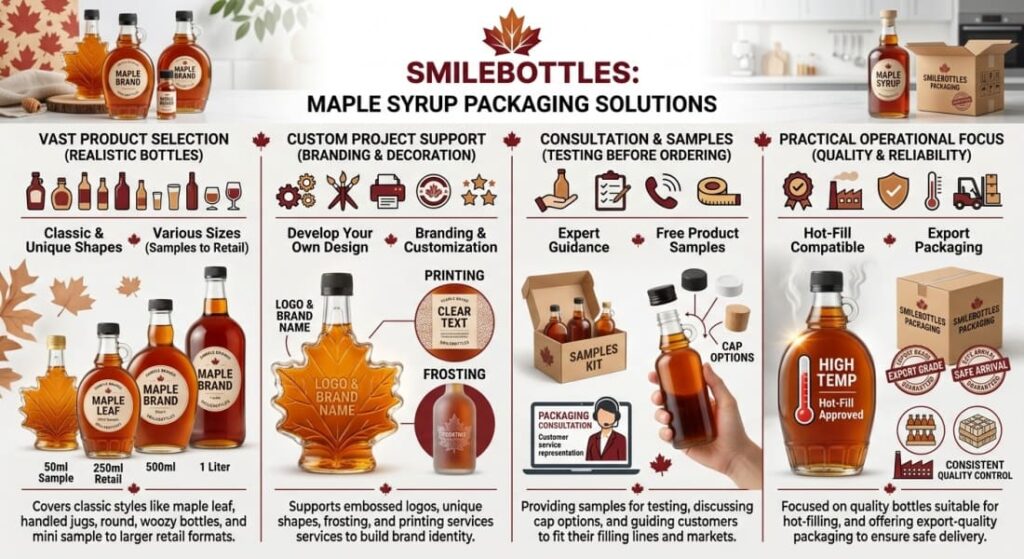
At Smilebottles, we manufacture glass bottles for maple syrup producers, private label brands, and distributors. Our range covers classic styles like maple leaf bottles, woozy bottles, round bottles, and small handled jugs, in sizes from mini sample bottles up to larger retail formats.
We also support custom projects, including embossed logos, unique shapes, and decoration such as printing and frosting. If you’re not sure which bottle fits your filling line or your market, we’re happy to send samples and talk through cap options and packaging so you can test before you order.
Our focus is on consistent quality, bottles that work well with hot-fill, and export packaging that helps your bottles arrive in good condition. Whether you need a stock bottle in volume or want to develop a design of your own, we can help you plan a practical solution.
FAQ: Frequently Asked Questions About Maple Syrup Glass Bottles
Q1:Why is maple syrup usually sold in glass bottles?
A1:Glass is non-reactive, keeps oxygen out, and lets customers see the syrup’s color. It also carries a long tradition in the maple industry and supports a premium, authentic image.
Q2:Is glass better than plastic for maple syrup?
A2:It depends on your goals. Glass is usually better for long shelf life, premium presentation, and gift markets. Plastic is lighter, cheaper to ship, and won’t break, which makes it practical for high-volume or budget products.
Q3:Do glass bottles affect the taste of maple syrup?
A3:No. Glass doesn’t react with the syrup or add flavors, so it helps keep the original taste. Proper hot-filling and a good seal are still important.
Q4:Can glass bottles handle hot-fill maple syrup?
A4:Yes, well-made glass bottles can handle hot-fill. Warming the bottles before filling helps reduce the risk of thermal shock, especially in cold conditions.
Q5:Are glass maple syrup bottles recyclable?
A5:Yes. Glass is widely recyclable and can be recycled many times. Local programs vary, so recycling access depends on where your customers live.
Q6:Can I customize maple syrup glass bottles for my brand?
A6:Yes. You can customize the shape, embossing, printing, and finish. Custom designs usually need a higher minimum order and longer lead times than stock bottles.
Conclusion
Glass isn’t perfect for every situation. It costs more and weighs more than plastic, and it needs careful packing. But if your brand is built on quality and you want your syrup to stand out in retail and gift markets, glass is usually the stronger choice.
The right bottle depends on your market, your price point, your filling setup, and your brand story. Take time to choose the right shapes and sizes, test samples on your line, and work with a supplier you can rely on. If you’d like to explore options for your next maple syrup line, feel free to reach out to Smilebottles for samples or a custom quote.
 English
  Russian
  Spanish (Chile)
  Spanish (Colombia)
  Spanish (Ecuador)
  Swedish
  Arabic
  French
  Portuguese