Table of Contents
ToggleAuthor: SmileBottles Editorial Team
Estimated Reading Time: About 15 Minute
Introduction
There is also a practical reason many people prefer glass soda bottles. Glass is a strong barrier, it does not allow carbon dioxide to pass through the bottle wall, and it does not readily absorb the drink’s aroma. When the cap seals properly and the product has been stored well, the recipe reaches you with very little interference from the package.
For your beverage business, taste is only part of the decision. The bottle must also withstand pressure, work with your closure and filling line, survive transport, and fit the way you want the product to be seen. The sections below follow those questions in order, so you can understand both the drinking experience and the buying decision.
Why Soda Often Tastes Better in Glass Bottles
Glass Is Non-Reactive and Preserves Pure Flavor
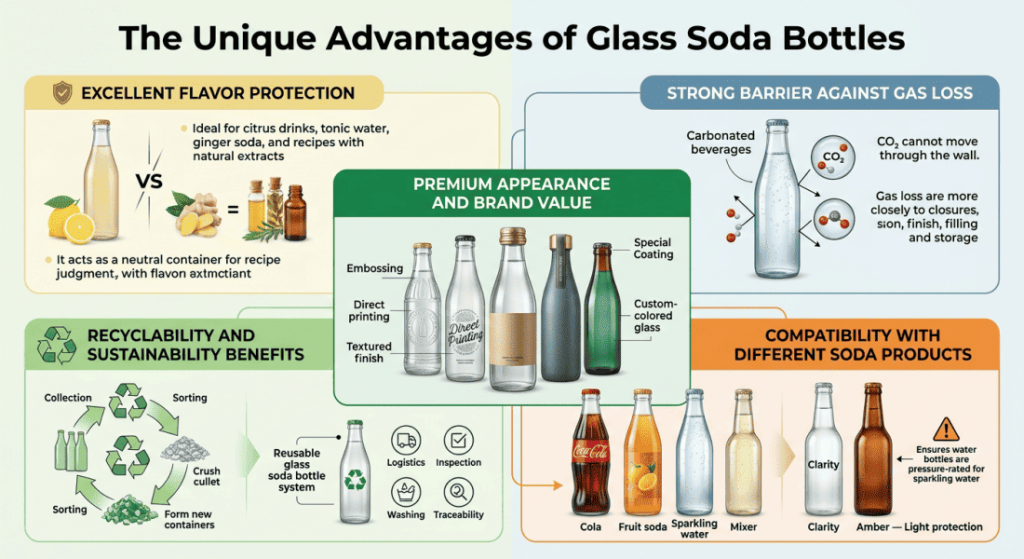
Soda is acidic and often contains ingredients that people notice in tiny amounts, including citrus oils, botanical extracts, sweeteners, colors, and aromas. A suitable glass surface stays largely neutral around those ingredients. It does not need to add a flavor of its own, and it does not easily take up the aroma it is meant to protect. This is one reason soda in glass bottles can taste especially clean.
Glass Protects Carbonation More Effectively
Carbon dioxide does more than create bubbles. It adds bite, changes mouthfeel, and carries aroma upward as bubbles rise. Glass blocks gas through the bottle wall, so a good seal can retain carbonation for a long period. The cap still matters: a damaged finish or poor crimp can slowly release gas even when no liquid leaks.
No Flavor Transfer from Packaging
PET bottles and lined cans can both package soda safely and successfully, but they use different materials at the product-contact surface. Glass gives you one less variable because it does not readily absorb odors or flavor compounds. If a trial batch tastes unusual, the neutral glass wall makes the investigation simpler. It is an advantage without implying that every other package creates an off taste.
Temperature and Drinking Experience Matter
Cold soda holds dissolved CO2 better than warm soda, so refrigeration helps the drink feel sharper and more lively. The bottle’s weight, narrow neck, and cold surface also shape your expectation. Pour the same drink into a wide cup and soda in a glass may feel slightly different because pouring releases gas and changes the way aroma reaches your nose.
Why Glass Bottles Are Often Used for Premium Sodas
You often see craft soda glass bottles paired with botanical flavors, regional recipes, or heritage branding. The package supports that position, but the formula and carbonation still have to earn the customer’s approval.
The Unique Advantages of Glass Soda Bottles
Excellent Flavor Protection
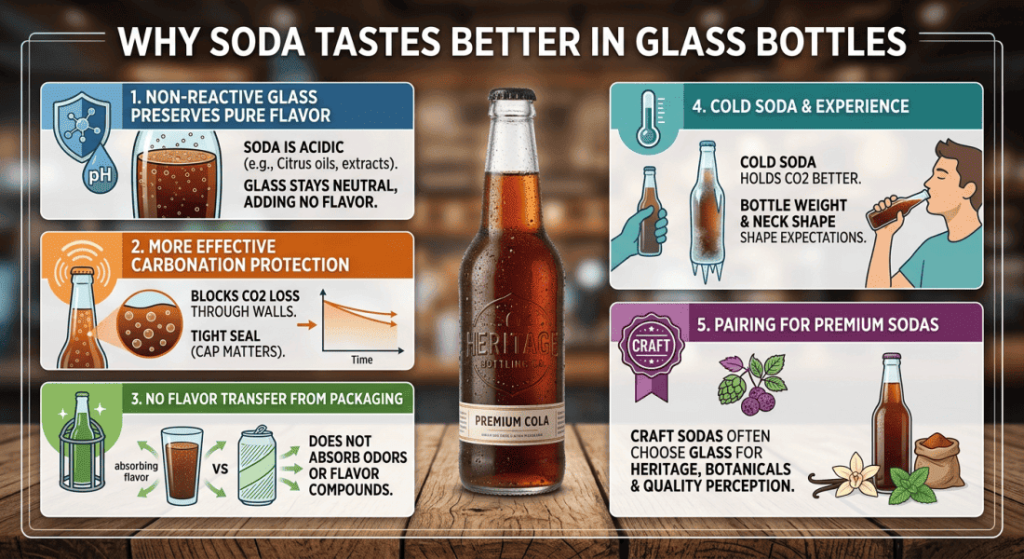
That is useful for citrus drinks, tonic water, ginger soda, and recipes using natural extracts. When you compare packages during product development, a neutral container helps you judge the recipe rather than wonder whether the bottle has changed it.
Strong Barrier Against Gas Loss
With glass bottles for carbonated beverages, CO2 cannot move through the container wall. Gas loss is therefore more closely linked to the closure, finish, filling conditions, and storage.
Premium Appearance and Brand Value
Glass can carry embossing, direct printing, labels, coatings, and distinctive colors. Even a standard bottle can look premium when the finish, label, cap, and drink color work together. Avoid adding decoration simply because it is available.
Recyclability and Sustainability Benefits
Glass can be collected, sorted, crushed into cullet, and made into new containers. Reuse is possible too, but only within a system designed for it. Reusable glass soda bottles need suitable bottle construction, return logistics, inspection, washing, and traceability.
Compatibility with Different Soda Products
You can use glass for cola, fruit soda, sparkling water, tonic, mixers, and many botanical drinks. Product sensitivity may affect the color you choose. Clear glass suits drinks where color and clarity matter, while amber can offer better light protection. For glass bottles for carbonated water, confirm that the selected water bottle is pressure-rated; a still-water design is not automatically suitable for sparkling water.
How Glass Bottles Help Soda Stay Carbonated Longer
The Role of an Airtight Closure
The bottle wall provides the barrier, but the closure seals the only opening. Pry-off crowns are common and reliable when the cap, liner, finish, and capper settings match. Twist-off crowns need the correct threaded finish. Screw caps can add resealing convenience, although torque, liner, thread engagement, and tamper evidence still need validation.
Glass as a Strong Gas Barrier
Once sealed, the package holds CO2 in the liquid and headspace. Glass does not permit gradual gas transmission through the sidewall, which gives it an advantage over permeable plastic. That does not make the package permanent. Time, heat, and a weak seal can still reduce carbonation, so you need to test the filled product rather than rely on the empty bottle alone.
Why Headspace and Filling Conditions Matter
Warm product gives up CO2 more readily. Agitation, sudden pressure drops, or too much time before capping can also cause foam and gas loss. Headspace should remain within the range established for the package and process. When developing glass bottles for carbonated drinks, run them with the actual beverage, closure, filler, and capper before commercial approval.
Storage Conditions That Affect Carbonation
Heat pushes carbon dioxide out of solution and raises pressure inside the package. Direct sunlight and repeated temperature swings can also speed up quality loss. The practical answer to how to store soda in glass bottles is simple: keep cases upright in a cool, dry, shaded area, protect them from impact, and rotate stock by date.
How Long Does Soda Last in a Glass Bottle?
Unopened Glass-Bottled Soda Shelf Life
If you search how long does glass bottled soda last, you will find many fixed answers, but no single period applies to every recipe. Shelf life depends on pH, sweetener, preservatives, aroma, color, dissolved oxygen, carbonation, closure, filling hygiene, light, and temperature. In the United States, a “Best if Used By” date generally describes expected quality rather than an automatic safety deadline.
How Long Opened Soda Stays Fresh
After opening, pressure falls and CO2 begins escaping. A resealable cap and refrigeration slow the change, but they cannot put lost gas back into the drink. Single-serve bottles are usually finished before flatness becomes a problem. For a larger pack, test the product after the number of days you plan to recommend instead of copying a general figure.
Signs That Soda Has Lost Quality
You may notice a weak opening hiss, fewer bubbles, dull aroma, faded color, or a sweeter and flatter taste. These signs often point to declining quality. A chipped neck, crack, leaking closure, or disturbed seal is different: reject the bottle rather than taste it. Damage to pressurized glass deserves a cautious response.
Best Storage Practices for Longer Freshness
Keep unopened bottles away from heat and direct light. Store them upright to reduce contact with the closure liner and lower spill risk if a seal has been disturbed. Refrigerate after opening when the label allows it. The accurate response to how long does soda last in a glass bottle still comes from testing your finished product under realistic distribution and storage conditions.
What Happens If You Store Glass-Bottled Soda in the Fridge?
Refrigeration Helps Preserve Flavor and Carbonation
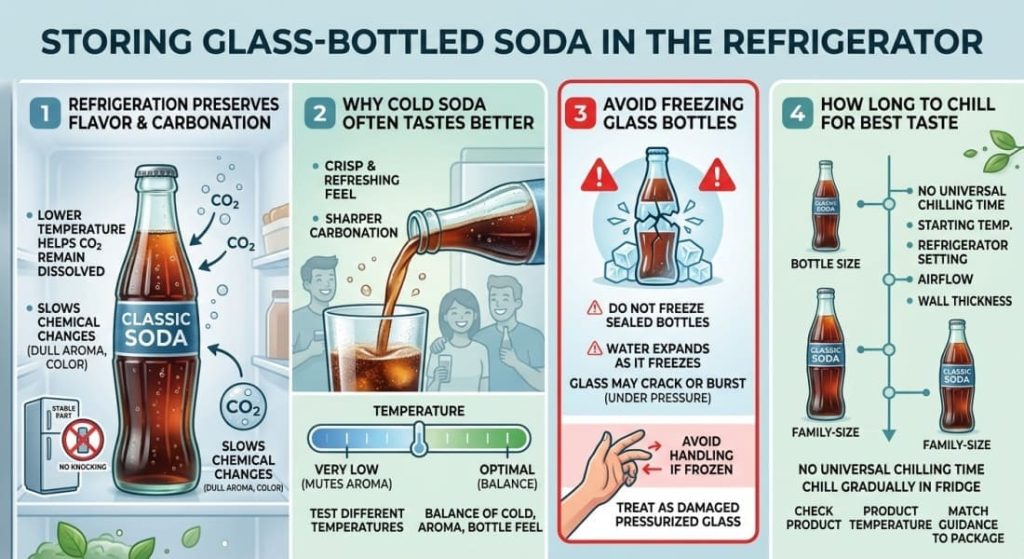
Lower temperature helps CO2 remain dissolved and slows many chemical changes that dull aroma or color. If the bottle stays sealed, normal refrigeration is generally helpful for sensory quality. Keep it in a stable part of the refrigerator where it will not be knocked against shelves or other containers.
Why Cold Soda Often Tastes Better
Cold soda feels crisp and refreshing, and carbonation usually seems sharper. However, very low serving temperatures can mute delicate aromas. Test your drink at several realistic temperatures before choosing a serving recommendation. The pleasure associated with soda in glass comes from the balance of coldness, fizz, aroma, and the feel of the bottle.
Avoid Freezing Glass Bottles
Do not freeze a sealed glass soda bottle. Water expands as it freezes, while the carbonated beverage is already under pressure. The glass may crack or burst. If a bottle freezes accidentally, avoid unnecessary handling and treat it as damaged pressurized glass instead of an ordinary drink that only needs thawing.
How Long to Chill Soda for Best Taste
There is no universal chilling time because bottle size, starting temperature, refrigerator setting, airflow, and wall thickness all matter. Chill gradually in a refrigerator and check the product temperature during your own service trial. A small bottle cools differently from a family-size bottle, so your guidance should match the package you sell.
How to Open a Glass Soda Bottle Cap Safely
Using a Standard Bottle Opener
If you need to know how to open a glass soda bottle, first place it upright on a stable surface. Hook a proper opener under the crown, hold the neck below the finish, and lift with steady pressure. Keep the mouth pointed away from faces, especially if the bottle has been shaken or stored warm.
How Twist-Off Glass Soda Bottles Work
A twist-off crown uses a matching threaded finish and should be identified on the cap or label. Turn it counterclockwise with a dry hand or cloth. Do not try to twist a pry-off crown. If your customer needs to reseal a larger bottle, a suitable screw closure may be more useful than a crown.
Safety Tips When Opening Pressurized Bottles
Never use teeth, knives, countertop edges, or tricks that strike the bottle. Let a shaken drink settle and cool before opening. A soda can saver may cover an opened can, but it does not restore the original pressure seal. For several servings, choose a genuinely resealable bottle and closure.
How to Choose the Right Glass Soda Bottle for Your Beverage Brand
Choose the Right Bottle Size
Match capacity to the drinking occasion. A single-serve bottle helps the customer finish the drink while it remains lively. A larger size can offer better value but often needs a resealable closure. Restaurant table service, convenience retail, gifting, and family use may each point to a different size.
Select the Right Glass Color
Clear glass soda bottles let customers see color, clarity, and bubbles, which can be a strong part of the product appeal. Clear glass also allows more light to reach the drink.
Consider Bottle Shape and Brand Positioning
Custom glass soda bottles make sense when the brand value justifies tooling, samples, approval, and longer lead times. A proven stock shape may be wiser for a first launch.
Match the Bottle with the Right Closure
Choose the finish and cap together. Confirm crown type, screw thread, liner, tamper evidence, application settings, and opening experience. The phrase glass bottle soda may appear in a catalog, but it is only a broad category; it does not tell you whether the bottle and closure suit your carbonation level or line.
Evaluate Durability, Filling Compatibility, and Logistics
When comparing soda bottle glass, pressure strength is only part of commercial performance. Breakage, scuffing, line loss, freight, and container loading affect your real cost.
Sustainability and Recyclability Considerations
Review the recovery system in your target market. If local glass recycling works well, give clear disposal instructions. If you operate a return loop, specify a refillable design and account for washing, inspection, breakage, reverse transport, and expected trips.
Why Beverage Brands Choose Glass Bottles for Premium Soda Packaging
Glass Enhances Product Perception
Glass feels solid, cool, and deliberate in the hand. It also allows a clean opening sound and a familiar serving ritual. These cues can raise expectations before the first sip. Your package still needs to deliver the promised flavor and fizz; appearance alone cannot carry a weak or inconsistent drink.
It Supports Premium and Retro Branding
Glass works with both traditional and modern identities. A crown cap and embossed shoulder can suit a nostalgic cola, while a simple flint bottle with restrained printing can feel contemporary. If you are evaluating glass bottled soda, decide which one or two details should carry the brand rather than adding every available decoration.
It Aligns with Consumer Demand for Sustainable Packaging
Customers often value recyclable or returnable packaging, but your claim must match the local system. Explain recycled content, collection, or reuse only when you have supporting information. The weight and transport needs of glass also belong in the calculation, especially for long-distance distribution or individual parcel shipping.
It Creates Stronger Shelf Impact
Glass can use color, shape, embossing, labels, coatings, and direct printing to create recognition. Premium shelf impact usually comes from restraint and consistency. A clear silhouette, readable label, and well-matched cap may create more value than a complicated bottle that is difficult to fill, pack, or ship.
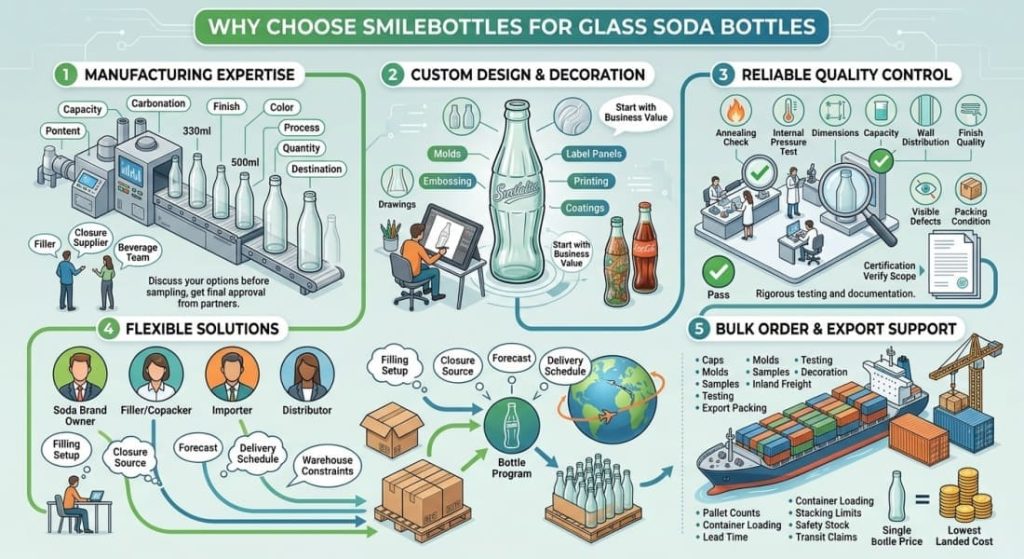
Why Choose Smilebottles for Glass Soda Bottles
Manufacturing Expertise in Glass Beverage Bottles
When you approach a glass beverage bottles manufacturer, you need more than an attractive catalog. Smilebottles can discuss your capacity, carbonation, finish, color, process, quantity, and destination so that suitable bottle options can be narrowed before sampling. Final approval should still include your filler, closure supplier, and beverage team.
Custom Bottle Design and Decoration Options
If a standard shape does not fit the brand, you can discuss custom molds, embossing, label panels, printing, coatings, and other decoration. Custom work needs clear drawings, samples, line trials, decoration tests, and approval milestones. Start with the business value of the design rather than customization for its own sake.
Reliable Quality Control and Production Standards
Ask how the proposed bottle is checked for annealing, internal pressure, dimensions, capacity, wall distribution, finish quality, visible defects, and packing condition. Documentation should relate to the quoted item. If your customer or market requires certification, verify the current scope instead of relying only on a logo in sales material.
Flexible Solutions for Soda Brands, Importers, and Distributors
Your needs may differ depending on whether you own a beverage brand, fill for other companies, import packaging, or distribute finished goods. Share the filling setup, closure source, forecast, delivery schedule, and warehouse constraints early. That allows the bottle program to reflect the way your business actually operates.
Support for Bulk Orders and International Export
For wholesale glass soda bottles, clarify what the quote includes: caps, molds, decoration, samples, testing, inland freight, and export packing. For bulk glass soda bottles, also confirm pallet counts, container loading, stacking limits, lead time, safety stock, and the process for transit claims. The lowest bottle price is not always the lowest landed cost.
FAQ Frequently Asked Questions About Glass Soda Bottles
Q1:Does Glass Keep Soda Carbonated Longer?
A1:Glass provides an excellent wall barrier, but actual retention depends on the cap, sealing surface, filling conditions, headspace, temperature, and time.
Q2:Can You Put Glass-Bottled Soda in the Freezer?
A2: No. Freezing causes the liquid to expand inside an already pressurized package, creating a risk of cracking or bursting. Chill in a refrigerator instead.
Q3:Is Glass Better Than Aluminum Cans for Soda?
A3: Each package solves a different problem. Cans are light, block light, and hold gas well; a liner separates the drink from aluminum. Glass provides a neutral wall, product visibility, and a distinctive serving experience, but it weighs more and can break.
Q4:Are Glass Soda Bottles Recyclable?
A4: Yes, where a suitable local collection and processing system exists. Check the rules in your market because acceptance can vary by color, region, and collection method. For a refill program, use bottles intended for repeated trips rather than treating ordinary one-way containers as returnable packaging.
Q5:What Type of Cap Is Best for Glass Soda Bottles?
A5:There is no universal best cap. Pry-off crowns suit many single-serve drinks, twist-off crowns add convenience with the correct finish, and screw closures can reseal larger bottles. Match the cap, liner, finish, capper, carbonation, process, and opening experience as one system.
Q6:Are Glass Bottles a Good Choice for Craft Soda Brands?
A6:They can be an excellent choice when flavor protection, carbonation, table presence, and brand story matter. You still need to consider freight, breakage, line compatibility, and landed cost. A water carbonator with glass bottle also requires its own approved pressure-rated container; it should not be treated as proof that any craft bottle is safe for carbonation.
Conclusion
The final choice should come from the whole package system. Confirm pressure suitability, match the finish and cap, test the filled product, run the bottle on your equipment, and calculate freight and breakage before production. When those details work together, the bottle protects flavor, fizz, safety, and brand value at the same time.
If you are ready to compare standard or custom options, you can bring your beverage, capacity, closure, quantity, and destination requirements to Smilebottles for a more focused packaging discussion.
 English