



Table of Contents
ToggleAuthor: SmileBottles Editorial Team
Estimated Reading Time: About 16 Minutes
If you are running a sauce brand, you already know that the recipe is only half the battle. The other half is how you present, protect, and deliver that recipe to your customers. In the highly competitive condiment industry, the packaging you choose speaks volumes about your product before the customer even unscrews the cap. Whether you are launching a fiery new habanero blend, a rich artisanal BBQ sauce, or a classic ketchup, making the right packaging choice is critical. For decades, glass sauce bottles have been the gold standard in the industry. But why exactly is that? Why do consumers naturally gravitate toward glass on the supermarket shelves?
In this comprehensive guide, Smilebottles will break down everything you need to know about choosing the perfect packaging for your brand. From understanding consumer psychology to technical filling requirements, we will explore why glass remains the undisputed champion. By the end of this article, you will have a clear roadmap for selecting the best glass containers for food to elevate your brand, protect your flavors, and scale your business successfully.
The Growing Demand for Premium Presentation
The food industry has seen a massive shift in recent years. Consumers are no longer satisfied with mass-produced, heavily processed condiments. Instead, there is a booming demand for premium, small-batch, and artisanal sauces. As a sauce brand owner, you are catering to a more educated, discerning customer base. They care about ingredients, they care about authenticity, and importantly, they care about packaging.
When a customer walks down the grocery aisle, they are bombarded with choices. Your sauce packaging needs to instantly communicate the quality of what is inside. Glass inherently does this. It feels heavier in the hand, it catches the light beautifully, and it carries a sense of tradition.
Furthermore, as global awareness of environmental issues grows, businesses are aggressively seeking out eco friendly food packaging. Glass fits perfectly into this narrative. It offers a premium look while delivering on the promise of sustainability. If you want your product to be perceived as high-quality, safe, and environmentally responsible, starting with the right packaging foundation is non-negotiable.
Why Glass Dominates the Sauce Packaging Market
Have you ever wondered why the most famous condiment brands in the world still rely on glass for their premium lines? The dominance of glass in the market is not an accident; it is backed by consumer psychology, environmental science, and food safety standards. Let’s look at why glass continues to rule the aisle.
1 Premium Brand Image
There is a profound psychological connection between weight and perceived value. When a consumer picks up a glass bottle, the weight signals quality. Glass looks and feels high-end. It allows the vibrant, natural colors of your sauce to shine through without the dulling effect that plastic often creates.
Think about the iconic imagery of heinz ketchup in glass. For generations, that specific bottle has represented the ultimate diner experience and uncompromised quality. Even as the brand introduced plastic squeeze bottles for convenience, the glass version remains their premium offering. Consumers associate glass with artisan, gourmet, and craft products. If you are pricing your sauce at a premium level, your customers will expect it to be housed in premium packaging.
2 Sustainability & Environmental Benefits
Modern consumers vote with their wallets, and they are increasingly voting for sustainable brands. As a business owner, adopting sustainable glass packaging is not just good for the planet; it is a powerful marketing tool. Glass is 100% infinitely recyclable. Unlike plastics, which degrade in quality each time they are recycled and eventually end up in landfills, glass can be melted down and reformed into a new bottle forever without any loss of purity or strength.
By utilizing condiment glass bottles, you align your brand with the eco-conscious values of modern shoppers. Many consumers actively repurpose these bottles in their own homes, giving your brand an extended life in their kitchens long after the original sauce is gone.
3 Food Safety and Chemical Stability
When you spend months perfecting a recipe, the last thing you want is for your packaging to alter the flavor. Glass is chemically inert. This means it will not react with the contents inside, no matter how acidic your sauce is. Vinegar-based hot sauces, highly acidic tomato products, and citrus-infused marinades are entirely safe in glass.
There is zero risk of harmful chemicals leaching into your product, ensuring that you are providing the safest possible condiment packaging for your customers. This chemical stability is a major selling point for health-conscious buyers who actively avoid synthetic packaging materials.
The Blueprint of Successful Sauce Presentation
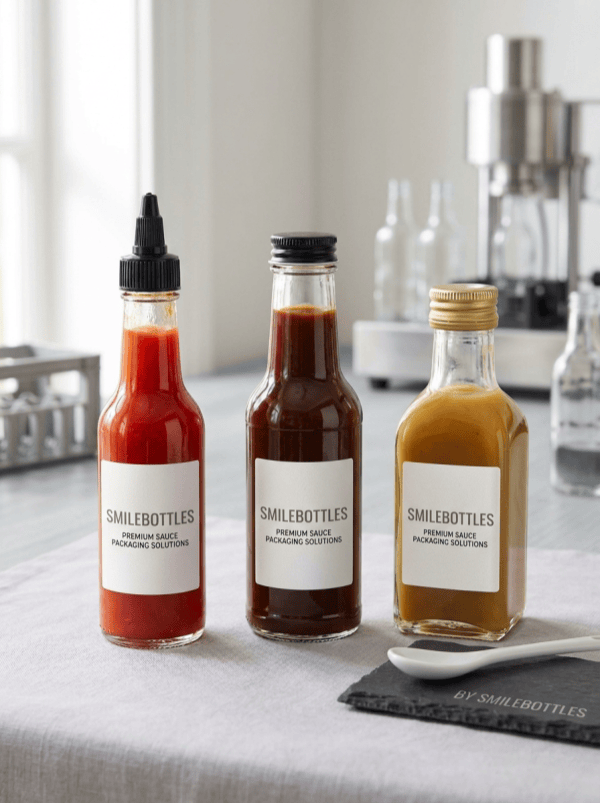
Designing the perfect bottle for your product requires a strategic approach. It is not just about picking a container that looks nice; it is about functionality, brand identity, and the customer experience. Here is the blueprint for mastering your hot sauce packaging.
1 Bottle Shape and Size
The physical shape of your bottle dictates how it pours, how it sits on the shelf, and how it fits into the consumer’s hand. You need to match the size and shape to the specific use case of your product. Are you selling a super-hot sauce where only a few drops are needed? Or a BBQ sauce that customers will pour generously? If you want to stand out, investing in custom hot sauce bottles can give your brand a unique silhouette that becomes instantly recognizable.
2 Closure Options
The cap you choose is just as important as the bottle itself. For thin, fiery liquids, you will need a drip insert (orifice reducer) to ensure the user doesn’t accidentally ruin their meal with too much heat. You also need to consider tamper-evident closures—whether that is a shrink band or a breakaway ring on the cap. This guarantees product integrity from your facility to the customer’s dining table.
3 Labeling and Branding
Glass provides an incredibly smooth, rigid surface that is perfect for high-quality labels. Whether you choose waterproof vinyl stickers, elegant paper labels, or direct screen printing onto the glass, your branding needs to pop. The transparency of glass allows you to use the color of your sauce as part of the label design.
4 Packaging for Retail vs Online Sales
You must design your packaging for sauces with the end destination in mind. If your primary sales channel is retail supermarkets, you need a bottle design that maximizes “facing” (how it looks from the front on a shelf). If your business model relies heavily on e-commerce and direct-to-consumer shipping, your bottle choice must be robust enough to survive the postal system. Thick-walled glass and the right protective shipping boxes are essential for online brands.
Key Benefits: Understanding Glass Bottle Function
Beyond looking good, what is the actual practical glass bottle function for a sauce manufacturer? Let’s dive into the technical benefits that make glass an operational necessity for serious sauce brands.
1 Excellent Flavor Protection
Glass is non-porous and impermeable. It does not absorb odors, and it does not impart any flavors into your product. When your customer opens a bottle of your sauce six months after it was manufactured, it will taste exactly as it did the day it left your facility. This uncompromising flavor protection is why high-end chefs and pitmasters insist on glass.
2 Zero Oxygen Permeability
Oxygen is the enemy of fresh food. When oxygen interacts with your sauce, it causes oxidation, which leads to color fading and flavor degradation. Glass provides an absolute barrier to oxygen. This zero permeability means your vibrant red hot sauces stay bright, and your rich, dark BBQ sauces maintain their deep, appetizing hues.
3 BPA-Free and Food Safe
Consumers are highly educated about the dangers of Bisphenol A (BPA) and other microplastics. By choosing glass, you completely bypass this concern. Glass contains no BPA, no phthalates, and no harmful endocrine disruptors. It easily meets all global food safety standards, making international export of your product much smoother.
4 Extends Shelf Life
Because it blocks oxygen, moisture, and external contaminants entirely, glass naturally extends the shelf life of your product. A longer shelf life reduces waste, makes your product more appealing to major retail buyers (who require long expiration windows), and ensures a better experience for the end consumer.
5 Perfect for Hot Filling and Pasteurization
This is perhaps the most critical operational benefit for commercial sauce makers. Most commercial sauces are preserved using a “hot fill” process, where the sauce is heated to temperatures between 180°F and 205°F to pasteurize it, then immediately pumped into the bottles. Glass can withstand these extreme thermal shocks without warping, melting, or releasing chemicals. It allows you to safely sterilize your product and create the vacuum seal necessary for long-term ambient storage.
The Great Debate: Glass vs Plastic Bottles
When scaling a brand, business owners inevitably face the glass vs plastic bottles decision. Plastic might seem tempting due to its lighter weight and lower shipping costs, but when you look closely at the data, the choice becomes clear for premium brands.
If you are looking at plastic vs glass food containers, the primary consideration is the Oxygen Transmission Rate (OTR). Plastic breathes. Over time, microscopic amounts of oxygen pass through the walls of a plastic bottle. If you have ever seen a bottle of ketchup on a diner table that has turned a dark, unappetizing brown, you have witnessed oxidation caused by plastic packaging. In contrast, keeping your glass bottle ketchup means the bright red color is preserved indefinitely until opened.
|
Feature |
Glass Bottles |
Plastic Bottles (PET/HDPE) |
|
Flavor Protection |
Excellent (Impermeable) |
Moderate (Can absorb/impart odors) |
|
Chemical Stability |
Very High (Inert) |
Lower (Risk of leaching over time) |
|
Sustainability |
100% Recyclable endlessly |
Often downcycled or sent to landfill |
|
Brand Perception |
Premium, Gourmet |
Budget, Mass-market |
|
Heat Resistance |
Very High (Perfect for hot-fill) |
Low to Moderate (Can warp under high heat) |
|
Color Preservation |
Excellent |
Poor to Moderate (Allows oxidation) |
While plastic has its place in fast-food environments where unbreakability and squeezability are the only concerns, if you are building a brand focused on quality, longevity, and flavor, glass wins every time. It is no surprise that fans of classic condiments still actively seek out ketchup in glass bottles simply because “it tastes better.”
Types of Glass Bottles Commonly Used for Sauces
Not all sauces are created equal, and neither are the bottles that hold them. As a buyer, you need to understand the different vessel styles available to you. Here is a breakdown of the most popular industry standards.
Woozy Bottles
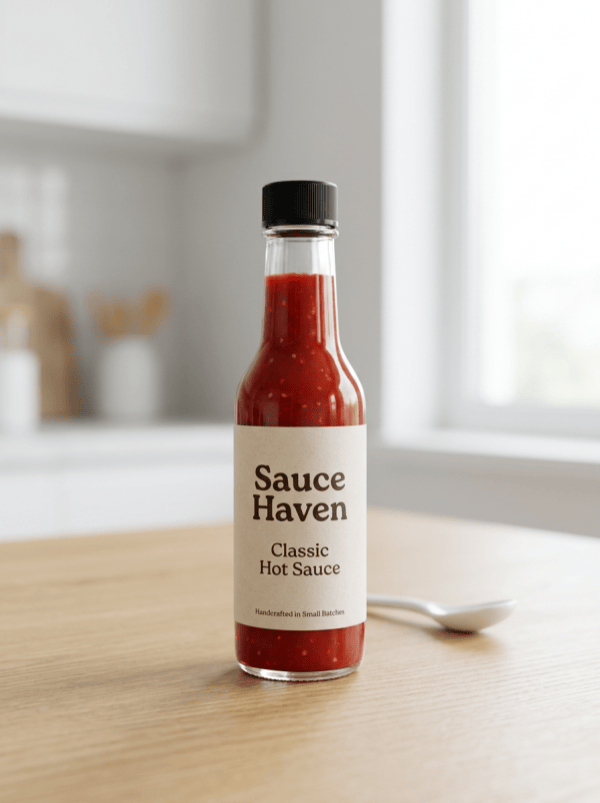
If you are starting a hot sauce company, you will become very familiar with woozy bottles. Typically holding 5 ounces (150ml), this tall, narrow-necked bottle is the undisputed industry standard for hot sauces worldwide. Its shape allows for easy handling, and the narrow neck is perfect for inserting a plastic dripper fitment, ensuring the customer dispenses the hot sauce drop by drop.
Boston Round Bottles
Recognizable by their stout shape and rounded shoulders, boston round bottles have an old-world, apothecary feel. They are incredibly sturdy and are often used for syrups, thin BBQ sauces, soy sauces, and premium craft marinades. They offer a large, smooth surface area for labeling.
Wide Mouth Jars and Containers
If your product is thick, chunky, or meant to be scooped rather than poured, you need a different approach. glass jars for salsa, relishes, and chutneys require wide mouths to accommodate a spoon or a tortilla chip. These jars provide high visibility for the ingredients inside, showing off chunks of tomato, onion, and pepper.
Passata and Tomato Sauce Bottles
If you are producing authentic Italian-style pasta sauces or purees, you will need specific bottles for tomato sauce. These are usually taller, wider, and hold between 16oz and 24oz of product. They feature wide necks (though not as wide as a salsa jar) to allow thick tomato bases to flow smoothly into a cooking pan.
Square Bottles and Swing Top Bottles
For brands that want to break away from tradition, square-sided bottles offer a sleek, modern look and are highly space-efficient for shipping. Meanwhile, swing-top (or wire-bail) bottles offer a rustic, artisanal aesthetic, perfect for small-batch vinaigrettes and infused olive oils.
How to Choose the Right Container for Your Sauce
Selecting the right container for sauce is a strategic decision that impacts your manufacturing process, your shipping costs, and your marketing. If you are preparing to buy glass bottles for sauces in bulk, consider the following factors to ensure you make the right choice for your specific product.
Analyze Your Sauce’s Viscosity
Viscosity (thickness) dictates your bottle neck. A thin, watery vinegar hot sauce needs a narrow neck and an orifice reducer to control the flow. Conversely, a thick, molasses-based BBQ sauce or a chunky teriyaki glaze will get stuck in a narrow neck, frustrating the consumer. Match the opening of the bottle to the flow rate of your product.
Determine the Right Sizing
How much sauce does a customer consume in a month? Hot sauces are used in dashes, so a 5oz bottle is perfect. Pasta sauce is used an entire jar at a time, requiring 24oz capacities. Offering your product in multiple sizes—such as mini sample bottles, standard retail sizes, and large food-service jugs—can help you capture different market segments.
Consider Your Filling Process
How are you getting the sauce into the bottle? If you are hand-filling, you might have more flexibility. However, if you are using an automated rotary or inline filling machine, you need a bottle that is stable on a conveyor belt. Wide bases are more stable, whereas tall, top-heavy bottles might tip over during high-speed production.
Source Empty Bottles for R&D
Before committing to a massive order, it is always wise to source empty hot sauce bottles for research and development. Do a test run. Hot fill your product into the samples, cap them, and let them sit for a month. Check the seal, evaluate the pour, and see how your label design looks on the physical glass.

Why Smilebottles Is Your Reliable Packaging Partner
When you are ready to scale your sauce business, you cannot afford supply chain disruptions, inconsistent glass quality, or poor customer service. You need a reliable glass bottle supplier who understands the specific demands of the food and beverage industry. That is where Smilebottles steps in.
1 A Comprehensive Catalog of Sauce Bottles
As a premier glass bottle manufacturer, Smilebottles offers an extensive and versatile range of packaging solutions. Whether you need standard 5oz woozy bottles, robust Boston rounds, or wide-mouth salsa jars, we have the inventory to support your brand. We provide complete sauces packaging systems, including the glass bottles, drip inserts, and matching closures (screw caps, tamper-evident lids, etc.).
2 Custom Packaging Solutions (OEM/ODM)
If you want your brand to be truly unique, off-the-shelf bottles might not be enough. We specialize in bespoke designs. Our team can help you design and produce custom molds, allowing you to have a proprietary bottle shape that belongs exclusively to your brand. We also offer advanced logo printing, frosting, and labeling support to make your vision a reality.
3 Uncompromising Quality Manufacturing
When you buy sauce bottles wholesale, quality control is paramount. At Smilebottles, all of our food packaging containers are manufactured using premium, food-grade silica sand, ensuring brilliant clarity and strength. Our facilities employ rigorous quality inspection processes to ensure uniform wall thickness, perfectly threaded necks, and extreme thermal shock resistance—meaning our bottles will perform flawlessly on your hot-fill production line.
4 Global Supply and Logistics Expertise
Scaling your brand means finding a partner who can keep up with your growth. Whether you are a local startup looking for your first pallet, or a national brand requiring hot sauce bottles wholesale shipped in multiple full containers, we have the export experience to deliver. Our robust packaging methods ensure your glass arrives safely, anywhere in the world, allowing you to focus on what you do best: making incredible sauce.
FAQ Frequently Asked Questions About Sauce Packaging
As you navigate the world of commercial condiment production, you likely have some technical questions. Here are answers to the most common queries we receive from sauce brand owners.
Q1:Why are hot sauce bottles almost always made of glass?
A1:Because hot sauces are highly acidic (due to vinegar) and pungent (due to capsaicin). Glass preserves the intense flavors perfectly, prevents the acid from degrading the packaging, and completely stops oxygen from ruining the bright colors of the peppers.
Q2:What size bottle is best for launching a hot sauce?
A2:The 5 oz (150ml) woozy bottle is the undisputed industry standard. Consumers recognize it, retail shelves are designed to display it, and it provides the perfect volume for a product used a few drops at a time.
Q3:Can glass bottles handle commercial hot filling?
A3:Yes, absolutely. High-quality glass is incredibly heat resistant. It is designed to handle commercial hot filling and pasteurization processes safely, creating the vacuum seal required for shelf-stable food products.
Q4:Are glass bottles better than plastic for long-term storage?
A4:Without a doubt. Glass offers zero permeability. Plastic allows microscopic amounts of oxygen to seep in over time, which degrades flavor and color. For long shelf-life items, glass is superior.
Q5:Are glass sauce bottles truly eco-friendly?
A5:Yes, glass is 100% infinitely recyclable. It can be melted down and turned into a new glass bottle repeatedly without any degradation in quality, making it a cornerstone of sustainable packaging.
Conclusion
In the competitive condiment industry, your recipe brings customers back, but your packaging is what gets them to buy in the first place. Choosing glass provides your product with uncompromised safety, unparalleled flavor protection, and a premium brand image that commands attention on the retail shelf.
Whether you are crafting a fiery artisanal hot sauce, a rich family-recipe pasta sauce, or a gourmet ketchup, placing your product in high-quality glass is a statement of intent. It tells your customers that you care about quality, sustainability, and authenticity.
Choosing the right manufacturing partner ensures that your packaging process runs smoothly as your brand grows. If you are looking to elevate your brand’s presence and need a trusted supplier for your packaging needs, Smilebottles offers the customizable, high-quality, and reliable solutions designed specifically for modern sauce manufacturers. Reach out to our team today, and let us help you bottle your success.


