
Table of Contents
ToggleAuthor: SmileBottles Editorial Team
Estimated Reading Time: About 15 Minute
When you are bringing a new product to market or looking to upgrade your existing packaging, you face a lot of choices. One of the most common debates you will run into is the choice between materials. You might find yourself wondering glass bottle vs plastic bottle—which one is actually the right fit for your brand? Because of this, the question of plastic bottle or glass bottle, which is better has become a major focus for businesses.
While plastic is certainly lightweight and cheap to produce, glass offers significant advantages when it comes to safety, protecting the taste of your product, and elevating your brand’s image. Throughout this guide, we will break down exactly why are glass bottles better than plastic, how they are made, and how you can use them to give your customers the best possible experience.
Quick Answer: Are glass bottles better than plastic bottles?
If you are looking for a short answer: Yes, in most cases where quality and safety are the priority, glass is the superior choice. If you are asking is glass better than plastic, you have to look at the long-term value. Glass is non-reactive, meaning it will not leach chemicals into your drinks or food. It is infinitely recyclable, making sustainable bottle packaging a reality rather than just a marketing buzzword. Furthermore, glass protects the taste and purity of your products while offering a premium look that plastic simply cannot match. For brands prioritizing consumer trust, glass bottle packaging is often the clear winner.
What Are Glass Bottles Made Of?
To understand the benefits of glass packaging, you first need to understand what goes into making it. Unlike plastics, which rely on complex chemical processes, glass is made from natural, abundant resources.
Raw materials used in glass bottle production
When you hold a glass bottle, you are essentially holding melted and reformed natural minerals. The primary ingredient is silica sand, which makes up the bulk of the structure. Soda ash is added to lower the melting point of the sand, making it easier to form. Limestone is then introduced to make the final product durable and chemically stable. Most importantly, high-quality production relies heavily on recycled glass cullet. Using cullet reduces the energy needed for melting and plays a huge role in glass bottle sustainability.
How glass bottles are manufactured
The process begins in the batch house, where these natural materials are carefully weighed and mixed. This mixture is fed into a massive furnace that operates at extremely high temperatures, turning the solid materials into molten glass. This molten liquid is then cut into “gobs” and dropped into molds, where compressed air blows them into the shape of the bottle you need.
Once formed, the bottles pass through an annealing lehr. This is a crucial step where the glass is slowly cooled to relieve internal stresses, ensuring the bottle doesn’t shatter easily. Finally, they undergo strict automated and manual inspections to ensure there are no defects before they reach your filling line.
Why glass composition matters for packaging
The natural composition of glass is exactly why so many brands prefer it. It is completely non-porous. This means it creates an absolute barrier against oxygen and moisture. It is chemically stable, so it does not react with the contents inside. When you use food grade glass bottles, you guarantee that your product will taste exactly as you intended, without any interference from the packaging itself.
Glass Bottles vs Plastic Bottles: Key Differences
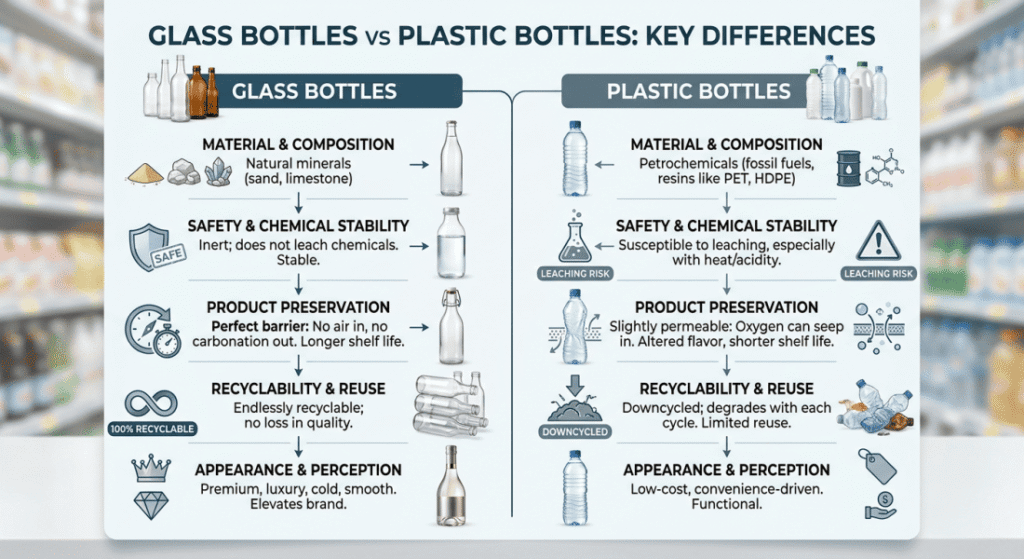
When you compare glass and plastic bottles side by side, the differences in how they perform and how consumers perceive them are striking. Let’s look closely at plastic versus glass across a few main categories.
Material and composition
As we covered, glass is made from natural minerals like sand and limestone. Plastic, on the other hand, is made primarily from petrochemicals—fossil fuels processed into polymer resins like PET or HDPE. This fundamental difference is the root of most of the advantages of glass bottles.
Safety and chemical stability
If you are wondering is glass safer than plastic, the answer lies in stability. Glass is inert. It does not break down or release particles into your product. Plastic can be susceptible to leaching, especially when exposed to heat or highly acidic contents.
Product preservation
Glass provides a perfect barrier. No air gets in, and no carbonation gets out. Depending on the type of plastic used, plastic bottles can be slightly permeable. Over time, oxygen can seep into a plastic bottle, which might alter the flavor or shorten the shelf life of sensitive products.
Recyclability and reuse
When looking at plastic vs glass through an environmental lens, recycling is a major factor. Glass can be recycled endlessly without losing any of its strength or purity. Plastic is generally “downcycled.” A plastic bottle might be recycled a few times, but the quality of the plastic degrades with each cycle, eventually ending up in a landfill.
Appearance Of Products
Glass feels heavy, cold, and smooth—it signals luxury. Whether you use clear glass bottles to show off a vibrant beverage or amber glass bottles to protect light-sensitive liquids, glass elevates your brand. Plastic is widely viewed as a low-cost, convenience-driven material.
Why is glass better than plastic for Your Packaging?
Let’s dive deeper into the specific glass bottle benefits and explore exactly why you should consider making the switch to glass for your product lines.
Glass is safer for food, beverages, and cosmetics
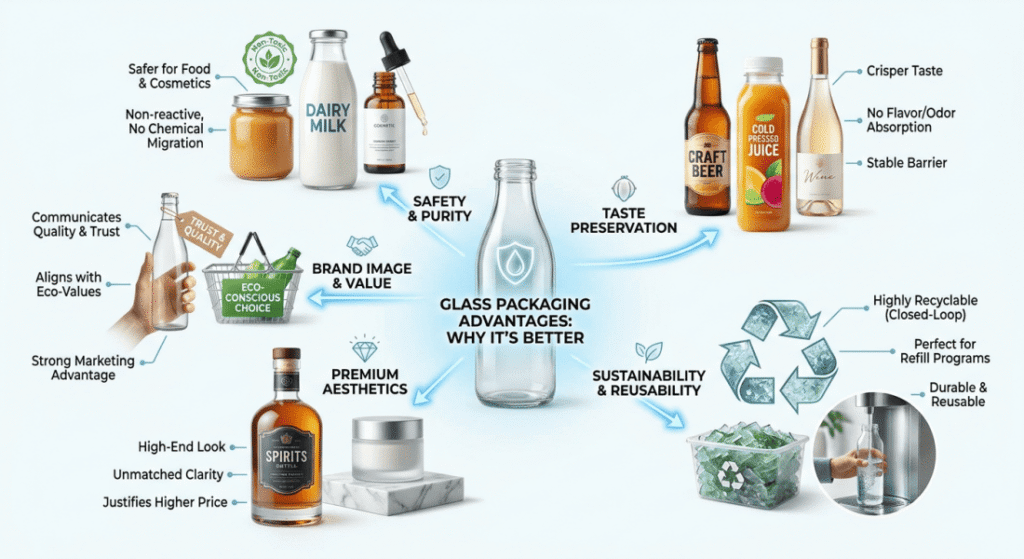
Glass is non-toxic and non-reactive, it is the safest choice for human consumption. It is the gold standard for glass containers for food, juices, dairy, and baby products. You never have to worry about chemicals migrating from the bottle into the product, ensuring your customers are getting exactly what they paid for.
Glass preserves taste and product purity
Glass does not absorb flavors or odors. If you are bottling a premium craft beer, a delicate wine, or a high-end cold-pressed juice, using glass ensures a stable barrier against external contamination.
Glass is highly recyclable and reusable
Glass bottle recycling is a true closed-loop system. Furthermore, glass is perfect for refill programs. Reusable packaging solutions are becoming very popular, and glass holds up perfectly to being washed, sterilized, and reused multiple times.
Glass offers a premium aesthetic appeal
Whether you are using sleek premium glass bottles for a high-end spirit or unique frosted bottles for a skincare line, glass grabs attention and justifies a higher price point.
Glass enhances brand image and product value
If you are aiming for the premium market, choosing glass helps you stand out and build a loyal customer base that appreciates high standards.
Glass supports sustainable packaging goals
By choosing eco friendly glass bottles, you align your brand with the eco-conscious values of modern consumers, turning your packaging choice into a strong marketing advantage.
The Main Drawbacks of Plastic Bottles
To fully understand the benefits of glass containers over plastic, we must honestly evaluate the limitations of plastic packaging.
Chemical concerns in some plastic applications
While not all plastic is dangerous, there are valid concerns about the chemicals used in plastic production. Many consumers actively try to avoid BPA in plastic bottles, as well as phthalates and microplastics. Even BPA-free plastics can sometimes leach other chemicals when exposed to high temperatures during shipping or storage.
Environmental impact of plastic waste
The plastic bottle environmental impact is one of the most pressing global issues today. Plastic pollution litters our oceans and landscapes. Because plastic takes hundreds of years to break down—and even then, only into harmful microplastics—its long-term footprint is incredibly damaging.
Limited durability for repeated use
If you want to offer refillable options, plastic will eventually let you down. It scratches easily, can warp in hot water, and discolors over time. Repeated washing degrades the material, shortening its lifespan significantly compared to glass.
Is Glass Always Better? Pros and Cons to Consider
To make the best decision for your business, you need a balanced view of glass versus plastic.
Advantages of glass bottles
As we’ve discussed, glass gives you unbeatable product protection, a superior brand image, and a much better sustainability profile. It is the undisputed champion for premium and health-focused products.
Situations where plastic may still be used
We have to acknowledge that glass is heavier and it can break. If your product is meant for outdoor sports, hiking, or environments where broken glass poses a severe safety risk (like swimming pools), plastic might be a practical necessity. Additionally, because plastic is lighter, it costs less to ship over long distances, which can be a factor for budget-conscious, high-volume, low-margin products. However, many brands find that the increased sales and brand loyalty generated by glass more than make up for the shipping weight difference.
Which Products and Industries Are Best Suited for Glass Bottles?
Different industries leverage glass in different ways. If you operate in any of the following sectors, glass should be at the top of your list.
Beverage packaging
When you ask is glass bottled water better than plastic, the taste alone says yes. This applies to all beverages. From premium mineral water and craft sodas to beers, wines, and spirits, glass bottles for beverages protect carbonation and prevent oxidation better than any other material.
Food packaging
Sauces, olive oils, syrups, and dressings thrive in glass. Glass prevents oils from going rancid quickly and keeps acidic sauces from interacting with the packaging.
Cosmetics and personal care
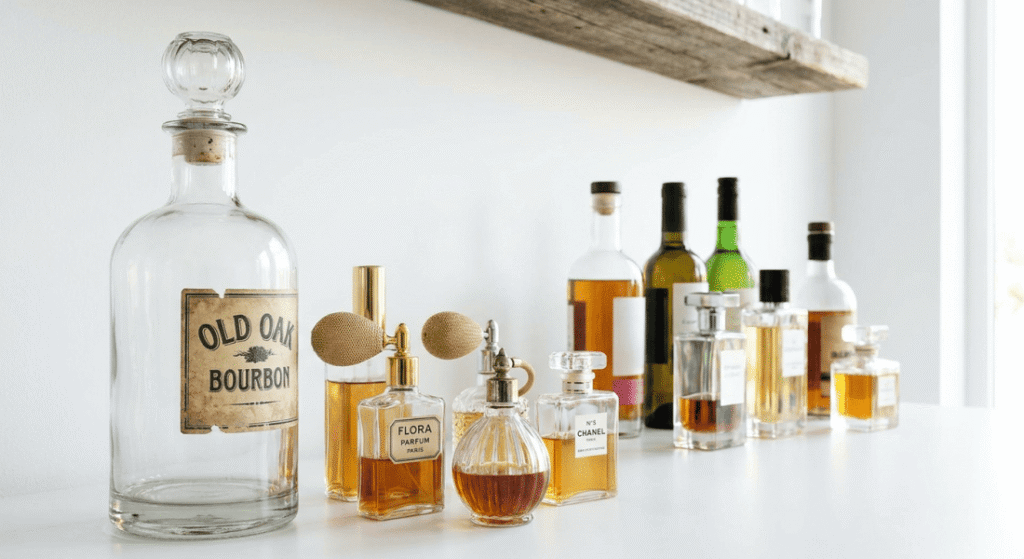
The beauty industry relies heavily on presentation. Cosmetic glass bottles and perfume glass bottles add a heavy, luxurious feel to serums, essential oils, and fragrances. Furthermore, because many essential oils are highly concentrated, they can actually dissolve certain plastics, making glass an absolute necessity.
Health and wellness products
Supplements, tinctures, and functional wellness drinks are often packaged in glass to signal purity and health. Consumers buying wellness products do not want their healthy choices housed in synthetic plastics.
Best Practices for Using, Cleaning, and Reusing Glass Bottles
If you are implementing a refill program or simply want to educate your customers, knowing how to handle reusable glass bottles is essential.
How to clean glass bottles properly
To keep glass pristine, it should be washed with warm water and a mild detergent. For commercial reuse, glass can easily withstand the high heat of industrial sterilization processes, which is why it is perfect for dairy and beverage refill programs.
How to store glass bottles safely
While glass is strong, it is rigid. To prevent breakage, you should avoid subjecting the bottles to severe thermal shock (moving rapidly from freezing cold to boiling hot). In a warehouse setting, ensure they are stored securely and moved using proper protective dividers in the transit cartons.
Tips for reusing glass bottles
Before reusing any glass container, always inspect it. Look for tiny cracks, chips on the rim, or deep scratches. As long as the structural integrity of the bottle is intact, it can be safely washed and reused indefinitely.
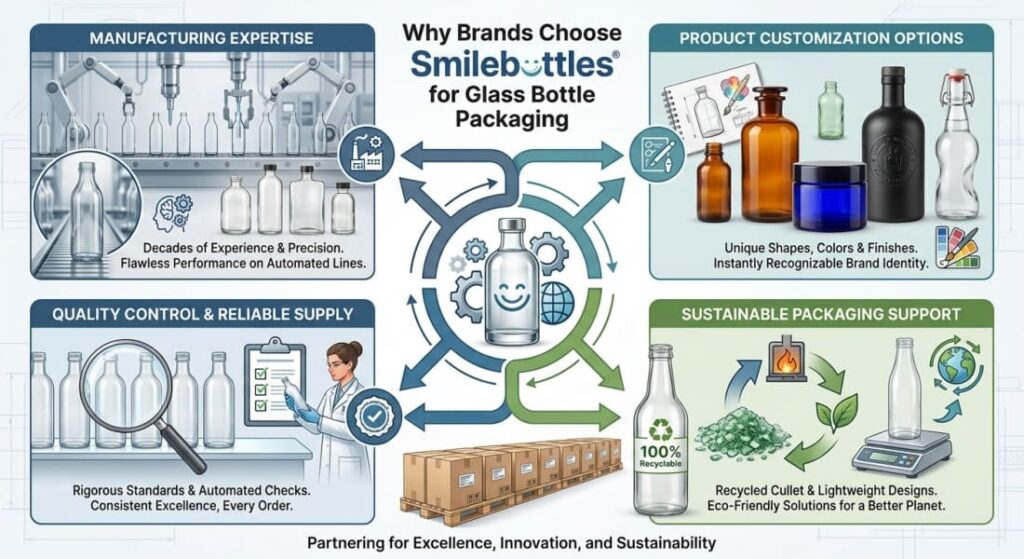
Why Brands Choose Smilebottles for Glass Bottle Packaging
Finding the right packaging is only half the battle; finding the right partner to supply it is just as critical. If you are looking for a reliable glass bottle manufacturer, you need a company that understands your specific industry needs.
Manufacturing expertise
As an experienced glass packaging manufacturer, Smilebottles has spent years perfecting the art of glass production. We understand how crucial it is to have bottles that don’t just look good but perform flawlessly on your automated filling lines.
Product customization options
Your brand is unique, and your packaging should be too. We offer extensive options for custom glass bottles. Whether you need a unique shape, a specific color, or specialized neck finishes, we can design and produce bottles that make your brand instantly recognizable.
Quality control and reliable supply
As a trusted glass bottle supplier, we implement rigorous quality control standards at every stage of production. From raw material inspection to final automated checks, we ensure consistency across every order.
Sustainable packaging support
We know that reaching your sustainability goals is important. As a sustainable packaging manufacturer, we optimize our production processes to include recycled cullet and work with you to design lightweight glass options that maintain strength while reducing shipping impacts. We provide premium packaging solutions that are as kind to the earth as they are beautiful.
FAQ: Frequently Asked Questions About Glass Bottles
As you plan your packaging strategy, you likely have some specific questions. Here are clear answers to the most common queries brands and consumers have.
Q1:Are glass containers better than plastic for food safety?
A1: Yes. Glass is non-reactive and impermeable. It does not contain harmful chemicals that can migrate into food, especially when heated, making it significantly safer for long-term food storage.
Q2:Is glass or plastic better for the environment?
A2:Yes, because they can be recycled infinitely without quality loss, and they don’t break down into toxic microplastics. While shipping heavier glass uses more fuel, localized recycling and reuse programs make glass highly sustainable. If you are asking why is glass better than plastic for the environment, it comes down to circularity—glass can truly be a zero-waste product.
Q3:Why do drinks taste better in glass bottles?
A3:Drinks taste better in glass because the material is inert. It doesn’t absorb flavors from previous contents, nor does it impart any plastic or metallic taste into the liquid. It also holds carbonation much better.
Q4:Can glass bottles be reused many times?
A4:Absolutely. One of the greatest benefits of glass packaging is its durability for reuse. As long as the bottle is not chipped or cracked, it can be cleaned, sterilized, and refilled hundreds of times.
Q5:What products are best stored in glass bottles?
A5:Any product where taste, purity, and shelf appeal are critical. This includes premium waters, juices, spirits, sauces, essential oils, and luxury cosmetics.
Conclusion
Glass provides an uncompromised barrier that protects the safety and flavor of your products. It aligns with global sustainability goals through infinite recyclability and offers the premium, trustworthy aesthetic that modern consumers demand. If you want to communicate quality, safeguard your product’s integrity, and build lasting trust with your customers, choosing glass is a powerful business decision.
If you are ready to explore high-quality, sustainable packaging for your brand, Smilebottles is here to help you find or create the perfect recyclable glass bottles to make your product shine.
 English