Índice
AlternarAutor: Equipo editorial de SmileBottles
Tiempo estimado de lectura: Aproximadamente 16 minutos
Glass is a sustainable choice for beauty and wellness brands because it can be recycled many times, it holds up well when it’s reused or refilled, and it protects sensitive formulas from air, moisture, and (in amber or other tinted glass) light. Add its clean, premium look, and it’s easy to see why so many brands are moving toward sustainable glass packaging.
Glass isn’t perfect, though. It’s heavier than plastic, it can break, and recycling access depends on where your customers live. This guide covers both sides, so you can decide whether glass fits your products, your customers, and your budget, and which bottles and jars to choose if it does.
What Is Sustainable Packaging in the Beauty and Wellness Industry?
Before you compare materials, it helps to agree on what “sustainable” means. Many people take it to mean “recyclable.” That’s part of it, but it isn’t the whole picture.
In beauty and wellness, sustainable packaging needs to balance several things at once: safe materials, recyclability, reuse potential, durability, formula protection, efficient shipping, and long-term brand value. A container that’s technically recyclable but lets your serum oxidize in three months isn’t helping anyone. You’ll end up with wasted product, unhappy customers, and returns, and all of that has an environmental cost too.
That’s why beauty packaging sustainability is about the full life of the product, not just the moment the empty container goes into a bin. Good sustainable beauty packaging keeps the formula stable, holds up during shipping, and has a clear path to recycling or reuse at the end. The same goes for sustainable wellness packaging, where many products, such as oils, tinctures, and aromatherapy blends, react to light and air.
In other words, you’re looking for packaging that protects product quality while also cutting down on waste. Those two goals work together far more often than people expect.
Key Questions to Ask When You Evaluate Packaging
When you compare packaging options, these questions can keep you focused:
- Can the material be recycled in the markets where you sell?
- Can the container be reused or refilled?
- Does it protect your formula from light, air, and contamination?
- Does it survive shipping without excessive outer packaging?
- Does it fit the image your brand wants to project?
If a material scores well on most of these, it’s probably a sound choice. Glass tends to do well on all five, with shipping being the one you’ll need to plan around.
Why Glass Packaging Is Highly Recyclable
To understand why glass packaging is sustainable, start with recycling. Glass is made mostly from sand, soda ash, and limestone, and it can be melted down and remade into new containers many times without losing its basic quality. A glass bottle can, in principle, become another glass bottle again and again. Most plastics can’t do that, because they tend to degrade a little with each recycling cycle.
Crushed recycled glass, called cullet, also melts at a lower temperature than raw materials. The Glass Packaging Institute notes that adding more cullet to a furnace reduces the energy needed to make new glass. Less energy means lower emissions per bottle.
So, is glass packaging sustainable from a recycling point of view? In most cases, yes. Recyclable glass packaging is among the easiest packaging for consumers to understand and for recycling facilities to sort, especially when the bottle or jar is a single material with a separate cap.
Why Consumer Recognition Matters
Most of your customers already know that glass goes in the recycling bin. That might sound like a small thing, but it matters. Packaging only gets recycled if people put it in the right place. Mixed-material tubes, pumps with metal springs, and multi-layer pouches often confuse people, and they end up in general waste.
Glass is familiar. When your customer finishes a jar of face cream, there’s a good chance they’ll rinse it and recycle it, or keep it for something else. That familiarity makes glass a strong choice if you want recyclable beauty packaging that people will actually recycle.
Recycling Rates Depend on Where You Sell
You should know that results vary by region. In the EU, glass container collection for recycling is around 80%, according to the European Container Glass Federation (FEVE). In the United States, the EPA has reported much lower glass container recycling rates, roughly 31% in its most recent detailed data. Some areas have bottle collection programs. Others don’t take glass curbside at all.
This doesn’t mean glass is a poor choice in lower-recycling markets. It means you should check the recycling setup where your customers live, give them clear disposal instructions on your label, and think about reuse as a second end-of-life option.
How Glass Packaging Supports Reuse and Refill Models
Recycling is useful, but reuse is often better. Every time a container is used again, you avoid making a new one. This is where glass really stands out.
Glass is tough, it doesn’t stain easily, it doesn’t hold onto smells the way some plastics do, and it can be washed and sanitized many times. That makes reusable glass packaging a natural fit for brands that want to keep their containers in use longer.
More brands now offer refill pouches, in-store refill stations, or “return and refill” programs. If you plan to do the same, refillable glass packaging gives you a container sturdy enough to last through many cycles. Your customer keeps the nice bottle on their bathroom shelf and buys a lower-waste refill when they run out. It’s one of the most practical forms of refillable beauty packaging, and it often encourages repeat purchases, because the customer is already set up with your system.
Even without a formal refill program, people reuse glass at home. An empty cream jar becomes a container for cotton pads. A small bottle gets reused for a homemade facial oil blend. That second life is a quiet sustainability win, and it keeps your brand visible in their home a little longer.
Product Types That Work Well for Reuse or Refill
If you’re thinking about a reuse or refill strategy, these formats tend to work best:
- Serum bottles and glass dropper bottles for facial oils
- Thick-walled skincare jars for creams, balms, and masks
- Essential oil and aromatherapy bottles
- Wellness oil bottles and massage oil containers
- Heavier jars for home fragrance and spa products
Pick sturdy glass with standard neck finishes. That way, replacement caps, pumps, and droppers are easy to find, and refills fit properly.
How Glass Packaging Protects Product Quality and Helps Reduce Waste
Here’s a point people often miss: a container that doesn’t protect your formula creates waste, even if the container itself is recyclable. Spoiled product, leaking bottles, and returns all add up.
Glass is non-porous and chemically stable. It doesn’t let oxygen or moisture through the walls, and it’s very unlikely to react with what’s inside. For active ingredients, natural extracts, and oils, that stability makes a real difference. This is a big reason why glass packaging for skincare is so common for serums, face oils, and treatments with vitamin C, retinol, or botanical extracts.
Color matters too. Amber glass blocks much of the UV and blue light that can break down sensitive ingredients. That’s why amber glass bottles for essential oils are the standard across the aromatherapy industry. Cobalt blue and violet glass offer some protection as well, while clear glass works best for formulas that aren’t light-sensitive, or for products sold in an outer box.
If you’re trying to work out the best packaging for essential oils, the answer for most brands is simple: dark glass with a tight-sealing cap and an orifice reducer or dropper. Essential oils can soften or react with some plastics over time, so essential oil glass bottles are the safer long-term choice.
Why This Matters for Sensitive Formulas
Glass is especially useful for:
- Essential oils and aromatherapy blends
- Botanical and herbal extracts
- Facial serums with active ingredients
- Natural skincare with few or no synthetic preservatives
- Some fragrance and wellness oils
If your formula falls into one of these groups, the protective benefit of glass may matter as much as its recyclability.
Why Glass Packaging Fits Premium and Sustainable Brand Positioning
Packaging tells your customer what to expect before they open anything. In beauty and wellness, that first impression carries a lot of weight.
Glass feels solid and cool in the hand. It looks clean and clear. People tend to associate it with purity, quality, and care, which is exactly what most skincare and wellness brands want to communicate. That’s why premium glass packaging is so often chosen for higher-priced lines, and why luxury glass packaging remains the standard in fine fragrance and prestige skincare.
The good news is that you don’t have to pick between looking premium and being responsible. Sustainable premium packaging is quite achievable with glass, because the same qualities that make it feel high-end (weight, clarity, durability) are what make it reusable and long-lasting.
Glass works especially well as glass packaging for natural beauty brands. If your brand story is about clean ingredients, botanicals, or an apothecary feel, plastic can feel out of step. Simple amber bottles, frosted jars, and minimal labels help your packaging match your message.
Why Packaging Perception Matters in Beauty
Customers notice packaging more than you might think. It affects:
- How your product stands out on a shelf or a product page
- The unboxing moment, which customers often share online
- How much they trust the product inside
- Whether your price feels fair
- How easily they can tell you apart from competitors
Best Beauty and Wellness Products for Glass Packaging
Glass isn’t the right fit for every product, but it suits a wide range of beauty and wellness categories. Here’s how to think about the main ones.
Skincare Packaging
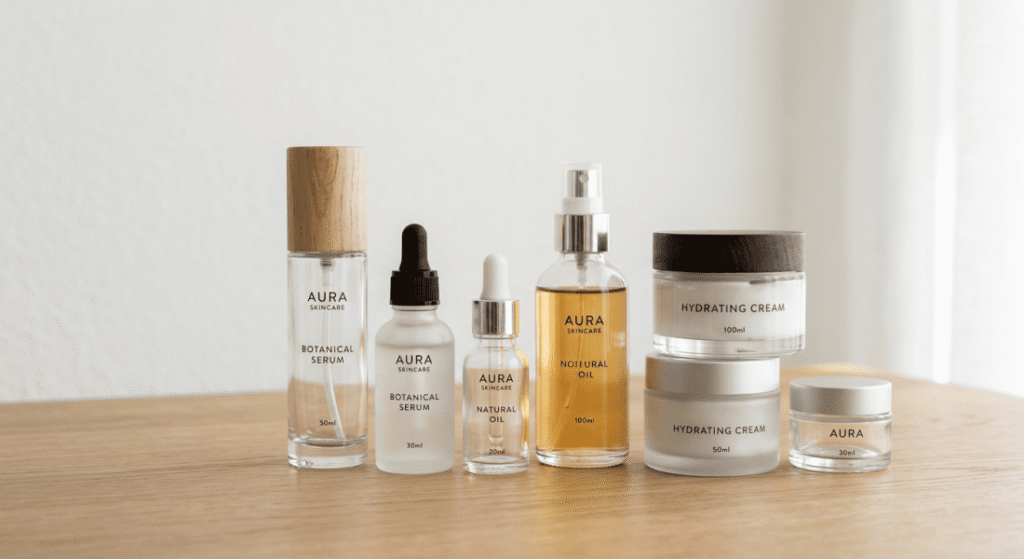
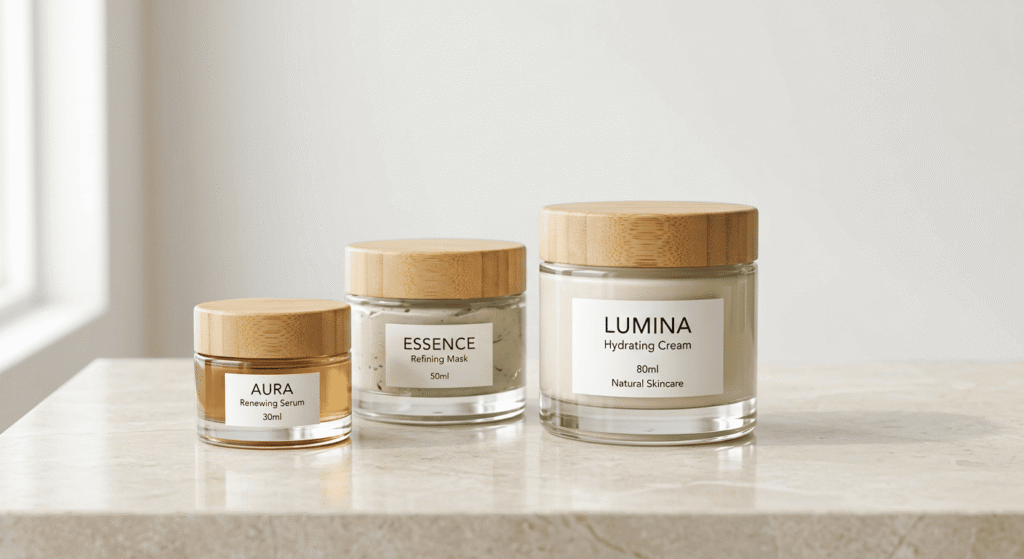
Serums, facial oils, essences, toners, lotions, creams, and masks all work well in glass. For liquids, skincare glass bottles with droppers, pumps, or treatment caps give you precise dosing and a clean look. For thicker products like creams, balms, and masks, glass jars for skincare are a classic choice, especially with a wide mouth that makes the product easy to scoop.
Frascos de vidrio para cosméticos come in a wide range of shapes and sizes, from slim 15 ml serum bottles to 100 ml lotion bottles with pumps. Cosmetic glass jars are just as varied, from small 5 g eye cream jars to larger 100 g body butter jars. If you’re unsure about the best packaging for skincare products, start with the texture of your formula, how the customer will dispense it, and whether it reacts to light.
Essential Oils and Aromatherapy Packaging
This is the category where glass is almost the default. Dropper bottles let your customers measure out drops easily, and roller bottles are ideal for pre-diluted blends that go straight onto the skin. Amber glass is the most common choice here because it protects the oils from light.
When you plan packaging for aromatherapy products, think about how the product will be used. A diffuser blend needs a bottle with an orifice reducer. A massage blend may work better with a pump or a wider neck. A pocket-sized blend calls for a small roller. Glass packaging for aromatherapy gives you all of these options in one material family, which also keeps your product line looking consistent.
Wellness and Personal Care Packaging
Massage oils, body oils, tinctures, bath salts, spa products, and home fragrance all work well in glass. Heavier jars with wooden or metal lids are popular for candles and bath products. That’s part of why so many shoppers search for candle jars glass options instead of tin or plastic. Glass looks better once lit, and many customers reuse the jar afterward.
If you’re building out sustainable packaging for wellness products, glass lets you keep a clean, unified look across oils, balms, candles, and bath items.
Perfume and Fragrance Packaging
Fragrance has always relied on glass. Perfume glass bottles protect the delicate balance of a scent and won’t absorb or alter it the way some plastics can. Glass also gives you a lot of room for design, from heavy bases and custom shapes to frosting, colored coatings, and decorative caps. For niche perfumers and home fragrance brands alike, fragrance glass packaging remains the most trusted option.
Glass vs Plastic Packaging: Which Is More Sustainable for Beauty Brands?
The glass vs plastic packaging debate doesn’t have a one-size-fits-all answer. Each material has strengths, and the right choice depends on your product, your shipping routes, and your customers.
Plastic is lighter, so it usually costs less to ship and has a lower transport footprint per unit. It’s also less likely to break. Glass, on the other hand, is easier to recycle into new containers, better for reuse, more stable with sensitive formulas, and more premium in look and feel.
When it comes to glass vs plastic for skincare packaging specifically, glass often wins for serums, oils, and active formulas, where ingredient stability matters most. Plastic may make more sense for travel sizes, products used in the shower, or products shipped long distances in large volumes.
|
Factor |
Glass Packaging |
Plastic Packaging |
|
Recyclability |
Can be recycled many times |
Varies by resin type and local systems |
|
Reuse potential |
Often high |
Often lower |
|
Aspecto y tacto de alta calidad |
High |
Varies |
|
Formula compatibility |
Strong with oils, actives, and fragrance |
Depends on plastic type |
|
Shipping weight |
Heavier |
Lighter |
|
Breakage risk |
Higher if poorly packed |
Menor |
|
Brand image |
Clean, premium, responsible |
Broad, from mass to premium |
The best approach is to look at each product on its own. Many brands use glass for their core serums, oils, and creams, and a lighter option for travel kits or shower products. That mixed approach can still count as eco friendly cosmetic packaging, as long as each choice is a sensible one.
The Main Glass Packaging Benefits for Your Brand
If you want a quick recap before moving on, here are the core glass packaging benefits for beauty and wellness brands:
- Recyclable many timeswithout major loss of quality
- Reusable and refillable, so containers can last much longer
- Chemically stable, so it won’t react with most formulas
- Strong barrieragainst air and moisture
- Light protectionwhen you choose amber or other tinted glass
- Premium feelthat supports higher price points
- Flexible design, with many shapes, colors, and decoration options
The benefits of glass packaging for cosmetics go beyond sustainability alone. Glass protects your formula, supports your brand image, and gives customers a better experience. When you add up these advantages of glass packaging, it’s clear why glass packaging for beauty products remains so popular, even with lighter materials available.
Challenges to Consider When Choosing Glass Packaging
You’ll make a better decision if you go in with your eyes open. Glass does come with a few challenges.
Weight. Glass is heavier than plastic, which increases shipping costs and transport emissions. Lighter-weight glass designs can help, as can choosing sizes that don’t use more material than needed.
Breakage. Glass can crack or shatter if it isn’t packed well. You’ll need good dividers, inserts, or molded pulp trays, especially for e-commerce orders.
Closure fit. A bottle is only as good as its seal. If the neck finish and the cap don’t match well, you can get leaks, evaporation, or contamination. This is one of the most common problems brands run into, and it usually comes down to buying bottles and closures from different sources without checking compatibility.
Supplier consistency. Small variations in glass thickness, neck size, or color can cause problems on filling lines and with closures. That’s why the glass packaging supplier you work with matters as much as the bottle design.
What to Ask a Glass Packaging Supplier
Whether you’re talking to a glass bottle manufacturer directly or a cosmetic bottle supplier that sources from several factories, these questions will help you compare options:
- Can they recommend closures that match each bottle’s neck finish?
- What quality checks do they run on wall thickness, dimensions, and color?
- How do they pack orders for export to reduce breakage?
- Can they handle decoration such as frosting, screen printing, or hot stamping?
- What are their minimum order quantities and lead times?
- Do they have experience with beauty, skincare, and essential oil packaging?
Clear answers here can save you from costly problems once production starts.
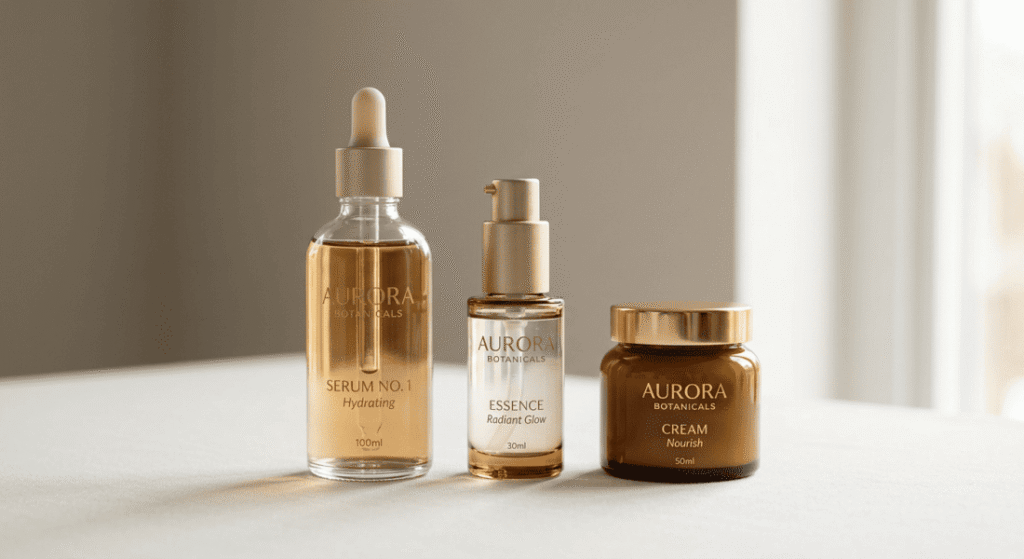
glass cosmetic bottles
How to Make Glass Packaging More Sustainable in Practice
Choosing glass is a good start. How you use it makes the bigger difference. Here are practical ways to make your eco friendly glass packaging work harder:
Choose the right size. Don’t use a 50 ml bottle for 30 ml of product. Extra glass adds weight, cost, and shipping emissions.
Match the container to the formula. Use amber glass for light-sensitive products, and droppers or pumps that suit the product’s thickness.
Plan for reuse or refill. Standard neck sizes and durable designs make refilling easier for your customers.
Cut down outer packaging. Glass often looks good on its own, so you may not need heavy boxes, plastic inserts, or extra wrapping.
Use matched closures. A good seal reduces leaks and product loss.
Improve shipping protection. Recyclable paper or pulp inserts can protect glass without adding plastic.
Keep decoration simple where it counts. Some heavy coatings or bonded parts can make recycling harder. If recyclability is a top priority in your target market, simpler finishes may be the better choice.
Use customization wisely. Custom glass packaging can help your brand stand out, but think about how each design choice affects weight, recyclability, and cost. Custom cosmetic glass bottles with a distinctive shape or a simple printed logo can look great without making recycling harder.
Sustainable Glass Packaging Checklist for Beauty Brands
- Choose a recyclable, durable glass container
- Match the bottle or jar to your formula’s needs
- Avoid unnecessary size or weight
- Look into refill or reuse options
- Reduce extra outer packaging
- Confirm closure compatibility before ordering in bulk
- Work with a reliable, experienced supplier
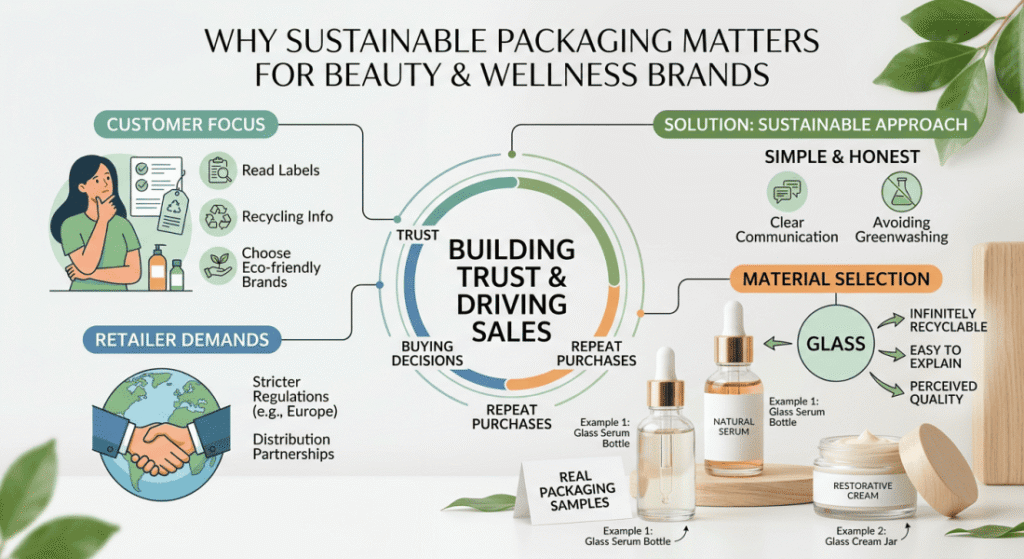
Why Sustainable Packaging Matters More Than Ever for Beauty and Wellness Brands
Your customers are paying more attention to packaging waste than ever before. Many read labels, look for recycling information, and choose brands that seem to take the issue seriously. Retailers and distributors often ask about packaging, too, especially in Europe, where packaging regulations keep getting stricter.
That makes sustainable packaging for beauty brands more than just a nice extra. It affects trust, buying decisions, and repeat purchases. For sustainable packaging for skincare brands, where customers often care about what goes on their skin and where it comes from, packaging is part of the same promise.
The brands that do this well tend to keep things simple and honest. They choose good materials, explain how to recycle or reuse them, and avoid big claims they can’t back up. Glass helps here because it’s easy to explain and easy for customers to understand.
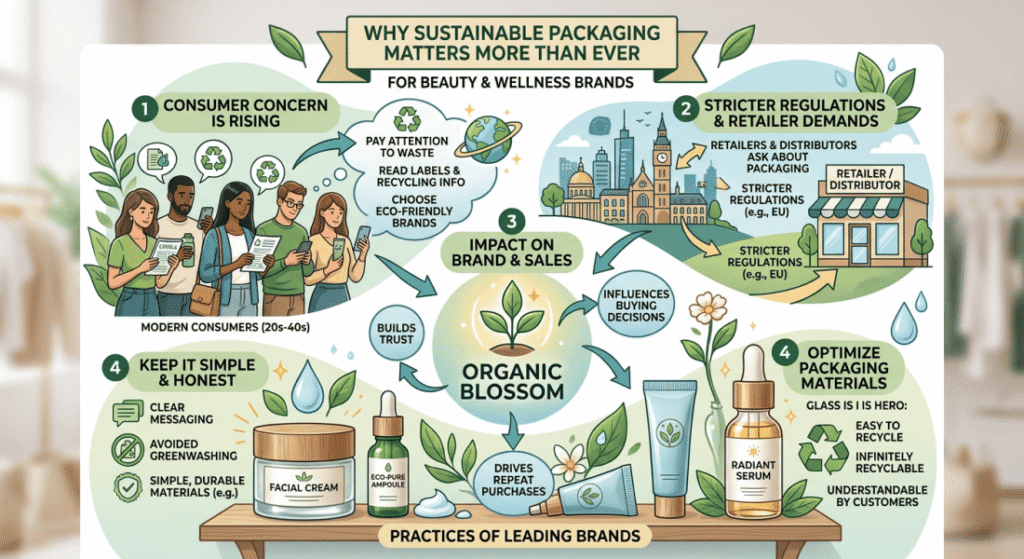
Why Sustainable Packaging Matters More Than Ever for Beauty and Wellness Brands
Preguntas frecuentes: Frequently Asked Questions About Glass Packaging Sustainability
P1:Is glass packaging more sustainable than plastic?
A1:In many beauty and wellness uses, yes, especially when recyclability, reuse, and product protection matter. Glass can be recycled many times and reused easily. However, it’s heavier to ship, so for some products and long shipping routes, plastic may have a lower transport footprint. The best choice depends on your product, your logistics, and local recycling systems.
Pregunta 2:Why is glass often used for skincare and essential oils?
A2:Glass is chemically stable and non-porous, so it doesn’t react with most formulas or let air through. Amber glass also blocks much of the light that can break down oils and active ingredients. That’s why glass is so widely used for serums, facial oils, and essential oils.
Pregunta 3:Can glass bottles and jars be reused?
A3:Yes. Glass can be washed and sanitized many times, which makes it well suited to refill programs and home reuse. Choosing standard neck sizes makes it easier to replace caps, pumps, and droppers over time.
Pregunta 4:Is all glass packaging recyclable?
A4:Most glass bottles and jars are recyclable, but local collection varies. Some areas have high glass recycling rates, while others don’t collect glass curbside. Certain decorations, coatings, or attached parts can also affect recycling. Adding clear recycling instructions to your label helps your customers do the right thing.
Pregunta 5:What beauty products are best suited to glass packaging?
A5:Serums, facial oils, essential oils, creams, balms, lotions, wellness oils, perfume, and home fragrance products all work well in glass. These products often benefit from glass’s protective qualities and its premium look.
Conclusión
What makes glass packaging sustainable isn’t one feature on its own. It’s the combination: glass can be recycled many times, reused and refilled, it protects sensitive formulas, and it gives your products a clean, premium feel that customers trust. For skincare, essential oils, aromatherapy, fragrance, and wellness products, that combination is hard to beat. Glass still needs careful planning. Weight, breakage, and closure fit all deserve attention, and the right sizes, protective shipping, and matched components make a real difference. If you get those details right, glass can serve your products, your customers, and your sustainability goals at the same time.
If you’re comparing bottles and jars for your next product line, it helps to talk with a sustainable cosmetic packaging supplier who understands both the material and your market. At Smilebottles, we work with beauty and wellness brands to match glass bottles, jars, and closures to each formula and brand style, and we’re happy to help you work through the options when you’re ready.