
Table of Contents
ToggleAuthor: SmileBottles Editorial Team
Estimated Reading Time: About 16 Minute
If you run a distillery, a beverage brand, or a private label business, one of the questions you probably ask early on is simple: should you package rum and whiskey in the same kind of bottle, or do they need something different? It sounds like a small detail, but the bottle you choose says a lot about your product before anyone even opens it. The shape, the weight, the color of the glass, even the closure on top — all of these send a message to the person picking your bottle off the shelf. And because rum vs whiskey are two very different spirits, the packaging choices tend to follow different paths.
This article walks you through what really separates these two spirits, how those differences shape liquor bottle packaging, and how you can pick the right glass for your own brand. Whether you’re launching your first product or refreshing an existing line, the goal here is to help you make a better decision — not just a prettier one.
Introduction: Why Rum and Whiskey Need Different Glass Packaging
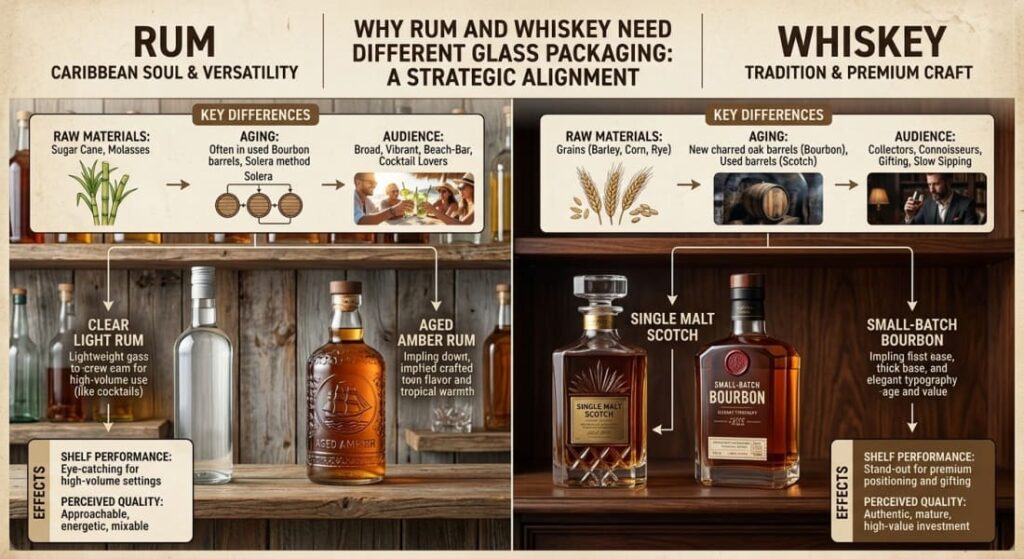
Rum and whiskey sit on the same shelf, but they don’t come from the same place. They’re made from different raw materials, aged in different ways, and they usually reach different types of drinkers. So when you’re planning your bottle, thinking of both of them as “just brown liquor” can lead you in the wrong direction.
A rum bottle design built for a beach-bar audience won’t do much for a small-batch bourbon aimed at collectors. A heavy, square whiskey decanter won’t feel right for a light silver rum sold as a mixer. Getting this alignment wrong isn’t just an aesthetic mistake — it affects pricing, shelf performance, and even how buyers perceive your quality.
That’s why understanding the difference between rum and whiskey matters before you sign off on any bottle mold or closure.
What Is Rum?
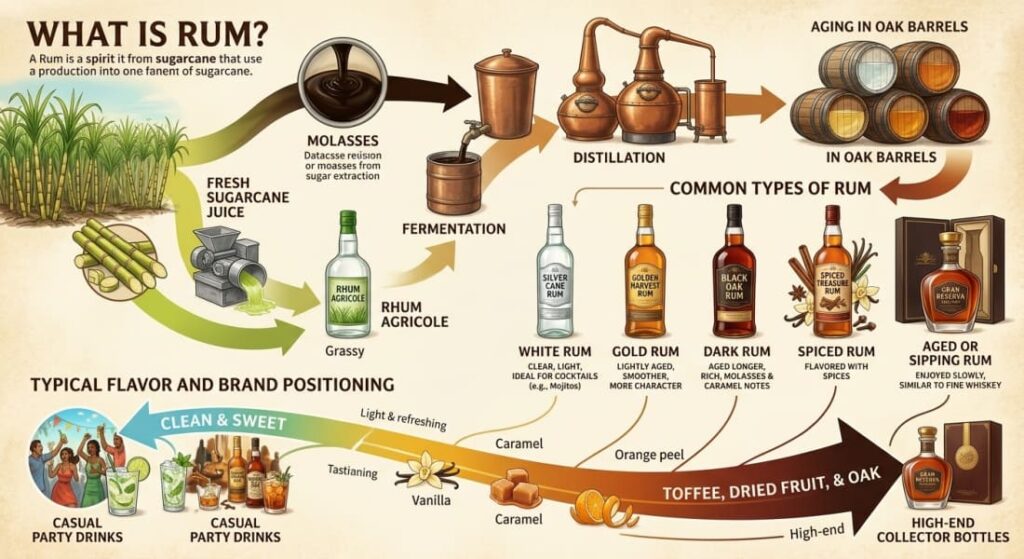
If you’ve ever wondered what is rum, the short answer is this: it’s a spirit made from sugarcane. Some producers use fresh sugarcane juice, but most use molasses, which is what’s left after sugar is extracted from the cane. That base gets fermented, distilled, and sometimes aged in oak barrels before it’s bottled.
Rum has a long history tied to the Caribbean, Latin America, and other tropical regions. Because sugarcane grows well in warm climates, that’s where most of the world’s rum still comes from today.
Main Raw Materials Used in Rum
The core ingredient is always sugarcane in one form or another. Molasses is the most common because it’s affordable and gives rum its rich, sweet backbone. Some premium rums use pure sugarcane juice, which produces a fresher, grassier flavor — this style is often called rhum agricole.
Common Types of Rum
You’ll usually see rum sorted into a few categories:
White rum — clear, light, often used in cocktails
Gold rum — lightly aged, smoother, a bit more character
Dark rum — aged longer, richer, with molasses and caramel notes
Spiced rum — flavored with spices like cinnamon, vanilla, or clove
Aged or sipping rum — meant to be enjoyed slowly, similar to how you’d drink a fine whiskey
Typical Flavor and Brand Positioning of Rum
Rum’s flavor swings wide. A white rum tastes clean and slightly sweet. A dark aged rum can taste like toffee, dried fruit, and oak. Because of that range, rum brands cover everything from casual party drinks to high-end collector bottles. Your packaging has to match wherever your product lands on that scale.
What Is Whiskey?
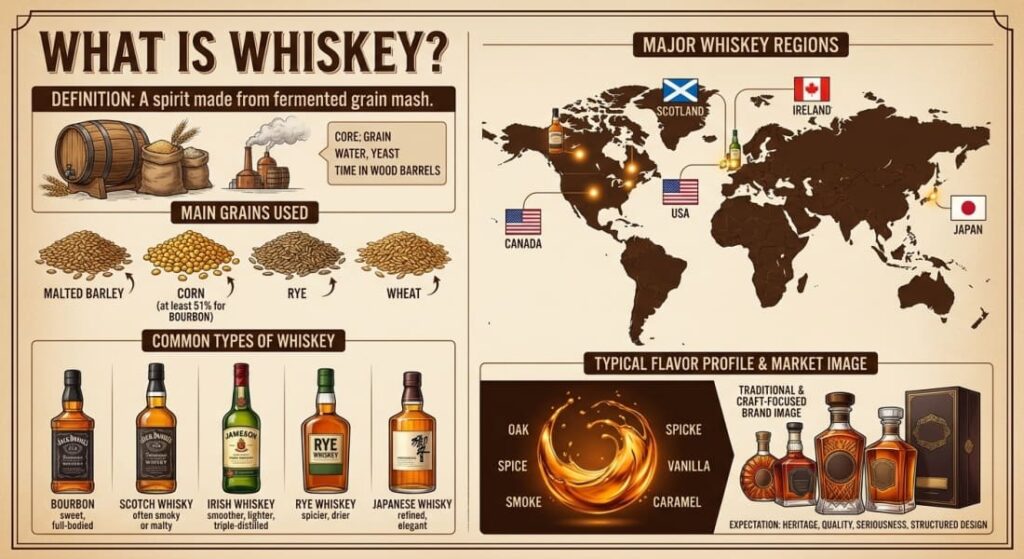
So then what is whiskey? Whiskey is a spirit made from fermented grain mash. Depending on where it’s made and what grains are used, you’ll see different styles — Scotch, bourbon, rye, Irish whiskey, Japanese whisky, and so on. All of them share one thing: grain, water, yeast, time in wood barrels.
Whiskey production is spread across the world, but the biggest names still come from Scotland, Ireland, the United States, Canada, and Japan.
Main Grains Used in Whiskey
The main grains include barley, corn, rye, and wheat. Bourbon must be made with at least 51% corn. Scotch leans heavily on malted barley. Rye whiskey uses — as you’d guess — rye. Each grain shapes the final flavor in its own way.
Common Types of Whiskey
The most common styles you’ll come across are:
Bourbon — American, corn-based, sweet and full-bodied
Scotch whisky — Scottish, often smoky or malty
Irish whiskey — smoother, lighter, triple-distilled in many cases
Rye whiskey — spicier, drier
Japanese whisky — refined, often compared to Scotch
Typical Flavor and Market Image of Whiskey
Whiskey tends to lean toward oak, spice, smoke, vanilla, and caramel. Its brand image usually feels traditional and craft-focused. Buyers expect heritage, quality, and a certain seriousness — which is why whiskey bottle design often looks more structured and classic than rum.
How Rum and Whiskey Are Made
Even if you’re not a distiller yourself, understanding how rum is made and how whiskey is made helps you make smarter packaging choices. The production style influences the final product’s color, weight, and price — and those things affect the bottle.
How Rum Is Made
Rum starts with molasses or sugarcane juice. That base gets diluted with water, fermented with yeast, and then distilled. Some rums go straight to bottling after distillation (that’s your white rum). Others are aged in oak barrels for anywhere from a few months to over 20 years.
Aging is where dark and premium rums pick up their color and depth. The longer it sits in wood, the richer and darker it gets.
How Whiskey Is Made
Whiskey starts with grain that’s mashed, fermented, distilled, and then — almost always — aged in oak barrels. Bourbon must be aged in new charred oak, which gives it that sweet vanilla character. Scotch is often aged in used barrels, which brings out different notes.
Aging is not optional for most whiskeys. That’s a big reason whiskey tends to carry a more premium image by default.
Why Production Methods Matter for Packaging
Here’s where it connects back to your bottle. Aged spirits are almost always sold at higher price points, and higher price points call for heavier, more refined liquor bottle packaging. If you’re producing a young white rum meant for cocktails, a lighter, simpler bottle usually makes more sense. If you’re bottling a 12-year aged whiskey, you’ll want thicker glass, a proper cork, and maybe a gift box.
Rum vs Whiskey: The Key Differences Explained
Let’s put the two side by side. This is where the difference between whiskey and rum becomes really clear, and where you can start thinking about how your bottle should reflect what’s inside.
Ingredient Differences
Rum comes from sugarcane. Whiskey comes from grain. That single difference sets off everything else — flavor, color, aging, market positioning. So no, is rum whiskey? No, it isn’t. And is whiskey rum? Also no. They’re different spirit families, even though people sometimes lump them together as “brown liquor.”
Flavor and Aroma Differences
Rum tends to be sweeter, with notes of caramel, tropical fruit, molasses, and spice. Whiskey leans drier, with oak, vanilla, smoke, and grain-forward flavors. In a sipping rum vs whiskey comparison, both can feel smooth and complex, but rum usually carries more natural sweetness.
Aging and Color Differences
Whiskey is almost always aged. Rum sometimes is, sometimes isn’t. This affects color: a white rum is clear, a bourbon is deep amber. When you’re planning packaging, clear glass makes sense for aged spirits because the color of the liquid is part of the appeal.
Brand Image and Consumer Expectations
Whiskey drinkers often expect tradition and craftsmanship. Rum drinkers can want anything from a fun tropical vibe to a serious, aged sipping experience. That range is why rum packaging design can feel more playful or more experimental, while whiskey packaging design usually plays it more classic.
A quick side-by-side:
Feature | Rum | Whiskey |
Base ingredient | Sugarcane/molasses | Grain (barley, corn, rye, wheat) |
Aging | Sometimes | Almost always |
Flavor | Sweeter, tropical, spiced | Oak, smoke, vanilla, spice |
Common bottle style | Flexible, varied | Structured, classic |
Typical closure | Cork or screw cap | Cork or bar top |
Brand feel | Casual to premium | Traditional, premium |
How Spirit Characteristics Influence Glass Bottle Packaging
Now let’s get practical. Your product’s character should guide your packaging. Here’s how the details usually break down.
Bottle Shape
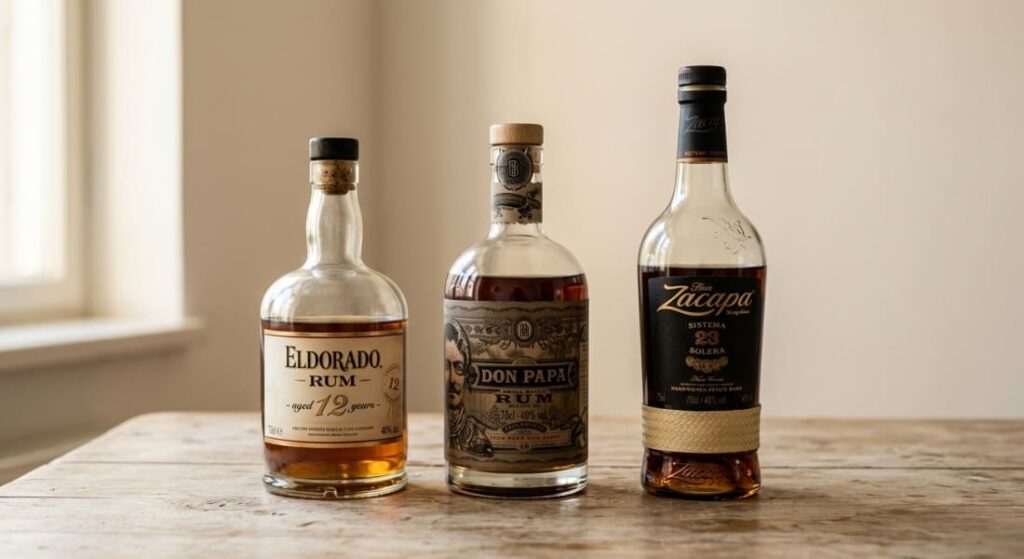
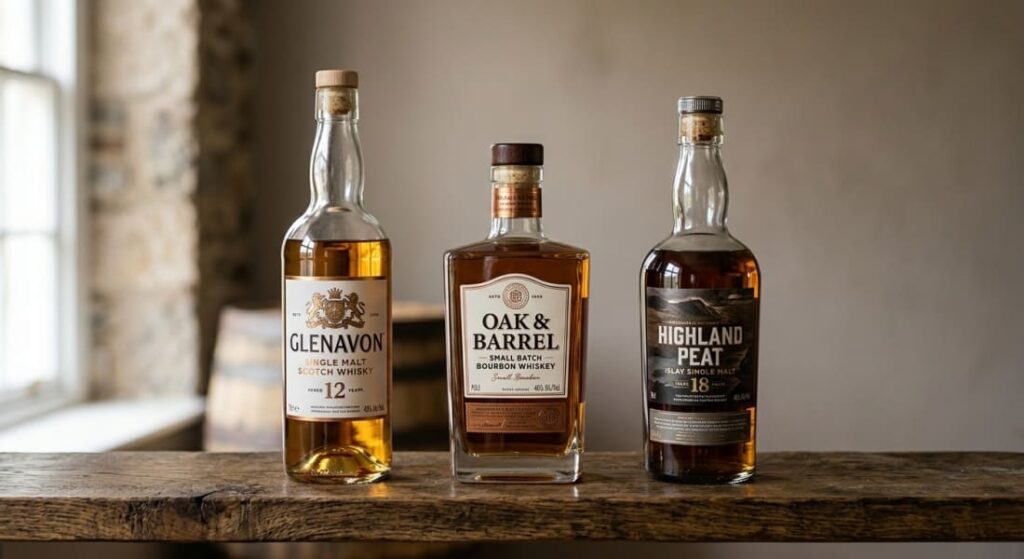
Rum bottles have more freedom. You’ll see tall and slim, rounded, curved, even bottles shaped like barrels or lanterns. Whiskey bottles usually stick closer to a few classic silhouettes — square shoulders, wide bases, short necks. That “solid, sturdy” look is part of the whiskey identity.
Bottle Weight and Glass Thickness
Heavier glass reads as premium. If you’re selling a top-shelf aged rum or a small-batch bourbon, thicker walls and a heavy base make the bottle feel substantial in the hand. For younger, cocktail-focused spirits, lighter glass is more practical and cheaper to ship.
Glass Color
Clear (flint) glass is the standard for both, mainly because customers want to see the color of the spirit. Amber or smoked glass shows up occasionally, usually for branding purposes or for products that want a moodier feel on the shelf.
Closure Types
You have a few options here:
Cork stoppers — feel premium, common for aged spirits
Bar top corks — the T-shape you see on most whiskey bottles
Screw caps — practical, cheaper, good for mixer-focused rums
Synthetic corks — consistent quality, no cork taint risk
For premium whiskey bottle packaging, a natural cork or bar top is almost expected. For rum, it depends on where your product sits in the market.
Decoration and Labeling
This is where your brand really comes through. Options include:
Embossing your logo directly into the glass
Silk screen printing
Hot stamping (gold, silver, copper)
Frosting for a matte finish
Custom paper labels with foil or texture
A well-designed label on a well-made bottle can do more for your sales than a bigger marketing budget.
Secondary Packaging
Gift boxes, tubes, wooden cases — these matter more for premium products. If you’re selling a 15-year aged whiskey or a limited-edition rum, secondary packaging adds perceived value and helps with gifting occasions.
Does Alcohol Content Affect Rum and Whiskey Glass Packaging?
People sometimes ask does rum have alcohol at a similar level to whiskey, and whether that changes the bottle. Let’s clear this up.
Typical ABV Range of Rum
Most rum alcohol content falls between 37.5% and 50% ABV. Overproof rums can go higher, sometimes up to 75%.
Typical ABV Range of Whiskey
Whiskey alcohol content usually sits between 40% and 50% ABV. Cask-strength whiskeys can reach 60% or more.
So is rum stronger than whiskey? Not really. Standard bottlings for both are in the same range. Overproof versions of either can push much higher.
Why Packaging Decisions Are About More Than ABV
Here’s the honest truth: alcohol content alone doesn’t force you to use a totally different bottle. Standard spirit-grade glass handles both rum and whiskey without issue. What actually drives your packaging decision is: Your brand positioning,Your price point,Your target market,Your closure compatibility,Shipping and durability needs.
Technical Considerations for Spirit Bottles
What you do need to check is that your bottle’s neck finish matches your closure, the glass thickness holds up to shipping, and the mold is compatible with your bottling line. These are things a good spirit bottle manufacturer will guide you through.
Rum Bottle Design vs Whiskey Bottle Design
Let’s look at this side by side, since it’s probably the part you care about most.
Common Bottle Styles for Rum
Rum brands often go with:
Tall, slim bottles with curved shoulders
Round bodies with a tropical or nautical feel
Decanter-style shapes for premium aged rums
Custom shapes that reflect Caribbean or Latin heritage
Because rum covers such a wide range, custom rum bottles are a popular route for brands that want to stand out.
Common Bottle Styles for Whiskey
Whiskey tends to stick to:
Square or rectangular bottles
Heavy, thick-based bottles for premium lines
Short-neck, wide-shoulder classics
Apothecary-inspired shapes for craft brands
Custom whiskey bottles are common too, but the customization usually stays within the classic whiskey visual language.
How Bottle Design Supports Brand Story
Your bottle is the first thing your customer touches. If your story is about heritage and craftsmanship, your bottle should feel weighty and traditional. If your story is about tropical warmth or modern craft distilling, your bottle can be more expressive. The point is to match the bottle to what your brand actually stands for.
How to Choose the Right Glass Packaging for Rum and Whiskey
Here’s a practical framework you can use.
Define the Spirit Category
Are you selling white rum? Aged bourbon? Spiced rum? Single malt? The specific category narrows your options quickly. A rum vs bourbon comparison, for example, would push you toward two very different bottle silhouettes.
Match the Bottle to Brand Positioning
Entry-level, mid-market, premium, ultra-premium — each tier has different expectations.
Select the Right Bottle Capacity
Common sizes include 50ml, 200ml, 375ml, 500ml, 700ml, 750ml, and 1L. In most markets, 700ml or 750ml is the standard for full-size bottles. Miniatures (50ml) work well for sampling and travel retail.
Choose the Right Closure
Cork for premium. Screw cap for practical. Bar top for classic whiskey. Match your closure to how your customer will use the bottle — a cocktail rum that gets opened and closed constantly is better with a screw cap, while a sipping whiskey shines with a natural cork.
Consider Decoration and Customization
Embossed logos add a tactile premium feel. Screen-printed labels look clean and modern. Hot stamping in gold or silver adds a luxury touch. Think about what your customer will notice first.
Think About Logistics and Sustainability
Heavier bottles cost more to ship and have a bigger carbon footprint. Lightweight glass is becoming more popular for brands that care about sustainability. There’s usually a middle ground between “premium feel” and “reasonable shipping cost” — a good custom glass bottle manufacturer can help you find it.
Work With an Experienced Glass Bottle Manufacturer
The right liquor bottle manufacturer will help you with mold design, closure fit, decoration options, and quality testing. If you’re planning to buy wholesale liquor bottles, you also want a partner who can hold consistent quality across large runs.
Why Quality Glass Packaging Matters for Rum and Whiskey Brands
The bottle isn’t just a container. It’s the physical piece of your brand that ends up in someone’s hand, on their shelf, at their party, in their gift bag. A cheap-feeling bottle undermines an expensive product. A well-made bottle can lift a mid-priced spirit into premium territory.
Good packaging also protects your product from light, minor impacts during shipping, and long-term storage. If you’re selling internationally, that matters even more.
And on a practical level, consistent bottle quality means fewer breakages on your bottling line, fewer complaints from distributors, and a cleaner shelf presence.
Why Smilebottles Is a Trusted Glass Bottle Partner for Rum and Whiskey Brands
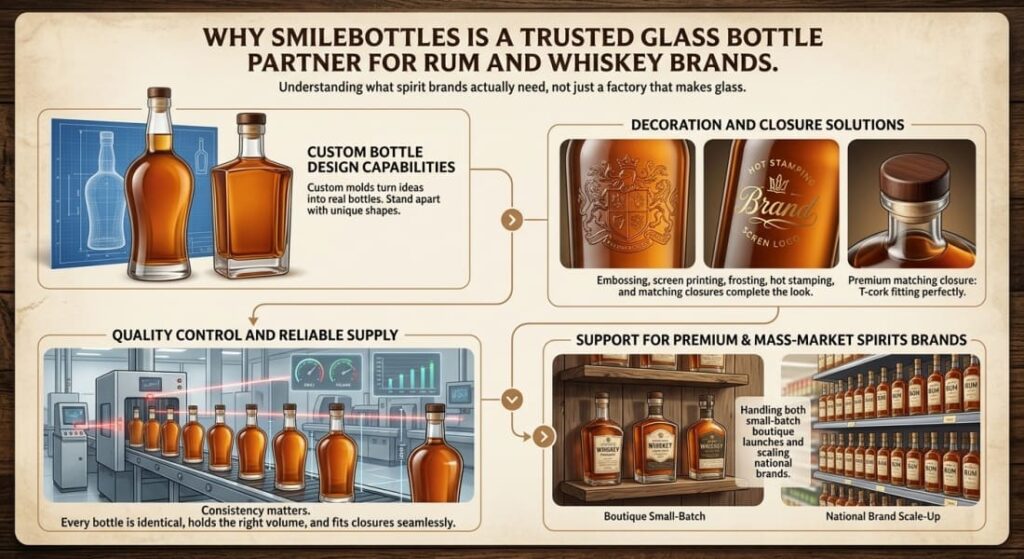
You’ll want to work with a supplier who understands what spirit brands actually need — not just a factory that makes glass.
Custom Bottle Design Capabilities
If you have a specific shape in mind, custom molds turn your idea into a real bottle. Whether it’s a rum bottle with a curved silhouette or a whiskey bottle with heavy square shoulders, custom design lets your brand stand apart.
Decoration and Closure Solutions
Embossing, screen printing, frosting, hot stamping, and matching closures all come together to complete the look. Getting these details right is what separates a good bottle from a great one.
Quality Control and Reliable Supply
Consistency matters. Every bottle in your batch should look identical, hold the right volume, and fit your closure without issues. Reliable quality control is what makes large-scale bottling work smoothly.
Support for Premium and Mass-Market Spirits Brands
Whether you’re launching a boutique small-batch whiskey or scaling up a national rum brand, custom liquor bottles should be available at both ends of the market. The right partner can handle both.
FAQ: Frequently Asked Questions About Rum and Whiskey Glass Packaging
Q1:Are rum bottles and whiskey bottles the same?
A1:Not usually. While both can technically use the same glass, rum and whiskey brands tend to choose different shapes and closures based on their positioning. Whiskey typically leans toward classic, structured bottles, while rum has more design flexibility.
Q2:What type of glass bottle is best for rum?
A2:That depends on your rum. A light white rum works well in a slim, tall bottle. An aged sipping rum deserves a heavier, decanter-style bottle with a proper cork.
Q3:What type of bottle is most common for whiskey?
A3:Square or rectangular bottles with heavy bases, short necks, and bar-top corks are the most common. This shape has become almost synonymous with whiskey.
Q4:Does higher alcohol content require thicker glass bottles?
A4:Not really. Standard spirit-grade glass handles typical ABV levels without any issue. Thicker glass is chosen for branding and premium feel, not because the alcohol demands it.
Q5:Is clear glass better for aged rum and whiskey?
A5:Yes, in most cases. Clear glass lets customers see the color of the spirit, which is part of the appeal for aged products. The amber tone signals quality and aging.
Q6:What closure is best for premium whiskey bottles?
A6:A natural cork or bar-top cork. It feels right in the hand, it opens with a satisfying sound, and it fits the tradition of the category.
Q7:Can rum and whiskey use the same bottle shape?
A7:Technically yes, and some smaller brands do it to save on mold costs. But if you want your brand to feel authentic to its category, matching your bottle to your spirit type is usually the better choice. And to answer a common question — can you mix rum and whiskey in the same bottle? That’s a different question entirely, and generally not something spirit brands do. Blending two different spirit categories creates a product that fits neither market well.
Q8:What bottle size is most popular for rum and whiskey?
A8:700ml or 750ml, depending on your market. Europe leans toward 700ml, while the US uses 750ml as the standard.
Conclusion
If you’re planning your next production run or launching a new label, take your time on the packaging side. Test different bottle shapes. Feel the weight. Try different closures. Look at how your bottle performs next to competitors on a real shelf. The details you get right now will pay off for years.
And when you’re ready to move from idea to actual glass, working with an experienced partner makes the whole process smoother — from mold design to final bottling. Whether it’s custom rum bottles, custom whiskey bottles, or a broader spirits line, the right bottle is out there. It just takes the right partner to make it happen. Contact Smilebottles for more informations.
 English