Table of Contents
ToggleAuthor: SmileBottles Editorial Team
Estimated Reading Time: About 16 Minute
Sparkling water keeps growing as a beverage category, and much of the premium end of that market comes in glass. Brands have good reasons for this. Glass sparkling water bottles keep carbonation well, protect the taste, and give you a lot of room to build a recognizable brand. They are not all the same, though, and the wrong choice can cost you money in ways you won’t notice until production starts.
This guide covers what you need to know before you buy: bottle types, sizes, closures, colors, how the bottles are made, how glass compares with plastic, and how to work with a supplier. We wrote it from a bottle maker’s point of view, so it includes the practical details buyers usually ask us about.
What Are Glass Sparkling Water Bottles?
If you’re asking what are glass sparkling water bottles, here’s the short answer. They are glass containers designed to hold carbonated water safely while keeping its fizz, taste, and quality intact. They look a lot like ordinary water bottles, but they’re built for a tougher job.
Definition and Core Features
Carbonated water contains dissolved CO₂, and that gas constantly pushes outward against the bottle walls. A sparkling water glass bottle has to handle that pressure every day it sits in a warehouse, on a truck, or in a hot storeroom. That’s why these bottles belong to the same group as beer, soda, and other glass bottles for pressurized beverages.
Most of them share a few features:
Even wall thickness, so pressure spreads evenly
Rounded shoulders and a strong base, because sharp corners concentrate stress
A neck finish made to work with pressure-rated closures
Testing for internal pressure during production
How They Differ from Regular Glass Water Bottles
This is where many new brands get caught out. A decorative glass water bottle can look almost identical to a carbonated one. It may still have thinner walls, a flat-sided or square shape, or a neck finish that was never meant to hold pressure.
So, can sparkling water be stored in glass bottles that weren’t designed for it? At home, for a day or two, it usually works. For a commercial product that may sit on a shelf for months and go through temperature changes, the answer is no. You need pressure resistant glass bottles that have been tested for internal pressure. If you skip this step, you risk leaks, flat products, and in the worst cases, broken bottles.
That’s also the honest answer to can sparkling water be stored in glass bottles in general. Yes, and glass is one of the best options, as long as the bottle and closure are made for carbonation.
Where You’ll See Them
You’ll find these bottles in many parts of the market:
Premium bottled sparkling water brands
Natural spring and glass mineral water bottles from regional producers
Hotels, restaurants, and cafés that serve water at the table
Private label sparkling water bottles made for supermarkets and lifestyle brands
Flavored and functional sparkling drinks
Why Glass Is a Preferred Packaging Material for Sparkling Water
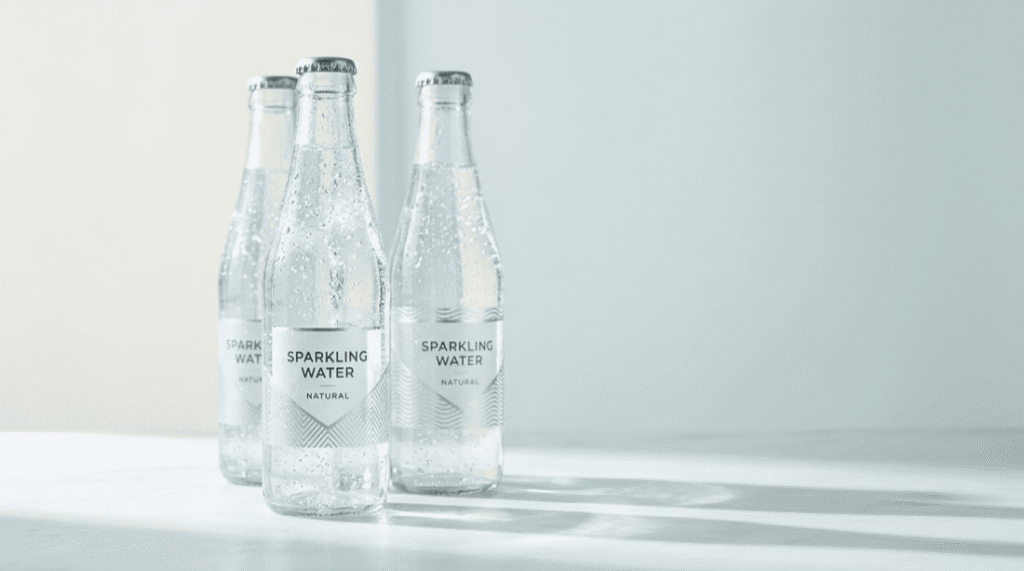
Brands ask us why is glass better for sparkling water fairly often, usually while they’re comparing costs. Glass blocks gas, doesn’t react with the drink, and makes the product feel more valuable. Here’s what that means in practice.
Excellent Carbonation Retention
Glass is non-porous, so CO₂ can’t escape through the walls. Plastic, especially PET, lets a small amount of gas pass through over time. That’s one reason plastic carbonated drinks usually have shorter shelf lives.
With glass, the weak point is the seal. Carbonation retention glass bottles only perform as well as the closure on top of them. A strong bottle with a poorly fitted cap will still lose fizz.
Do glass bottles keep sparkling water fizzy longer? In most cases, yes, as long as the closure is matched properly. If you need bottles that preserve carbonation across a long shelf life or a long export route, glass with a well-chosen closure is a safe choice.
So if someone asks you do glass bottles keep sparkling water fizzy longer than plastic ones, the answer is generally yes, and the gap grows the longer the product sits on a shelf.
Pure Taste and No Material Interaction
Glass is chemically inert. It won’t pass flavors, odors, or chemicals into the water, even in warm storage. Taste problems show up quickly in plain sparkling water because there’s nothing to cover them up. Sparkling water in a glass bottle tastes the way the source or recipe intended.
Many consumers say sparkling water simply tastes better from glass. Part of that is perception, but perception affects whether people buy your product again.
Premium Shelf Appeal and Brand Perception
Weight, clarity, and the cold feel of glass all tell the customer that the product is high quality. That’s why most premium sparkling water bottles in hotels and fine dining are glass. When a server pours sparkling water in a glass from a well-designed bottle at the table, the bottle becomes part of the experience.
If you’re building luxury sparkling water bottle packaging, glass gives you choices that plastic can’t easily match, such as heavy bases, embossing, unusual shapes, and premium finishes.
Strong Sustainability Value
Glass is a common choice for eco friendly sparkling water packaging. It can be recycled again and again without losing quality, and most markets have well-established systems for collecting recyclable glass water bottles.
Some regions, such as parts of Europe, still run returnable systems. There, reusable glass sparkling water bottles are collected, washed, and refilled many times.
It’s worth staying realistic, though. Glass is heavier than plastic, so it costs more to transport. Sustainable glass beverage bottles bring the most environmental benefit when you use lighter bottle designs, use recycled glass (cullet) in production, and sell in markets that are reasonably close to your bottling site. If sustainability is part of your brand message, base it on these facts. Customers notice when claims are exaggerated.
Main Types of Glass Sparkling Water Bottles
Clear Glass Sparkling Water Bottles
Clear glass sparkling water bottles (also called flint glass) let customers see the bubbles and how clean the water is. They suit modern, minimal branding. Clear glass also shows labels and printing well. One thing to keep in mind is that clear glass shows every flaw, so the bottle quality has to be consistent.
Green Glass Sparkling Water Bottles
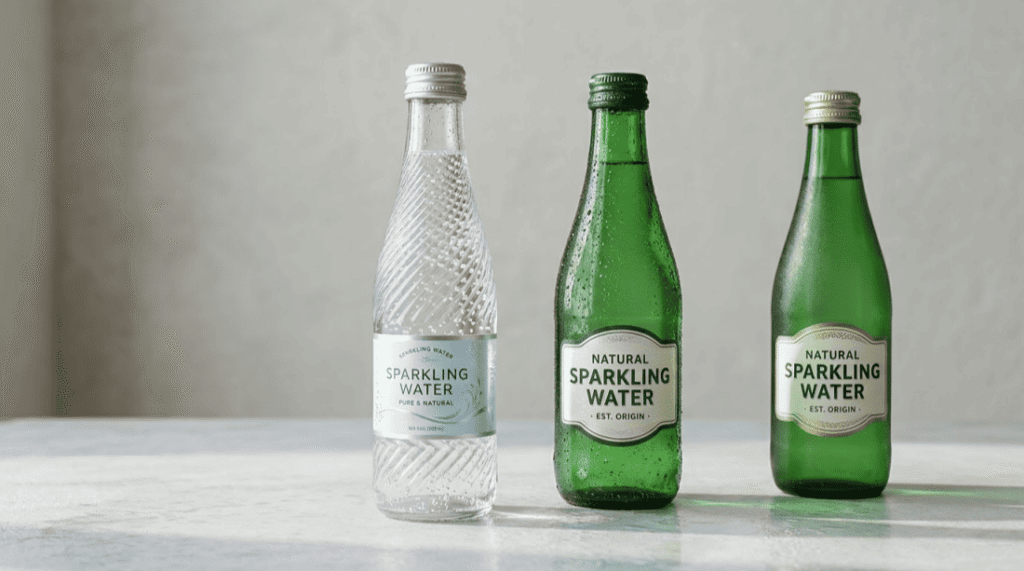
Green glass sparkling water bottles are a classic look for mineral and sparkling water, especially in European-style brands. Green feels traditional and natural, and it gives some protection from light. If you want buyers to see your product as “mineral water” at first glance, green is a sensible choice.
Amber and Dark Glass Bottles
Amber glass sparkling water bottles offer the strongest UV protection of the common colors. Plain sparkling water isn’t very sensitive to light. Flavored waters, botanical drinks, and products with added vitamins or natural extracts can be, so amber is more common in functional and specialty sparkling drinks.
Other Colored Glass Options
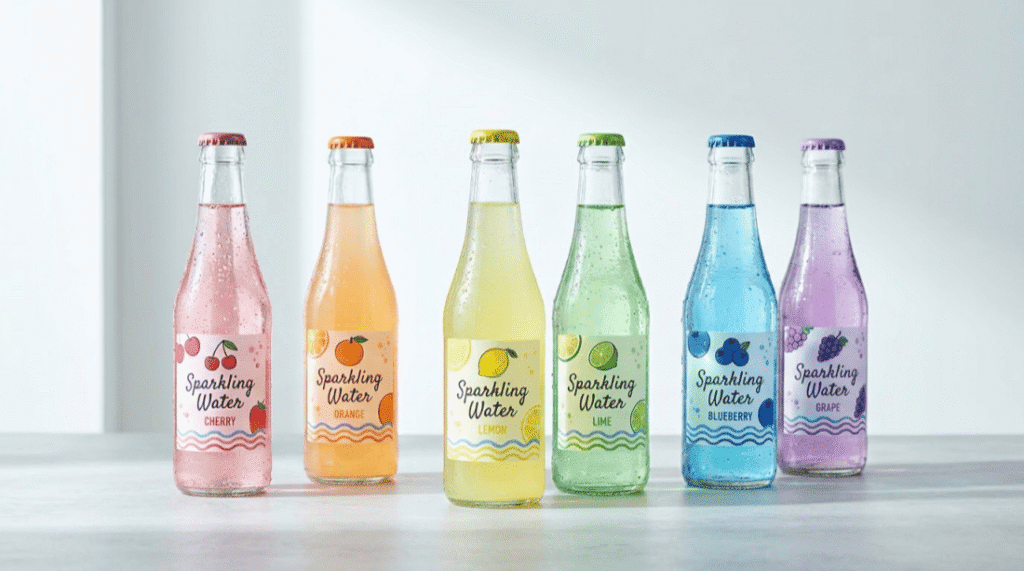
Colored glass sparkling water bottles in blue, smoky gray, or other custom shades can set your brand apart. There’s a cost to consider. Changing the color of the glass itself usually means a dedicated furnace run, which brings a higher minimum order. For smaller volumes, spray coating clear glass is often a more practical way to get a custom color.
|
Glass Color |
Appearance |
UV Protection |
Typical Use |
|
Clear (Flint) |
Clean, modern |
Low |
Premium still and sparkling water, minimal brands |
|
Green |
Classic, natural |
Moderate |
Mineral water, European-style brands |
|
Amber |
Warm, earthy |
High |
Functional and botanical sparkling drinks |
|
Custom / Coated |
Distinctive |
Varies |
Luxury and highly branded products |
Standard vs. Custom Molds
Standard molds are already available, so you’ll get faster lead times, lower costs, and smaller minimum orders. Custom molds give you a shape no one else has, but you’ll pay for mold development and wait longer. Many brands start with a standard bottle and add a custom mold once sales justify the investment.
Key Specifications to Consider Before You Buy
If you’re working out how to choose glass sparkling water bottles for your product, start with the technical details. A beautiful bottle that doesn’t work on your filling line will cause problems no matter how good it looks.
Pressure Resistance and Bottle Strength
Sparkling water is usually carbonated at roughly 2.5 to 4 volumes of CO₂. At room temperature, that creates a few bar of internal pressure, and the pressure goes up when bottles get hot during shipping or storage. Wall thickness, glass distribution, shoulder shape, and base design all affect how well a bottle handles that pressure.
Ask your supplier for the bottle’s internal pressure rating and how it was tested. A serious supplier will give you a clear answer.
Bottle Capacity Options
Here are the most common glass bottle sizes for sparkling water and where they usually sell:
|
Size |
Common Channel |
|
200–250ml |
Hotels, airlines, minibars, premium single serve |
|
330ml |
Retail single serve, cafés, convenience stores |
|
500ml |
Retail, on-the-go, gyms |
|
750ml |
Restaurants, table service, gifting |
|
1L |
Home use, family dining, foodservice |
There isn’t one best bottle size for sparkling water. It depends on where your product will be sold. For a restaurant-focused brand, 750ml is the standard. For retail, 330ml and 500ml usually sell faster. Many brands launch with two sizes, one for retail and one for foodservice.
Bottle Shape and Filling Line Compatibility
Round bottles handle pressure best and run smoothly on most filling lines. Slim, tall bottles look elegant but can tip over on conveyors. Before you finalize a shape, check it against your filler, labeler, and case packer. Also check that it stacks well on pallets. Small differences in height or diameter can lead to expensive line adjustments.
Neck Finish and Closure Compatibility
Glass bottle closures for sparkling water generally fall into four groups:
Crown caps. Cheap, reliable, and very good at holding pressure. Common for smaller bottles and soda-style products.
ROPP aluminum caps. Roll-on pilfer-proof caps that are resealable and tamper-evident. They’re widely used on premium water.
Plastic screw caps. Convenient and resealable, but they need the right liner and neck finish for carbonated use.
Swing tops. Charming and reusable, often used in craft or vintage-style branding.
So what’s the best cap for sparkling water glass bottles? For most commercial sparkling water, an ROPP aluminum cap with a liner suited to carbonation is the safest all-round choice. Crown caps also work very well if customers don’t need to reseal the bottle.
Whatever you choose, the neck finish and the closure have to be designed to work together. Choose your closure early, before the bottle design is locked.
Labeling and Decoration
There are many glass bottle decoration options, and each one affects your cost and minimum order:
Pressure-sensitive paper or film labels
Screen printing or ceramic printing
Embossing or debossing in the glass itself
Hot stamping, frosting, or spray coating
Printed glass sparkling water bottles look clean and premium, and printing holds up well in ice buckets, where paper labels can peel. Embossed glass sparkling water bottles add a permanent logo or pattern that customers can feel. Embossing has to be built into the mold, so plan it from the start.
How Glass Sparkling Water Bottles Are Made
A question we hear from new buyers is, how are glass sparkling water bottles made, and does the process affect quality? It does, quite a lot. Knowing the basics helps you ask better questions when you talk to suppliers.
So if you’ve been wondering how are glass sparkling water bottles made, here’s the process in plain terms.
Raw Materials
Bottle glass is mostly silica sand, soda ash, and limestone, plus recycled glass called cullet. Cullet melts at a lower temperature, so more of it means less energy used. Colorants are added for green, amber, and other shades.
Melting and Forming
The raw materials melt in a furnace at around 1,500°C. The molten glass is cut into measured portions called “gobs” and dropped into a forming machine. The gob is first shaped in a blank mold and then blown into its final shape in a blow mold. Press-and-blow forming gives more even walls and allows lighter bottles. Blow-and-blow forming is common for narrow-neck bottles.
Annealing and Surface Coatings
Freshly formed bottles carry internal stress. They pass through an annealing oven (a lehr), where they cool slowly so the stress can release. Without proper annealing, a bottle can fail under pressure even if it looks perfect. Most beverage bottles also get surface coatings that reduce scratching. Scratches weaken glass, which matters a lot for pressurized products.
Inspection and Quality Control
A good glass bottle manufacturer for sparkling water checks:
Dimensions and neck finish accuracy
Wall thickness and glass distribution
Surface defects, bubbles, and stones in the glass
Internal pressure performance on samples from each batch
Packaging condition before shipment
Why This Matters for Carbonated Drinks
Still water forgives small defects. Sparkling water doesn’t. Uneven walls, poor annealing, or a neck finish that’s slightly off can lead to leaks, flat products, or broken bottles on the line. That’s why manufacturing quality should be one of your first questions, not something you think about later.
Glass vs. Plastic for Sparkling Water: Which Is Better?
The glass vs plastic for sparkling water debate usually comes down to what your brand needs most. Here’s a direct comparison.
|
Factor |
Glass |
Plastic (PET) |
|
Carbonation retention |
Excellent; no gas passes through the walls |
Good short-term; slow CO₂ loss over time |
|
Taste |
Fully neutral |
Generally neutral, but some consumers notice a difference |
|
Shelf life |
Longer |
Shorter for carbonated products |
|
Weight and shipping |
Heavier, higher freight cost |
Light, cheaper to ship |
|
Breakage risk |
Higher |
Low |
|
Recyclability |
Recycled repeatedly without quality loss |
Recyclable, but quality drops with each cycle |
|
Brand perception |
Premium |
Everyday, convenient |
So, are glass bottles better than plastic for sparkling water? For taste, fizz, shelf life, and premium positioning, yes. Plastic still makes sense for low-price, high-volume, on-the-go products where weight and breakage matter most.
The same reasoning applies to the wider glass bottle vs plastic bottle for carbonated drinks question. Glass suits products where quality and image come first. Plastic suits products where cost and convenience come first.
Brands usually pick glass for:
Premium and natural mineral water
Hotel and restaurant supply
Boutique and private label products
Export products that need a longer shelf life
Who Uses Glass Sparkling Water Bottles?
Sparkling and Mineral Water Brands
Spring water producers and premium brands are the biggest users of carbonated water glass bottles. For many of them, glass is part of their identity.
Private Label Companies
Supermarkets, wellness brands, and boutique labels often use standard glass bottles for carbonated water and make them their own with labels, cap colors, or printing. This keeps costs down while still looking premium.
Hotels, Restaurants, and Cafés
Foodservice businesses like glass because it looks good on the table and fits a higher-end dining experience. Some hotels even order their own branded water bottles.
Specialty Beverage Producers
Flavored sparkling water, functional drinks, and botanical sodas often use glass to stand out and to protect sensitive ingredients.
Customization Options for Your Bottles
Custom glass sparkling water bottles help your product stand out, but each choice affects cost and timing. Here’s what you can do.
Custom Bottle Shapes
A unique shape can become the most recognizable part of your brand. Keep the shape practical, though. Round profiles handle pressure best, so most custom designs work with shoulder lines, base details, or proportions rather than sharp angles.
Embossed Logos and Surface Details
Custom embossed glass bottles carry your logo permanently in the glass. Embossing feels premium and can’t peel or fade. It does require a mold change, so it makes more sense for larger or longer-term orders.
Custom Colors and Coatings
Through-color glass or spray coatings can give you a unique look. Coatings are often more affordable at lower volumes.
Closure Customization
Cap color, printed tops, liner type, and tamper-evident features all help finish the look. Choose closures that suit carbonation first and appearance second.
Labels and Printing
Choose labels that hold up to condensation and ice buckets. Direct printing is a good option for premium lines.
Export and Retail Packaging
Good glass bottle packaging for beverages includes strong cartons, dividers, and stable pallet loads. For export, ask how bottles will be protected in transit.
Simple branding on standard bottles is a smart starting point for custom sparkling water bottles. Add custom molds and decoration as your brand grows.
How to Choose a Sparkling Water Bottle Supplier
Type sparkling water bottles glass into a search engine or a B2B platform and you’ll get hundreds of results. Knowing how to choose a sparkling water bottle supplier saves you time, money, and a lot of stress.
Look for Experience with Carbonated Products
Not every sparkling water bottle supplier really understands pressure, closures, and filling lines. Ask whether they’ve made bottles for carbonated drinks before and whether they can share test data. A glass bottle supplier for sparkling water should talk confidently about pressure ratings and neck finishes.
Check Manufacturing and Quality Standards
Ask about inspection systems, food-contact compliance, and how they keep quality consistent from batch to batch. A reliable sparkling water bottle manufacturer will explain this clearly and won’t avoid the question.
Evaluate Customization Capabilities
If you plan to grow your brand, work with a custom glass bottle manufacturer that offers mold development, decoration, and closure matching. If you want a design no one else can use, you’ll need a private mold glass bottle manufacturer. If you’re producing under your own brand, an OEM glass bottle manufacturer can handle development from sample to mass production.
Consider MOQ, Lead Time, and Logistics
For bulk glass sparkling water bottles, ask about minimum orders, production schedules, and export packaging. If you’re comparing prices for wholesale glass sparkling water bottles, look past the unit price. Include freight, breakage rates, and how dependable delivery is.
Ask About Technical Support
A good glass beverage bottle manufacturer will help you match bottles to closures, suggest sizes for your market, and provide samples for testing. A good custom glass packaging supplier also helps with decoration and secondary packaging, so you aren’t coordinating five different vendors.
Think Beyond One Product
If you also make juices, sodas, or other drinks, a beverage glass bottle supplier who can provide wholesale glass beverage bottles across several product lines makes purchasing much simpler.
At Smilebottles, we work with brands at different stages. Some are testing a first product on standard bottles, and others are building custom designs for a growing range. Whoever you choose to work with, the questions above will help you find a partner you can rely on.
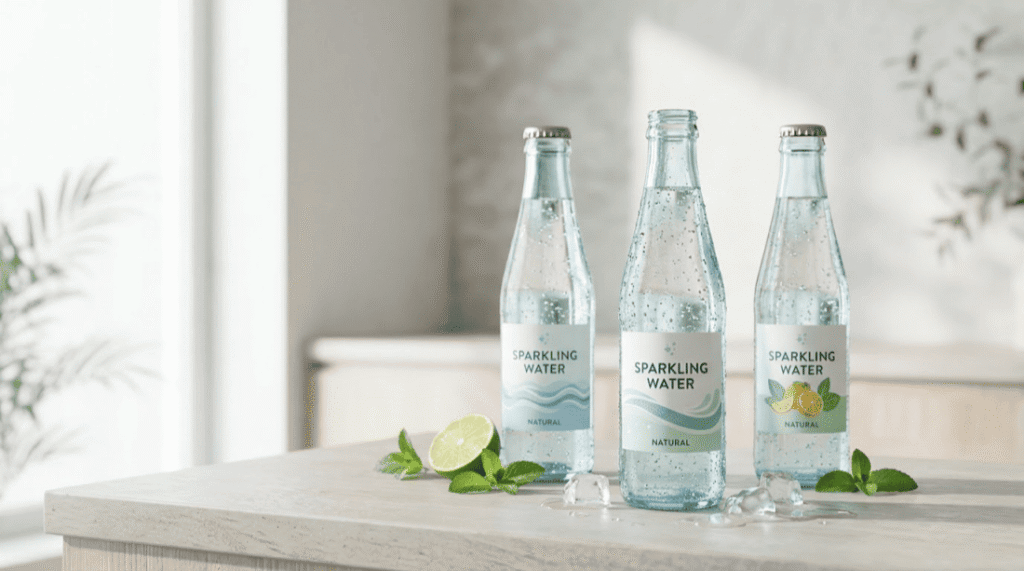
glass bottles for sparkling water
Common Challenges Brands Face When Sourcing
Choosing Bottles Not Made for Carbonation
This is the most common and most costly mistake. Always confirm that the bottle has a pressure rating.
Mismatched Closures
A cap that almost fits will slowly let gas escape. Test the bottle and closure together before you scale up production.
Overcomplicated Designs
Very complex shapes can increase costs, slow down filling, and weaken the bottle. Good designs balance branding with practicality.
Inconsistent Quality Between Batches
Small changes in dimensions can stop a filling line. Ask how your supplier controls quality from one batch to the next.
Shipping Damage
Weak cartons and poorly built pallets cause breakage. Check the packaging specifications before your first export order.
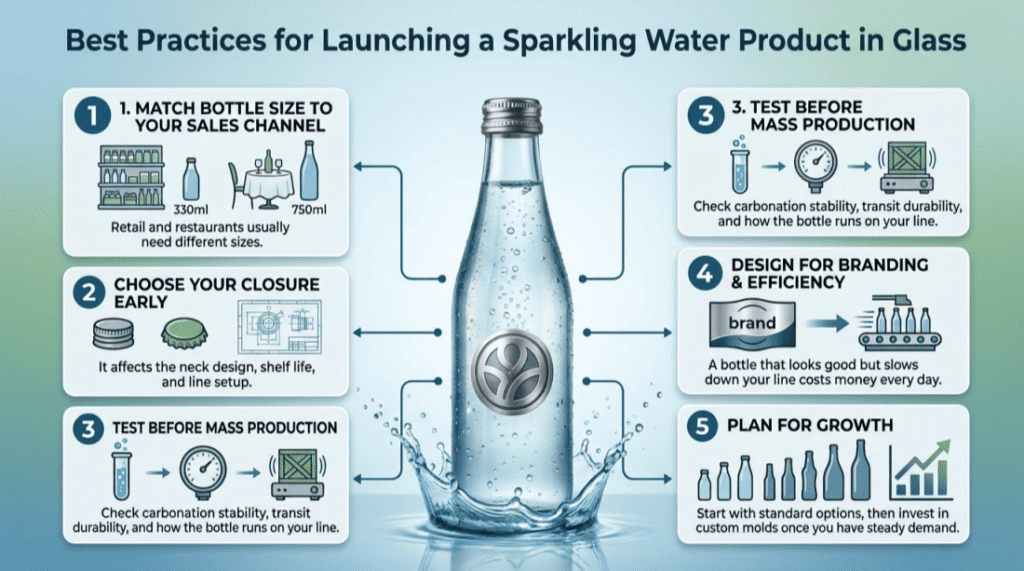
Best Practices for Launching a Sparkling Water Product in Glass
Match bottle size to your sales channel. Retail and restaurants usually need different sizes.
Choose your closure early. It affects the neck design, shelf life, and line setup.
Test before mass production. Check carbonation stability, transit durability, and how the bottle runs on your line.
Design for branding and efficiency. A bottle that looks good but slows down your line costs money every day.
Plan for growth. Start with standard options, then invest in custom molds once you have steady demand.
FAQ: Frequently Asked Questions About Glass Sparkling Water Bottles
Q1:Are glass bottles better for sparkling water?
A1:Yes, in most cases. To answer are glass bottles better for sparkling water in one line: glass keeps carbonation well, keeps taste neutral, and feels premium. Plastic is lighter and cheaper to ship, but it loses CO₂ slowly over time.
Q2:Can regular glass bottles hold sparkling water?
A2:Not safely for commercial use. Only use bottles designed and tested for carbonated drinks.
Q3:What type of cap is best for sparkling water bottles?
A3:ROPP aluminum caps and crown caps are the most reliable choices. Screw caps can work if the liner and neck finish are designed for carbonation.
Q4:What is the most popular bottle size for sparkling water?
A4:330ml and 500ml are common in retail. 750ml is the standard for restaurants.
Q5:Are colored glass bottles better than clear glass?
A5:Colored glass gives better light protection, which matters for flavored and functional drinks. Clear glass is better if you want customers to see the product.
Q6:Can glass sparkling water bottles be customized?
A6:Yes. You can customize the shape, color, embossing, printing, labels, and closures. Every glass sparkling water bottle can be adapted to your brand, depending on your budget and order volume.
Q7:Are glass bottles recyclable and reusable?
A7:Glass can be recycled again and again without losing quality. In some regions, it is also washed and refilled through returnable systems.
Q8:Do glass bottles keep sparkling water fizzy longer?
A8:Generally yes, as long as the closure seals properly.
Conclusion
Choosing glass bottles for sparkling water affects more than appearance. The right bottle protects carbonation, keeps the taste clean, runs smoothly on your line, arrives safely, and fits the image you want for your brand.
Start with the basics: pressure resistance, the right closure, a sensible size, and a supplier who understands carbonated drinks. Once those are in place, use shape, color, and decoration to build your brand.
If you’re planning a new sparkling water line or upgrading your current packaging, Smilebottles can help with bottle selection, custom design, decoration, and bulk supply. You can reach out with your project details and get practical advice before you commit to anything.