
Table of Contents
ToggleAuthor: SmileBottles Editorial Team
Estimated Reading Time: About 15 Minute
If your product reacts badly to light, the bottle you choose matters as much as the formula inside it. You can spend months perfecting an essential oil blend, a herbal tincture, or a vitamin C serum. Then a few weeks under store lighting, or a sunny afternoon on a delivery truck, can change its color, weaken its scent, or reduce how well it works.
That is why so many brands use dark glass bottles. They are not a trend or a design choice alone. They are a simple, built-in way to cut down the amount of light that reaches your product.
This guide walks you through how UV light damages products, how glass color changes protection, how the main colors compare, and what to check before you place an order.
How UV Light Damages Light-Sensitive Products
Ultraviolet light is part of sunlight that you cannot see. It sits just beyond violet on the light spectrum and has shorter wavelengths than visible light. Shorter wavelengths carry more energy, and that energy can start chemical reactions inside your product. Scientists call this photodegradation.
UV light is usually split into three bands:
UVA (about 315 to 400 nm): reaches the ground in large amounts and passes through many materials
UVB (about 280 to 315 nm): stronger, but much of it is filtered by the atmosphere
UVC (below 280 nm): almost entirely absorbed by the atmosphere, so it rarely affects packaged goods
Not every product reacts to light in the same way. Some are very stable. Others start to break down quickly. Common signs of light damage include:
Oxidation, which can make oils smell stale or rancid
Loss of active ingredients, such as vitamins or plant compounds
Color changes, like fading or yellowing
Weaker aroma or flavor
Lower effectiveness in medicines and supplements
The products most at risk tend to be essential oils, pharmaceuticals, nutraceuticals, skincare serums, botanical extracts, some beers and spirits, and many lab chemicals.
Keep in mind that light exposure does not only happen on a sunny windowsill. Your product meets light during storage in the warehouse, during shipping, under bright retail lights, and in your customer’s bathroom or kitchen. Store lighting matters too. Many lamps give off short-wavelength visible light, and some give off small amounts of UV. Over weeks or months, those small doses add up.
So the real question you need to answer is simple. How much light reaches your formula, and how much of it can your formula handle?

Does Glass Block UV Light?
This is one of the most common questions buyers ask, and the honest answer is: partly, and it depends on the glass.
If you are wondering does glass block uv light, you first need to know what kind of glass you mean. Standard clear soda-lime glass, the type used for most clear bottles and windows, blocks a good share of UVB. It does a much weaker job with UVA. A large portion of UVA light can still pass through a clear bottle.
So when people ask does glass block uv rays fully, the answer for clear glass is no. It reduces some of them, but it is not a reliable shield for sensitive products.
Does UVB Go Through Glass?
Most UVB does not get through ordinary glass. If you are asking does uvb go through glass, clear soda-lime glass absorbs much of it. This is the reason you are unlikely to get sunburned through a closed window. But that same window will still let UVA in, which is why furniture and fabrics near windows can fade over time. Your products behave in a similar way. Clear glass stops the burn, but not the slow damage.
Does UV Light Pass Through Glass?
Yes, some of it does. When you ask does uv light pass through glass, the amount depends on three things: the glass formula, the color, and the wall thickness. UV light through glass is not an all-or-nothing event. Each bottle lets through a certain percentage of light at each wavelength. That pattern is called the light transmission curve, and it is the most useful way to compare bottles.
Does Glass Block UV Radiation Completely?
No standard bottle blocks all light in every situation. If you are asking does glass block uv radiation completely, even good amber glass lets a small amount of longer-wavelength light through. That is usually fine. The goal is not total darkness. The goal is to bring light exposure down to a level your product can tolerate for its full shelf life.

How Dark Glass Bottles Help Block UV Exposure
Glass gets its color from metal oxides and other materials added to the batch during melting. These additives absorb certain wavelengths of light. Whatever is absorbed does not reach your product.
The basic glass ultraviolet behavior works like this:
Amber glass is colored mainly with iron, sulfur, and carbon. This mix absorbs UV light and much of the blue and violet range.
Green glass is usually colored with iron and chromium oxides. It absorbs some UV, but less than amber.
Blue glass is colored with cobalt oxide. It looks dark, yet it lets blue light and part of the UVA range through.
Black glass uses high levels of colorants such as iron, manganese, or cobalt, so it absorbs a wide range of light.
Darker does not always mean safer. Your eyes judge color by visible light, but UV is invisible. A bottle can look deep and rich and still let a lot of UV through. Blue glass is the best example of this.
Protection also depends on more than color:
Glass formula: two amber bottles from different factories can perform differently
Wall thickness: thicker walls absorb more light, but thickness alone will not make clear glass protective
Exposure conditions: a bottle on a shaded shelf faces very different stress than one in a sunny shop window
One practical benefit of dark glass is that the protection is passive. It is built into the bottle. Your staff, your retailers, and your customers do not have to do anything extra. Glass also gives you other useful qualities. It is non-porous, it resists most chemicals, it does not leach plasticizers, and it can be recycled many times.
What About Ultraviolet Filtering Glass and Ultraviolet Glass?
You may come across terms like ultraviolet filtering glass or ultraviolet glass when you research packaging. These terms are used in different ways. Sometimes they simply mean colored glass that absorbs UV, like amber. Sometimes they refer to violet or purple glass sold as premium “UV glass,” which is designed to block most visible light while letting certain wavelengths through.
Before you pay more for a specialty glass, ask the supplier for its transmission data. Marketing names do not tell you how the bottle performs. Measured numbers do. When you compare ultraviolet light glass performance between options, always look at the actual transmission percentages across the 290 to 450 nm range. That range is where most of the damage to sensitive products happens, and it is the range used in the USP light-resistant container test for pharmaceutical packaging.
Why Amber Glass Bottles Are the Industry Standard
Walk into any pharmacy, herbal shop, or lab, and you will see amber glass bottles everywhere. There is a clear reason for that.
How Amber Glass UV Protection Works
Amber glass UV protection comes from its ability to absorb nearly all UV light and a large share of visible light below about 450 nm. That range covers the wavelengths most likely to trigger chemical breakdown in light-sensitive formulas. Few other common bottle colors filter this range as well at the same price.
Amber Glass Bottle Benefits for Your Business
When you weigh up amber glass bottle benefits, think beyond light protection:
Strong UV filtering for most light-sensitive products
Lower cost than black or specialty violet glass in most cases
Wide availability in dropper bottles, Boston rounds, syrup bottles, jars, roller bottles, and pharmaceutical vials
Easy to match with standard caps, droppers, pumps, and sprayers
Familiar to buyers, pharmacists, and regulators, who often expect amber for light-sensitive goods
Easy to scale, since amber is produced in large volumes worldwide
That last point matters if you plan to grow. A packaging choice that is easy to source today will also be easy to source when your order size doubles.
Amber Glass vs Clear Glass
The amber glass vs clear glass decision comes down to what matters more for your product: visibility or stability.
Clear glass lets your customer see the product. That works well for stable items, like many spirits, syrups, or water-based products without sensitive actives. It also suits brands that rely on color as part of their appeal.
Amber glass hides some of the color, but it protects the formula much better. If your product contains essential oils, plant extracts, vitamins, retinoids, or certain medicines, amber is usually the safer default. If you really want a clear look, you will likely need extra protection, such as a carton or a full-body sleeve.
A simple rule: if light can damage your product, start with amber and only move away from it for a good reason.
Dark Bottles for Essential Oils
Essential oils are one of the most common reasons buyers look for dark bottles for essential oils. These oils are made of volatile compounds such as terpenes, which can oxidize when exposed to light, heat, and air. Oxidized oils lose their scent, can change color, and may become more likely to irritate skin.
This is where amber bottles for essential oils earn their place. Amber glass protects essential oils from UV light source exposure, whether that source is sunlight through a shop window or bright lights in a display case. Paired with a tight-sealing cap or dropper, amber glass slows down the reactions that shorten an oil’s useful life.
Amber vs Blue Glass Bottles for Essential Oils
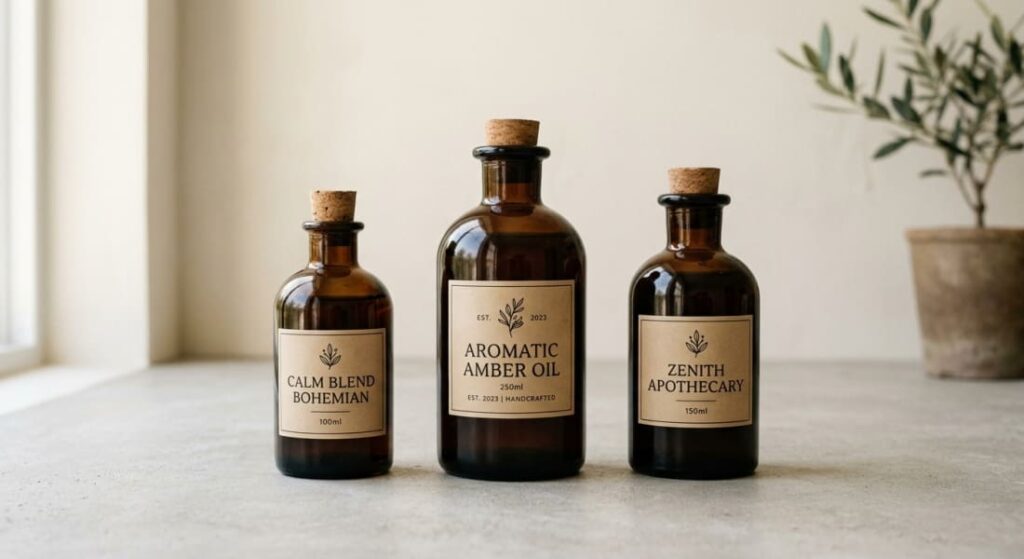
Cobalt blue bottles are popular for essential oils and aromatherapy products. They look good on a shelf and have a classic apothecary feel. But when you compare amber vs blue glass bottles, amber clearly offers better UV protection.
Blue glass lets blue light and part of the UVA range pass through. Amber absorbs most of it. If your oils sell quickly and are stored away from light, blue can work. If your oils sit on retail shelves for months, or if you sell sensitive oils like citrus blends, amber is the more reliable option. You can also use blue glass inside an outer box if you want the look without the risk.
When Black, Blue, or Green Glass Bottles Make Sense
Amber is not the only choice. Other colors can be the right fit, as long as you choose them for the right reasons.
Black Glass Bottles
Black glass gives you strong light blocking and a premium, modern look. You will see it in luxury skincare, high-end spirits, and some wellness products. For very sensitive formulas, true black glass can block more visible light than amber.
There is one thing to check carefully. Some “black” bottles are actually clear glass with a black coating or spray. The coating may block light well when new, but it can scratch, chip, or wear off. True black glass is colored all the way through. Ask your supplier which type you are getting, and ask for transmission data if light protection is the main reason you chose black.
Blue Glass Bottles
Blue glass works best when your brand look matters most and your product is only moderately sensitive to light. It suits bath products, some cosmetics, decorative bottles, and products with a short shelf life. As covered above, blue is not a good replacement for amber when UV protection is your top priority.
Green Glass Bottles
Green glass is common in wine, beer, olive oil, and heritage-style packaging. It offers more protection than clear glass and some protection against UV, though less than amber. Many buyers choose green because their market expects it. Wine drinkers, for example, are used to seeing green bottles. If your product is a beverage or oil with moderate light sensitivity, green can be a fair balance between tradition and protection.
Glass Color Comparison at a Glance
|
Glass color |
UV protection level |
Typical uses |
Look and feel |
Best for |
|
Clear (flint) |
Low (blocks some UVB, little UVA) |
Spirits, sauces, water, stable cosmetics |
Shows product color |
Stable products where visibility matters |
|
Amber |
High |
Essential oils, pharmaceuticals, tinctures, lab chemicals |
Warm, trusted, practical |
Most light-sensitive products |
|
Green |
Moderate |
Wine, olive oil, beer, beverages |
Traditional, natural |
Moderately sensitive drinks and oils |
|
Blue (cobalt) |
Low to moderate |
Cosmetics, aromatherapy, decorative bottles |
Striking, apothecary style |
Brand appeal with low light sensitivity |
|
Black |
Very high (if true black glass) |
Luxury skincare, premium spirits |
Bold, upscale |
Very sensitive or premium products |
How Dark Glass Packaging Supports Shelf Life and Product Stability
Less light means fewer light-driven reactions. Fewer reactions mean your product keeps its color, scent, flavor, and active strength for longer. That is the basic link between dark glass and shelf life.
But you should see dark glass as one part of a larger protection system, not a full guarantee on its own. Other factors play a big role:
Closure quality: a weak seal lets in oxygen and moisture, which can cause damage even in total darkness
Headspace and oxygen: air left in the bottle can speed up oxidation
Filling process: contamination or heat during filling can shorten shelf life
Storage temperature: heat speeds up almost every chemical reaction
Humidity: some powders and capsules react to moisture
Formula design: antioxidants and stabilizers make a big difference
Here are a few common examples of how this plays out:
Essential oils keep their aroma longer in amber with a tight dropper or orifice reducer
Pharmaceutical syrups and tinctures often need light-resistant containers to meet quality standards
Skincare serums with vitamin C, retinol, or botanical extracts can lose strength quickly under light
Beer and some spirits can develop off-flavors when exposed to light during display
If your product is very sensitive, run a stability test in your chosen bottle under real conditions. Store samples in light and dark, at normal and raised temperatures, and check them over time. This gives you real data instead of guesses.
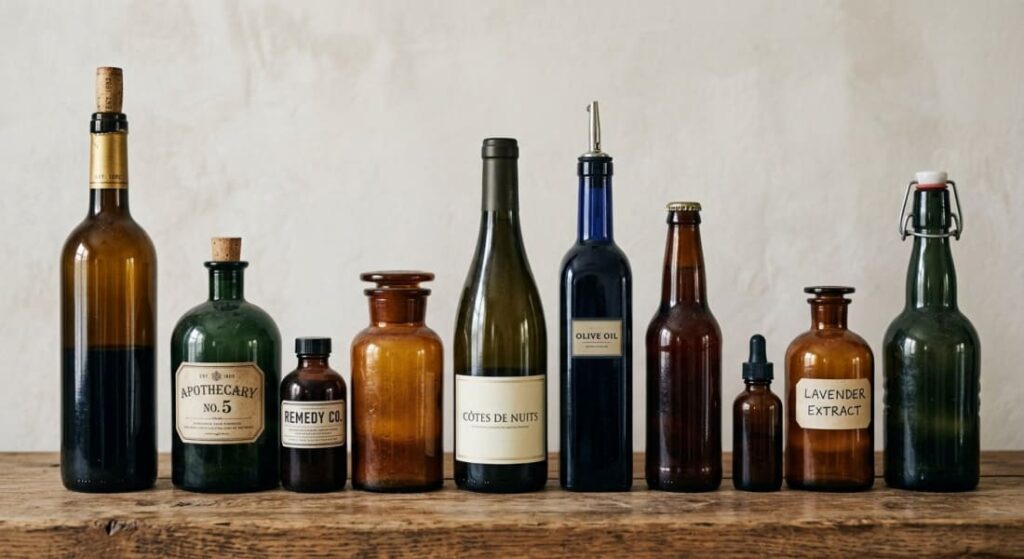
different dark glass bottles
Alternative Ways to Protect Products from UV Light
Sometimes you want clear or lightly tinted glass for design reasons. Or your product is so sensitive that dark glass alone is not enough. In those cases, you can add other layers of protection:
Outer cartons or boxes that keep light out until the customer opens them
Full-body shrink sleeves or wraparound labels
UV-absorbing coatings applied to the glass surface
Opaque or frosted finishes combined with colored glass
Controlled storage and shipping, such as covered pallets and shaded warehouses
Customer instructions like “store in a cool, dark place”
These options can work well alongside dark glass. Just keep the trade-offs in mind. Extra layers add cost and steps to your production line. Sleeves and coatings can wear. Cartons get thrown away once the product is opened, so they only protect during storage and transport, not during daily use.
Dark glass protects your product from the day it is filled to the day the last drop is used. That is why many brands treat it as the first line of protection and add other methods only when needed.
How to Choose the Right Dark Glass Bottle Manufacturer: Smilebottles is Your Good Choice
Once you know which color and style you need, the next step is finding a reliable source. Whether you buy wholesale amber glass bottles for a growing essential oil line or custom black glass for a premium launch, the supplier you pick will affect your quality, costs, and timelines.
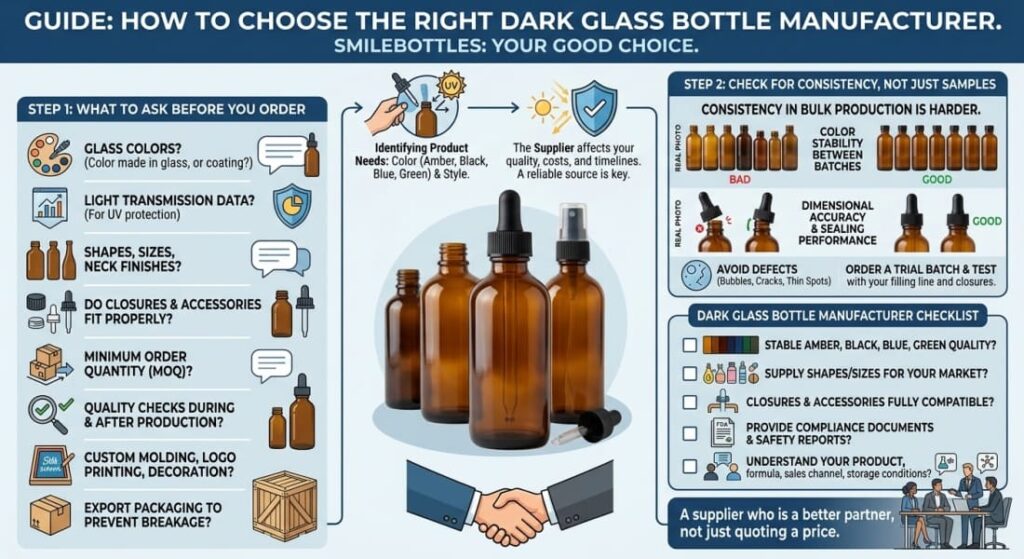
What to Ask Before You Order
When you talk to an amber glass bottle supplier, ask clear questions:
Which glass colors do you produce, and is the color made in the glass or added by coating?
Can you share light transmission data for your amber, black, or green glass?
What bottle shapes, sizes, and neck finishes are available?
Do your caps, droppers, pumps, and sprayers fit the bottles properly?
What is your minimum order quantity?
What quality checks do you run during and after production?
Can you offer custom molds, logo printing, frosting, coating, or hot stamping?
How do you pack bottles for export to prevent breakage?
Check for Consistency, Not Just Samples
A good sample is easy to make. Consistent bulk production is harder. Pay attention to:
Color stability between batches, since a lighter batch of amber may protect less
Dimensional accuracy, so closures seal properly every time
Sealing performance, especially for droppers and dropper tips
Defect rates, such as bubbles, cracks, thin spots, or uneven walls
It helps to order a trial batch, test it with your filling line and closures, and check it against your samples before moving to larger orders.
Dark Glass Bottle Supplier Checklist
Does the supplier offer stable amber, black, blue, or green color quality?
Do they carry the shapes and sizes your market needs?
Are their closures and accessories fully compatible?
Can they provide documents for compliance, such as material safety or food contact reports?
Do they understand the needs of your product type, whether that is essential oils, cosmetics, supplements, or pharmaceuticals?
A supplier who asks about your formula, your sales channel, and your storage conditions is usually a better partner than one who only quotes a price.
FAQ: Frequently Asked Questions About Dark Glass Bottles and UV Protection
Q1:Do dark glass bottles block UV light?
A1:Yes, they reduce UV exposure. How much they block depends on the glass color, formula, wall thickness, and storage conditions. Amber and true black glass offer the strongest protection among common bottle colors.
Q2:Why is amber glass good for UV protection?
A2:Amber absorbs nearly all UV light and much of the blue-violet range, which are the wavelengths most likely to damage sensitive products. It also offers a good balance of protection, cost, and availability.
Q3:Is black glass better than amber glass?
A3:True black glass can block more light than amber, especially in the visible range. But it usually costs more and hides the product completely. For most light-sensitive products, amber gives you enough protection at a lower price.
Q4:Are blue glass bottles good for essential oils?
A4:They can work for oils that sell quickly or are stored in a box. If UV protection is your main concern, amber is the better choice.
Q5:Can green glass protect products from sunlight?
A5:Green glass protects better than clear glass and gives some UV filtering. It is not usually the first choice for highly light-sensitive products.
Q6:Is dark glass better than plastic for UV-sensitive products?
A6:In many cases, yes. Dark glass combines light filtering with chemical resistance and does not interact with oils or strong actives the way some plastics can. The right choice still depends on your formula and how your product is used.
Q7:Does dark glass extend shelf life?
A7:It can help. By reducing light exposure, dark glass slows down light-driven breakdown. You will get the best results when you combine it with a good closure, a stable formula, and proper storage.
Conclusion
UV light is one of the quiet causes of product damage. It does not show up overnight, but over weeks and months it can weaken scent, color, and strength. Clear glass blocks some UVB, but much of the UVA still gets through. Dark glass reduces that exposure by absorbing light before it reaches your product.
For most light-sensitive products, amber remains the practical default. It protects well, costs less than most specialty glass, and fits nearly every bottle style and closure you might need. Black glass suits premium products that need maximum shielding. Green works for beverages and oils with moderate sensitivity. Blue is best saved for products where looks matter more than light protection.
 English
  Russian
  Spanish (Chile)
  Spanish (Colombia)
  Spanish (Ecuador)
  Swedish
  Arabic
  French
  Portuguese