
Table of Contents
ToggleAuthor: SmileBottles Editorial Team
Estimated Reading Time: About 15 Minute
If you sell drinks, cosmetics, sauces, perfumes, or medicine, chances are you’ve spent more time thinking about bottles than you’d like to admit. And honestly, that makes sense. The bottle is the first thing your customer touches. It’s what sits on the shelf, what holds your product together during a long shipping trip, and what shapes how people feel about your brand before they even open the cap.
This guide walks you through the ten questions buyers ask most often when sourcing glass bottle packaging. Whether you’re a small brand ordering your first batch or an importer running full container loads, the goal here is simple: help you make smarter decisions, avoid costly mistakes, and know what to look for in a glass bottle supplier.
Quick Answers About Glass Bottle Packaging
Before you dig into the details, here’s a fast summary you can scan:
Best packaging method: dividers, cushioning, strong double-wall cartons, and secure palletizing
Biggest limitation: weight and fragility
Main purpose: protect the product, preserve quality, support branding
Sustainability: highly recyclable, though shipping distance matters
Cost vs plastic: usually higher, but often justified for premium products
Common uses: food, beverage, cosmetics, fragrance, pharmaceuticals
What Is the Best Way to Package Glass Bottles?
The best way to package glass bottles is to combine inner protection, dividers, cushioning, sturdy outer cartons, and secure palletizing based on the size, shape, and destination of your bottles.
That sounds simple, but the details make all the difference. When you’re packaging glass bottles, the inner layer matters just as much as the outer carton. If bottles knock against each other during transit, no amount of tape on the outside will save them.
Here’s what usually works best inside the carton:
Cardboard dividers for standard bottles going short distances
Molded pulp trays for premium products where appearance matters
Foam inserts for heavier or oddly shaped bottles
Corrugated partitions for mixed sizes
Shrink wrap to keep multi-packs stable
For the outer packaging, double-wall corrugated cartons are the industry standard for export. Single-wall boxes may work for local deliveries, but they don’t hold up on long sea freight routes where humidity, stacking pressure, and vibration all add up.
On the pallet level, you’ll want stretch film, corner protectors, and proper strapping. A pallet that shifts during loading can crack dozens of bottles before it even leaves the port.
One thing many first-time importers overlook: test your packaging before mass production. A short drop test or vibration test tells you more than any spec sheet. If you’re shipping heavy beverage glass bottles or thick-walled spirit bottles, your carton grade needs to match the weight.
What Are the Main Limitations of Glass Packaging?
The main disadvantages of glass packaging are its weight, fragility, and the higher cost of shipping and handling compared with plastic.
Let’s be honest here. Glass isn’t perfect. If you sell a lightweight beverage that ships in bulk to distant markets, freight cost can hit you hard. A pallet of glass simply weighs more than a pallet of PET.
Common limitations you should plan for:
Higher breakage risk during transit
Heavier weight, which raises freight cost
More careful handling in warehouses
More energy used during production compared with some plastics
Design limits for very lightweight or squeezable applications
That said, most of these issues can be reduced with smart choices. Better bottle design, stronger secondary packaging, and a well-planned logistics route bring the numbers back down. Many brands find that the higher shelf value of glass more than covers the extra cost per unit.
What Is the Purpose of Glass Bottle Packaging?
The purpose of glass bottle packaging is to protect the contents, preserve product quality, support branding, and give buyers confidence in what they’re purchasing.
Packaging isn’t just a container. It’s part of how your product performs on the shelf and in the customer’s home. Glass gives you a few things plastic simply can’t match:
A clean, non-reactive surface that doesn’t affect taste or smell
Better barrier protection for sensitive contents
A premium feel that supports higher price points
Clear space for labeling, decoration, and regulatory information
Long-term consumer trust, especially in food, drink, and skincare
For premium categories like perfume glass bottles or high-end cosmetic glass bottles, packaging is often the reason a customer picks one product over another. The shape of the bottle, the weight in the hand, the sound of the cap closing — all of it plays into how the brand feels.
How Can Glass Bottles Be Packed Safely for Transport?
To pack glass bottles safely, you need to prevent bottle-to-bottle contact, absorb shock, use the right carton strength, and secure everything on the pallet.
Sea freight, road transport, and courier delivery each carry different risks. A carton that survives a trucking route in Europe might not hold up on a 40-day ocean journey with multiple transfers. That’s why protective packaging for glass bottles should be matched to the actual route, not just the product.
Practical steps that make a real difference:
Use dividers or individual slots so bottles never touch
Add cushioning around the top and bottom, where shocks hit hardest
Choose carton grades based on total loaded weight
Avoid leaving empty space inside the box (bottles will move)
Seal cartons on all edges for humid climates
Palletize in tight, stable patterns
Use corner boards and strap firmly
If you’re a first-time buyer, ask your factory about drop tests, compression tests, and vibration tests. A good glass bottle factory will have data from previous shipments and can recommend carton specs based on your destination.
Is Glass Packaging More Sustainable?
Is glass packaging sustainable? In most cases, yes — glass is 100% recyclable without losing quality, and it’s made from natural raw materials. But full sustainability depends on how it’s produced, shipped, and recycled.
Recyclable glass packaging is one of the strongest arguments for switching away from single-use plastics. Glass can be melted down and reformed endlessly. Recycled glass, called cullet, also reduces energy use in production, which lowers the overall carbon footprint of each bottle.
Here’s a more honest picture of sustainable glass packaging:
Made from silica sand, soda ash, and limestone — all natural
Fully recyclable and often reusable
Supports refill and return systems
Lower chemical migration compared with some plastics
Recycled cullet cuts furnace energy demand
But there’s nuance. Shipping heavy glass long distances raises emissions. If your target market has weak recycling infrastructure, the environmental benefit shrinks. So eco friendly glass packaging is not automatic — it’s the result of good bottle design, efficient production, and smart logistics.
If sustainability is a real priority for your brand, ask your glass bottle manufacturer about cullet content, furnace efficiency, and lightweighting options.
What Are the Common Uses of Glass Bottles in Packaging?
The main uses of glass bottles cover food, beverage, cosmetics, personal care, fragrance, and pharmaceutical products.
Each industry has its own preferences, and knowing where your product fits helps you choose the right shape, weight, and finish.
Food: Sauces, olive oil, vinegar, honey, condiments — anywhere flavor purity matters. Food grade glass bottles are also popular for cold-pressed juice and premium dairy.
Beverage: Juice, water, kombucha, beer, wine, and spirits. The spirit glass packaging market is especially competitive, with tequila, whiskey, and gin brands all fighting for shelf attention. A well-designed glass tequila bottle with clean decoration can lift retail price by a wide margin.
Cosmetics: Serums, toners, lotions, and creams. Cosmetic glass bottles are often chosen for their premium appearance and compatibility with active ingredients.
Essential oils: Amber and cobalt essential oil glass bottles protect contents from UV light and keep aromas stable.
Perfume: Perfume glass bottles are almost always glass because the material carries the sense of value that fragrance buyers expect.
Pharmaceutical: Pharmaceutical glass bottles need strict compliance, chemical inertness, and often specific glass types like Type I or Type III.
Every industry has different needs for neck finishes, closure types, and glass bottle decoration methods — screen printing, hot stamping, frosting, spray coating, or labeling.
Is Glass Packaging More Expensive Than Plastic?
Yes, glass usually costs more than plastic per unit, both in production and in shipping. But looking at price alone misses the bigger picture.
Here’s a quick comparison of glass vs plastic packaging:
|
Factor |
Glass Packaging |
Plastic Packaging |
|
Appearance |
Premium, weighty feel |
Standard to mid-tier |
|
Weight |
Heavy |
Light |
|
Breakage Risk |
Higher |
Lower |
|
Recyclability |
Fully recyclable, no quality loss |
Depends on resin and local systems |
|
Product Compatibility |
Inert, safe for most formulas |
Good, but some formulas react |
|
Shipping Cost |
Higher |
Lower |
|
Perceived Value |
High |
Lower to mid |
When you weigh glass bottle vs plastic bottle, the real question isn’t which is cheaper. It’s which one fits your product positioning. If you’re selling budget bottled water, plastic makes sense. Luxury glass packaging almost always pays for itself in retail markup and customer trust.
What Are the Main Challenges in Glass Bottle Packaging?
The biggest challenges are breakage control, freight cost, closure fit, and coordinating custom orders with production schedules.
If you’re new to sourcing, watch out for these areas:
Breakage during filling lines — bottle geometry matters
Freight cost — heavier bottles eat into your margin
Closure compatibility — the wrong thread finish causes leaks
Decoration durability — printing can scratch during transit
MOQ and lead time — custom molds take weeks to develop
Lightweighting trade-offs — thinner walls cut cost but reduce strength
Working with an experienced glass bottle factory helps you avoid most of these issues before they become expensive problems. A good factory will flag design flaws early, suggest better carton solutions, and match your bottle to a reliable closure.
Why Is Glass Packaging Preferred Over Plastic?
Glass is often preferred because it looks premium, doesn’t react with the product, and communicates quality without a single word of marketing.
The benefits of glass packaging show up in a few consistent ways:
Inert and non-reactive — safe for sensitive formulas
Preserves taste, aroma, and shelf life
Feels heavier and more valuable in hand
Supports luxury positioning for cosmetics, spirits, and fragrances
Builds consumer trust in food and pharmaceutical categories
Fits recyclable and refill-based packaging systems
Plastic still wins on weight, cost, and impact resistance. But when a brand wants to be taken seriously — especially in gifting, luxury, or health-focused markets — glass usually leads.
What Natural Resources Are Needed to Make Glass Bottles?
What are glass bottles made of? The main raw materials are silica sand, soda ash, limestone, and recycled glass cullet, along with small amounts of minerals depending on color.
Here’s the short version of how it works:
Silica sand forms the base of the glass
Soda ash lowers the melting temperature to save energy
Limestone improves chemical durability
Cullet (recycled glass) reduces raw material use and cuts furnace energy
Iron, chromium, or cobalt oxides create amber, green, or blue colors
The mixture is melted at roughly 1500°C, then shaped by blowing or pressing into bottle molds. After forming, bottles pass through an annealing oven to relieve stress and prevent cracking.
The more cullet used, the lower the carbon footprint. That’s why cullet content is one of the first things to ask about if you care about sustainable sourcing.
How to Choose the Right Glass Bottle Packaging Supplier
Choosing a supplier is where most sourcing mistakes happen. A cheap price on paper often turns into breakage claims, delayed shipments, and mismatched closures later.
When you evaluate a glass bottle supplier, look for these things:
Manufacturing experience in your product category
Range of stock molds so you don’t always need custom tooling
Custom mold capability for brands ready to develop their own shape
Decoration services — printing, coating, frosting, labeling
Quality inspection at multiple production stages
Export experience with your destination country
MOQ flexibility that matches your order size
Clear communication and fast response times
Packaging design support — not just the bottle, but the carton and pallet
Sample support before mass production
The best factories help you design glass bottle packaging solutions as a full system — bottle, closure, carton, pallet, and shipping method. That’s what separates a factory that sells bottles from a partner that protects your brand.
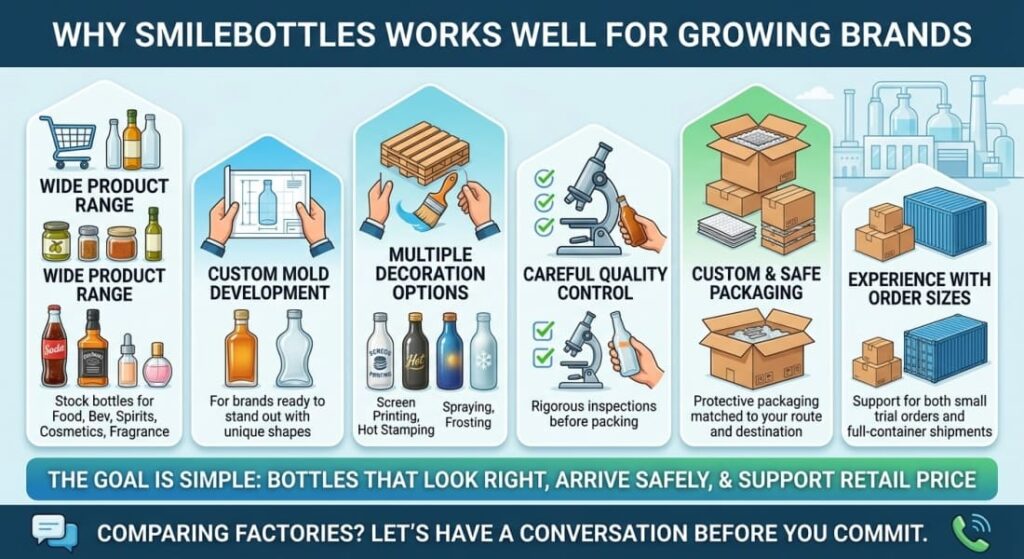
Why Smilebottles Works Well for Growing Brands
Smilebottles is a glass bottle manufacturer focused on helping brands solve real sourcing problems. That means clean production, careful export packaging, and honest advice on what will and won’t work for your product.
A few things buyers often mention:
Wide range of stock bottles for food, beverage, spirits, cosmetics, and fragrance
Custom mold development for brands ready to stand out with unique shapes
Multiple glass bottle decoration options, including screen printing, hot stamping, spraying, and frosting
Careful quality control before packing
Custom glass bottle packaging that matches your route and destination
Experience with both small trial orders and full-container shipments
Support for food grade, cosmetic, and pharmaceutical categories
The goal is simple: help you receive bottles that look right, arrive safely, and support the retail price you want. If you’re comparing factories for your next launch, it’s worth having a conversation before you commit.
FAQ: Frequently Asked Questions About Glass Packaging
Q1:Are glass bottles safe for long-distance shipping?
A1:Yes, as long as the inner protection, carton, and pallet setup match the route. Sea freight requires stronger cartons and tighter packing than short domestic trips.
Q2:Can glass bottles be customized?
A2:Yes. You can customize shape, size, color, decoration, and closure. Custom molds usually take a few weeks and require a minimum order quantity.
Q3:What industries use glass bottle packaging most?
A3:Beverages, spirits, cosmetics, fragrance, food, and pharmaceuticals lead the market.
Q4:Is recycled glass used in bottle manufacturing?
A4:Yes. Most factories use cullet in their raw material mix. Higher cullet content lowers energy use and carbon footprint.
Q5:How can breakage be reduced during export?
A5:Use dividers, proper cushioning, double-wall cartons, corner protectors, and stable palletizing. Testing before production is strongly recommended.
Q6:What’s the typical MOQ for custom glass bottles?
A6:It depends on the factory and bottle size. Custom molds usually start around 10,000 to 30,000 units. Stock bottles with custom decoration can start much lower.
Conclusion
Choosing the right glass packaging for your product isn’t just about price or looks. It’s about matching the bottle to your product, your market, and your shipping route. The right choice protects your margins, your brand image, and the trust your customers place in you every time they pick up your product.
If you’re planning your next order and want a partner who can help you get the bottle, decoration, and packaging right the first time, Smilebottles is ready to help — from stock samples to full custom development, and everything in between.