
Table of Contents
ToggleAuthor: SmileBottles Editorial Team
Estimated Reading Time: About 15 Minute
If you’ve ever stood in front of a shelf full of spirits and wondered why some brands sell those tiny bottles alongside their full-size versions, you’re already thinking like a packaging buyer. Bottle size isn’t a small detail. It shapes how your product looks, how much it costs to ship, how buyers react to it on the shelf, and even how your brand feels in someone’s hand.
For spirits brands, distilleries, and anyone sourcing glass liquor bottles, the choice between mini liquor bottles and standard formats comes up again and again. And honestly, there’s no single right answer. The right pick depends on your product, your market, your budget, and the kind of experience you want your customers to have.
This guide walks you through everything you need to think about before placing an order, including the differences in cost, use cases, branding, compliance, and logistics. By the end, you should have a much clearer idea of which direction fits your brand best.
Why Bottle Size Matters More Than You Think
Bottle size influences almost every part of your product’s life. It affects how your spirit is priced, how it moves through distribution, how much space it takes up in a warehouse, and how your customers perceive the value inside.
When buyers talk about liquor bottle sizes, they’re really talking about two broad families:
Mini alcohol bottles — usually 50ml, 100ml, or 200ml
Standard bottles — commonly 375ml, 500ml, 700ml, 750ml, and 1L
Both have their place. Minis are great for trial, gifting, and travel. Standards are the backbone of retail and bar sales. But before you pick one, you need to understand what each format really does for your brand.

What Are Mini Liquor Bottles?
Mini liquor bottles are the small-format glass bottles you often see at hotel minibars, on airline carts, or packaged into gift sets during the holidays. They’re small, portable, and surprisingly versatile.
Common Sizes You’ll See
The most popular small liquor bottles fall into a few sizes:
50ml liquor bottles — the classic “airline” or sampler size
100ml liquor bottles — slightly larger, popular for premium samplers
200ml liquor bottles — a middle ground used in some retail markets
Different countries lean toward different sizes, but 50ml remains the global standard for miniature liquor bottles.
Where Mini Bottles Shine
You’ll usually find mini spirit bottles being used for:
Sampling programs and tasting kits
Hotel minibars and in-room service
Airline mini liquor bottles served on flights
Wedding favors and corporate gifts
Promotional campaigns and new product launches
Subscription boxes and discovery sets
Travel retail at airports and duty-free shops
If someone is searching for where to buy small alcohol bottles, they’re often planning an event, running a hospitality business, or sourcing packaging for a new spirit line.
The Upside of Going Small
Mini bottles reduce the entry barrier for your customers. If you’re launching a premium whiskey at $80 a bottle, not everyone will take that risk. But a $7 mini? That’s an easier yes. Travel size liquor bottles also work beautifully for gifting, impulse buys, and sampler packs that let people try several flavors at once.
They’re also great if you want to build curiosity around a new release without committing customers to a full-size purchase.
The Trade-Offs
Minis aren’t perfect. Per milliliter, they cost more to package and fill. The label area is small, which makes design harder — you have less room for your story, tasting notes, and legal text. Some markets also restrict small-format alcohol sales, so you’ll want to check regulations before ordering bulk mini liquor bottles.

What Are Standard Liquor Bottles?
Standard bottles are what most people picture when they think of a liquor bottle. They sit on back bars, fill retail shelves, and anchor your product line.
Common Standard Sizes
The typical lineup includes:
375ml liquor bottles — half bottles, often used for premium spirits
500ml liquor bottles — common in European markets and some liqueurs
700ml — standard across Europe, Australia, and most export markets
750ml liquor bottles — the U.S. standard
1 liter liquor bottles — used for value-size retail and duty-free sales
Where Standard Bottles Work Best
Standard-size glass spirits bottles are the go-to for:
Retail and liquor store sales
Bars, restaurants, and hospitality venues
E-commerce and direct-to-consumer channels
Duty-free and export markets
Premium and ultra-premium product lines
Limited editions and collector releases
Why Standards Still Rule the Shelf
Standard formats give you more design freedom. You’ve got room for embossing, large labels, custom closures, and heavy decorative bases. They also cost less per milliliter to package, which means better margins when you scale up.
For spirit brands building core SKUs, premium liquor bottles in standard sizes offer the shelf presence and perceived value that minis simply can’t match.
The Downsides
Standard bottles cost more upfront for your customer. They’re heavier, which raises shipping costs, and they take up more warehouse space. They’re also not ideal for sampling or one-off trial purchases.
Mini vs. Standard: The Real Differences
Here’s a quick side-by-side look so you can see the differences clearly:
|
Factor |
Mini Liquor Bottles |
Standard Liquor Bottles |
|
Common Sizes |
50ml, 100ml, 200ml |
375ml, 500ml, 700ml, 750ml, 1L |
|
Best For |
Sampling, gifts, travel |
Retail, bars, premium lines |
|
Cost Per ml |
Higher |
Lower |
|
Label Space |
Limited |
Generous |
|
Portability |
Excellent |
Moderate |
|
Shelf Impact |
Strong in sets |
Strong as standalone |
|
Consumer Commitment |
Low |
Higher |
Brand Positioning
Mini bottles feel approachable, playful, and giftable. Standard bottles feel established, serious, and premium. Both can carry a luxury brand, but they tell different stories.
Cost Structure
If you look at cost per bottle, minis are cheaper. If you look at cost per milliliter of liquid packaged, standards win. For large production runs, wholesale liquor bottles in standard sizes almost always deliver better margins.
Logistics and Shipping
Minis mean more units, more handling, and more filling cycles. Standards mean fewer units, bigger pallets, and simpler warehouse flow. If you’re shipping internationally, those differences add up fast.
Compliance and Labeling
Every market has its own rules. ABV declarations, health warnings, origin statements, barcodes — all of it has to fit on the bottle. Minis make this a real design challenge. Standards give you breathing room.
When Mini Liquor Bottles Are the Right Choice
You should lean toward mini formats if any of these describe your situation:
You’re launching a new product. New brands, new flavors, or limited editions all benefit from a low-risk trial format. Letting people taste before they commit to a full bottle removes hesitation.
You sell through hospitality or travel channels. Hotels, airlines, cruise lines, and event venues all rely heavily on mini alcohol bottles for portion control and convenience.
You want to build gift sets or tasting kits. Holiday samplers, discovery packs, and curated collections all depend on small-format bottles. Decorative liquor bottles in mini sizes make strong gifting products, especially with personalized liquor bottles for weddings and corporate events.
Your brand focuses on impulse and convenience. Checkout displays, convenience stores, and small-format retail all favor minis.
You want to lower the entry price. A premium brand with an $80 full-size bottle can offer the same product in a $9 mini, which drops the barrier dramatically.
When Standard Liquor Bottles Are the Better Fit
Go with standards when:
You’re building a core retail line. Repeat purchases happen at standard sizes. Customers who love your product want the full bottle at home, not a mini.
You want strong premium shelf presence. Heavier glass, custom silhouettes, and premium closures all work better at standard sizes. Luxury branding needs room to breathe.
You need better cost efficiency at scale. Standards reduce your packaging cost per ml, which matters when you’re producing tens of thousands of units.
You need label space. If your brand story, tasting notes, and legal information take up real estate, you need the room standards offer.
You serve bars and restaurants. On-premise accounts almost always buy standard sizes. It’s just how the industry works.
How to Choose Between Mini and Standard for Your Brand
Here’s a practical way to think through the decision.
Start With Your Product and Your Audience
Who’s buying your spirit? If your audience is made up of new customers or gift buyers, minis help. If they’re repeat buyers or bar operators, standards win. A premium aged whiskey behaves differently from a flavored vodka or a craft gin — your packaging should match the drinking occasion.
Look at Your Sales Channel
Retail, e-commerce, duty-free, on-trade, direct-to-consumer — each channel has its own preferences. Duty-free loves 1L bottles. Hotels want 50ml. Supermarkets usually stock 750ml or 700ml. Match the format to the channel.
Think About Your Pricing Strategy
Are you building an accessible brand with easy entry points? Minis help. Are you anchoring your brand around premium positioning and higher margins? Standards work better.
Factor In Branding and Decoration
Custom embossing, hot stamping, frosting, metallic finishes — all of these look better with more surface area. If decoration is central to your brand, that pushes you toward standard sizes. If you’re working with a custom glass bottle manufacturer on both formats, make sure your designs scale properly between them.
Consider the Dual-Size Strategy
Here’s something a lot of brands overlook: you don’t have to choose. Many successful spirit brands run both formats at once. Minis handle sampling, gifting, and new customer acquisition. Standards drive repeat sales and retail revenue. The two formats work together — minis bring new buyers in, and standards keep them coming back.
Design and Customization That Actually Matters
When you’re sourcing custom liquor bottles, a few decisions shape the final result more than anything else.
Bottle Shape
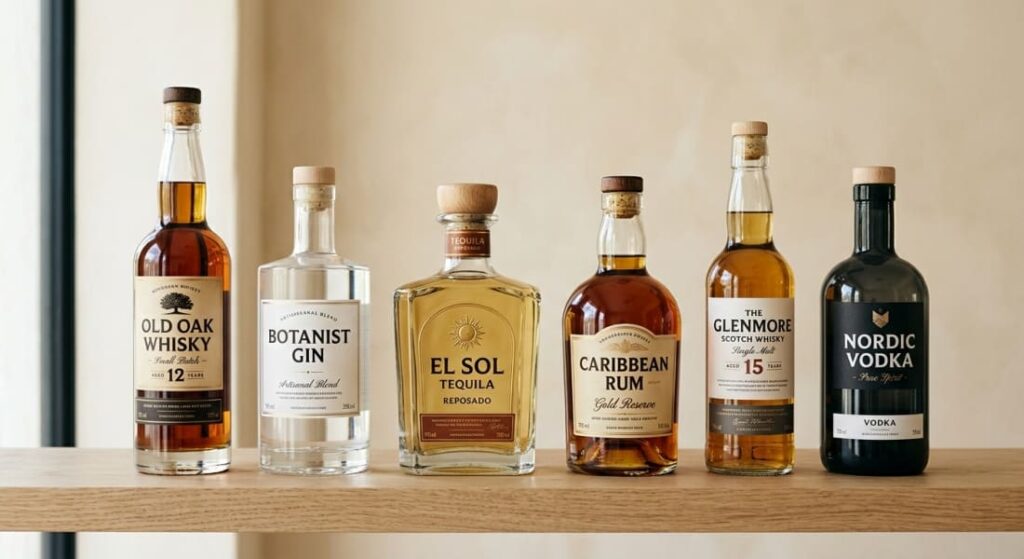
Round, square, flask, Nordic-style, or fully custom — your bottle silhouette becomes part of your brand identity. A unique shape makes your product recognizable from across the room.
Weight and Base Thickness
Heavy bottles feel premium. Lightweight bottles ship cheaper. The right choice depends on your positioning. Wine and spirits bottles at the luxury end almost always use heavier glass with thick bases.
Decoration Options
The usual options include: Embossing and debossing, Screen printing
Frosting, Spraying and coating, Pressure-sensitive labels, Hot stamping and foiling
, Metallization
Each adds cost but also builds brand value. Decoration decisions should match your retail price point.
Closures
Screw caps, natural cork, synthetic cork, bar-top closures, tamper-evident seals — the closure sets the opening experience and influences perceived quality. Make sure your closure choice fits both your filling line and your brand.
liquor bottles
Compliance, Safety, and Export
If you plan to sell internationally, a few things need extra attention.
Regional Size Preferences
The U.S. uses 750ml. Most of Europe, Australia, and Asia use 700ml. Mix these up and your product won’t be allowed on shelves in the wrong market.
Labeling for Mini Bottles
Minis make labeling harder. You need to fit ABV, origin, volume, warnings, barcode, and brand information into a tiny space. Smart design and careful planning make this work.
Glass Quality
Consistency matters. Neck finishes have to match your filling line perfectly. Bottles need to survive shipping without breakage. A reliable liquor bottle manufacturer will have strict quality control on dimensions, glass clarity, and transport packaging.
Why Your Supplier Matters
A good liquor bottle supplier reduces your compliance risk, keeps production consistent, and helps you handle export logistics. These things matter more than you might think until the first time something goes wrong on a shipment.
How Smilebottles Helps Spirits Brands
At Smilebottles, we work with distilleries, wine and spirits companies, and packaging buyers across many markets. We produce both mini and standard formats, and we help brands figure out which direction fits best.
Our capabilities cover:
Stock bottles across all common liquor bottle sizes
Custom mold development for unique shapes
Decoration services including embossing, printing, frosting, and more
Closure matching and packaging support
Wholesale glass liquor bottles for both small and large production runs
Export support with experience in multiple regional standards
We think of ourselves less as a factory and more as a packaging partner. If you’re not sure whether to start with minis, standards, or both, we’re happy to walk through the trade-offs with you.
Quick Decision Guide
If you want the short version:
Choose mini bottles if you need sampling, gifting, travel-size convenience, or lower entry pricing.
Choose standard bottles if you need retail strength, premium shelf presence, lower cost per ml, and long-term core sales.
Choose both if you want to build a full customer journey from first taste to repeat purchase.

FAQ: Frequently Asked Questions About Glass Liquor Bottles
Q1:What size is considered a mini liquor bottle?
A1:A mini is usually 50ml, though 100ml and 200ml bottles are also sold as minis in some markets. The 50ml size is the most common worldwide.
Q2:What is the most common standard liquor bottle size?
A2:In the U.S., it’s 750ml. In Europe, Australia, and most of Asia, it’s 700ml. Both are considered standard full-size bottles.
Q3:Are mini liquor bottles more expensive than standard bottles?
A3:Per milliliter, yes. Mini bottles cost more to package and fill. But they can create higher per-serving revenue when used for sampling, gifting, or hospitality.
Q4:Which is better for a new spirits brand: mini or standard?
A4:It depends on how you want to launch. Minis build trial and awareness. Standards drive retail sales. Many new brands use both to cover more ground.
Q5:an mini liquor bottles be customized?
A5:Yes. You can customize the shape, closure, embossing, printing, and labels. The smaller surface area just takes more careful design work.
Q6:Are there different regulations for mini liquor bottles?
A6:Yes. Some countries restrict small-format alcohol sales, and labeling requirements vary. Always confirm compliance for each target market before production.
Conclusion
There’s no single right bottle size. The best choice is the one that matches your product, your market, and your long-term brand strategy.
Mini bottles work beautifully for trial, gifting, hospitality, and travel. Standard bottles anchor your retail presence, support premium positioning, and give you better margins at scale. Many brands find that running both at the same time builds a stronger customer journey — minis bring people in, standards keep them loyal.
If you’re weighing your options for your next project, think about where your customers meet your brand, what price point makes sense, and how you want the bottle to feel in someone’s hand. The answer usually becomes clearer once you line those things up.
And if you want a second opinion from someone who makes these bottles every day, we’re always open to a conversation. Smilebottles works with spirits brands on both mini and standard formats, and we’re happy to help you figure out the right mix for your product.
 Ukrainian
  English
  Russian
  Spanish (Chile)
  Spanish (Colombia)
  Spanish (Ecuador)
  Swedish
  Thai
Thai  Turkish