
Table of Contents
ToggleAuthor: SmileBottles Editorial Team
Estimated Reading Time: About 15 Minute
If you buy packaging for spirits, you already know the bottle does more than hold liquid. It protects the product, carries your brand on the shelf, and shapes how people judge the drink before they even open it. So when you look for wholesale liquor bottles, the real job is not just finding a cheap quote. It is finding a bottle that fits your product, your market, and the way you fill and ship.
This guide is written for buyers who are planning real purchases — new brands, private label projects, bulk reorders, or a full packaging refresh. You will go through sizes, volume choices, shape and closure, quality checks, sourcing options, and what to confirm before you place a bulk order. The aim is practical: help you choose better, with fewer surprises later.
Why the bottle choice matters more than most people expect
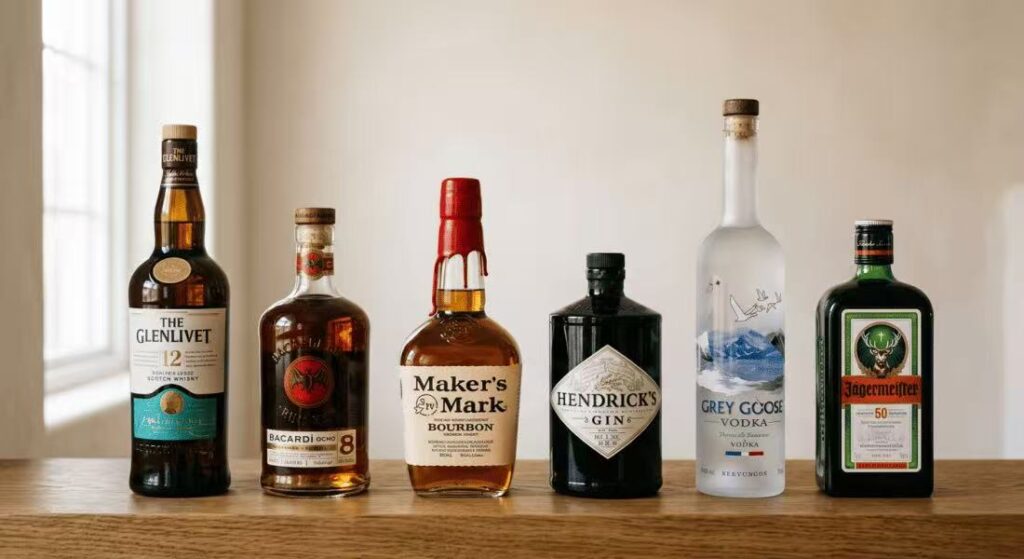
Glass is still the standard for most spirits packaging, and for good reason. It handles alcohol well, keeps aroma more stable than many alternatives, and looks right for both classic and modern brands. If you sell whiskey, vodka, rum, gin, tequila, or brandy, glass bottles for spirits remain a safe and familiar choice for retail and on-premise channels.
But not every glass bottle works the same way in real business. Two bottles can share the same capacity and still feel completely different in the hand. One may look sharp under store lighting. Another may feel thin, uneven, or slightly off when capped. That gap is where branding, complaints, and repeat orders get decided.
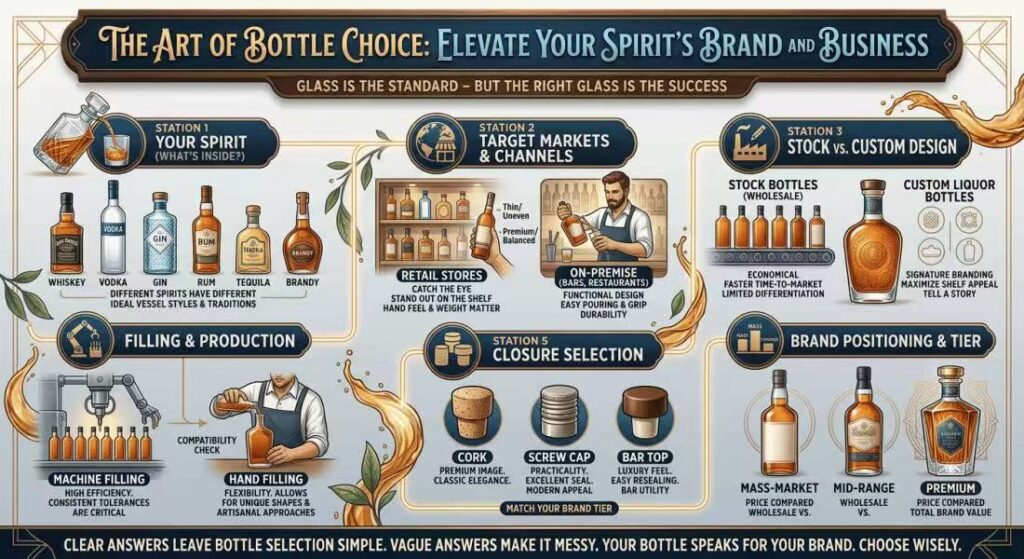
Before you compare prices for liquor glass bottles wholesale, it helps to settle a few basics:
What spirit are you packing?
Which markets will you sell into?
Do you need stock bottles, or do you need custom liquor bottles?
Will you fill by machine or by hand?
Do you prefer cork, screw cap, or bar top?
Is the brand mass-market, mid-range, or premium?
If those points are still vague, bottle selection gets messy fast. If they are clear, the rest of the process becomes much easier.
Common wholesale glass bottle sizes for liquor packaging
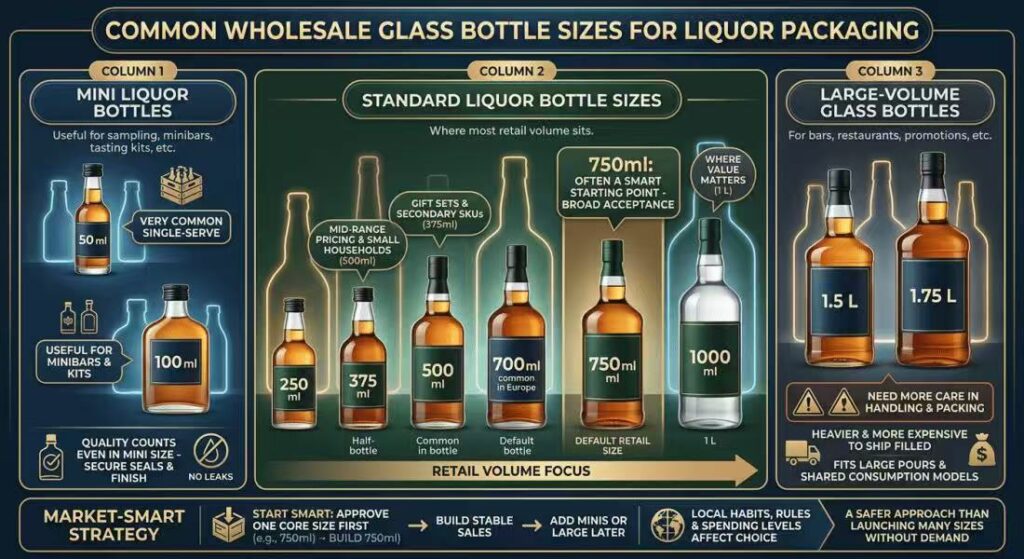
Most buyers start with capacity, and that makes sense. Size affects unit cost, freight, shelf presence, filling speed, and how customers use the product. When people search liquor bottle sizes, they usually want a clear picture of what is common and what is worth stocking.
It helps to think in three groups: mini, standard, and large.
Mini liquor bottles
Small formats are useful when you need sampling, hotel minibar supply, tasting kits, wedding favors, travel retail, or low-risk market tests. A lot of buyers begin with mini liquor bottles wholesale before they commit to a full retail launch.
You will usually see:
50 ml
100 ml
Among these, 50ml liquor bottles wholesale is especially common for single-serve use. The bottle is small, but that does not mean quality can be loose. Sealing still matters. Finish quality still matters. If a mini bottle leaks in transit, the whole pack looks careless.
Standard liquor bottle sizes
This is where most retail volume sits. If you check a practical liquor bottle size chart, the core range usually includes:
250 ml
375 ml
500 ml
700 ml
750 ml
1000 ml
These are the standard liquor bottle sizes most buyers compare first. In many markets, 750 ml is the default retail size. In parts of Europe, 700 ml is also very common. That is why 750ml liquor bottles wholesale is often a smart starting point if you need one size with broad acceptance.
When you look at common liquor bottle sizes, do not only ask what is popular. Ask what fits your channel. A 500 ml bottle can work well for smaller households or mid-range pricing. A 375 ml bottle can support gift sets or secondary SKUs. A 1 L bottle may make more sense where value and pour volume matter more than compact shelf looks.
Large-volume glass bottles
Larger formats are less common for everyday retail, but they still have a place in bars, restaurants, promotions, and selected gift programs. Typical options include 1.5 L and 1.75 L.
These bottles need more care in handling and packing. They are heavier, easier to damage in rough transport, and more expensive to ship per unit when filled. If your sales model needs large pours or shared consumption formats, they can still earn a place in the range. If not, you may not need them at the start.
One size rarely fits every market
This is where buyers sometimes get caught. A size that sells well in one country can feel wrong in another. Local habits, retail rules, and spending levels all affect what customers expect. Many brands approve one core size first, get stable sales, then add mini or large formats later. That approach is usually safer than launching five sizes at once with no clear demand signal.
How to choose the right bottle volume for different liquor products
Capacity is not only a technical decision. It is a sales decision. The right volume depends on the spirit type, the channel, and the kind of customer you want.
Start with the liquor type
Different spirits can share the same glass material and still need different packaging logic.
For whiskey, many brands want a bottle that feels solid and steady. Buyers looking for whiskey bottles wholesale often care about base weight, shoulder shape, and a cleaner classic outline. The product may be aged and higher priced, so the bottle usually needs to support that.
For vodka, the mood is often cleaner and more modern. Brands sourcing vodka bottles wholesale tend to care about clarity, label area, and a polished retail look. A simple silhouette can work very well if the glass quality is high.
For rum, the range is wider. Some brands feel traditional. Others feel bold or tropical. If you need rum bottles wholesale, think about whether your brand should look aged and serious, or more playful and distinctive.
For gin, design often does more work. Buyers comparing gin bottles wholesale may want more room for botanical storytelling, stronger shape identity, or decorative detail. Gin customers are used to bottles that stand out.
Tequila and brandy often leave room for stronger design identity as well. Some brands stay classic. Others push taller, heavier, or more sculpted bottles. The liquid matters, but brand positioning still decides a lot.
Then look at the sales channel
Your channel can change the ideal size quickly.
Retail shelves usually favor standard sizes such as 700 ml and 750 ml.
Bars and restaurants may prefer larger bottles because they reduce changeovers.
Duty-free can support special sizes and gift-ready formats.
Gift sets often work better with smaller or specially finished bottles.
Sample packs almost always need mini formats.
If your product will move through more than one channel, one bottle size may not be enough. Many brands run a core retail size plus a mini version for trials and promotions.
Keep consumer positioning in mind
Ask a direct question: who is buying this, and why?
Mass-market buyers usually care about practical size and value.
Premium buyers will accept higher packaging cost if the bottle feels refined.
Limited-edition buyers respond to special shapes, finishes, and collectible details.
That is why premium liquor bottles and luxury liquor bottles often use thicker glass, better finishing, and more careful proportions. The capacity may still be standard. The feeling is different. You are not only buying glass. You are buying perceived value.
Check the practical side before you lock capacity
Before final approval, look at:
local labeling and volume rules
shipping cost per filled unit
carton and pallet efficiency
filling line compatibility
whether the size fits your pricing structure
A bottle can look excellent in photos and still create problems if it slows filling, raises freight cost, or fights market habits. The best volume is the one that works in daily operations, not only in a product meeting.
Bottle shape, finish, and closure matter just as much as size
A lot of first-time buyers focus hard on capacity and leave shape and closure too late. That usually causes trouble. Two bottles with the same volume can create two completely different brand impressions.
Common bottle shapes
You will see round bottles, square bottles, tall bottles, flat bottles, and fully custom shapes.
Round bottles are versatile and often easier for labeling and machine handling.
Square bottles can feel more structured and modern.
Tall bottles create stronger vertical presence on the shelf.
Flat bottles can work in gift or travel settings.
Custom shapes help when you need clear separation from competitors.
If brand differentiation is a major goal, unique liquor bottle designs are worth considering. Just remember that custom tooling usually means higher MOQ, longer lead time, and more sampling rounds. That is fine when the brand needs it. It is less fine when you only wanted a small design tweak.
When you compare glass spirits bottles, do not stop at the side view photo. Check shoulder angle, base thickness, panel flatness, and how the bottle sits in the hand. Those details affect both appearance and daily handling.
Neck finish and closure type
Closure choice affects sealing, opening experience, and brand style.
Common options include cork finish, screw cap, bar top, and tamper-evident closures.
A liquor bottle with cork often feels more traditional and can support a higher-end presentation, especially for aged spirits. Screw caps are practical when people open and reseal more often. Bar top closures are widely used in spirits packaging because they look clean and work well when the fit is right. Tamper-evident features help when retail security and consumer trust matter.
Do not choose the bottle first and the closure later as an afterthought. Neck finish and closure should be planned together. A good-looking bottle with a weak stopper match can still create returns.
Match the design to the brand, not the other way around
Your bottle should support the brand story.
Classic brands usually need balanced proportions and familiar silhouettes.
Luxury brands often need heavier glass and cleaner finishing.
Modern brands may prefer sharper geometry and simpler lines.
Craft brands often look for more character or texture.
If you need custom glass bottles for liquor, start from brand identity, then move into mold design, samples, and decoration. Late design changes are one of the easiest ways to waste time and money.
Key factors to check before buying liquor glass bottles wholesale
Once size and style are shortlisted, the next step is less glamorous and more important. This is where bulk orders succeed or turn into headaches.
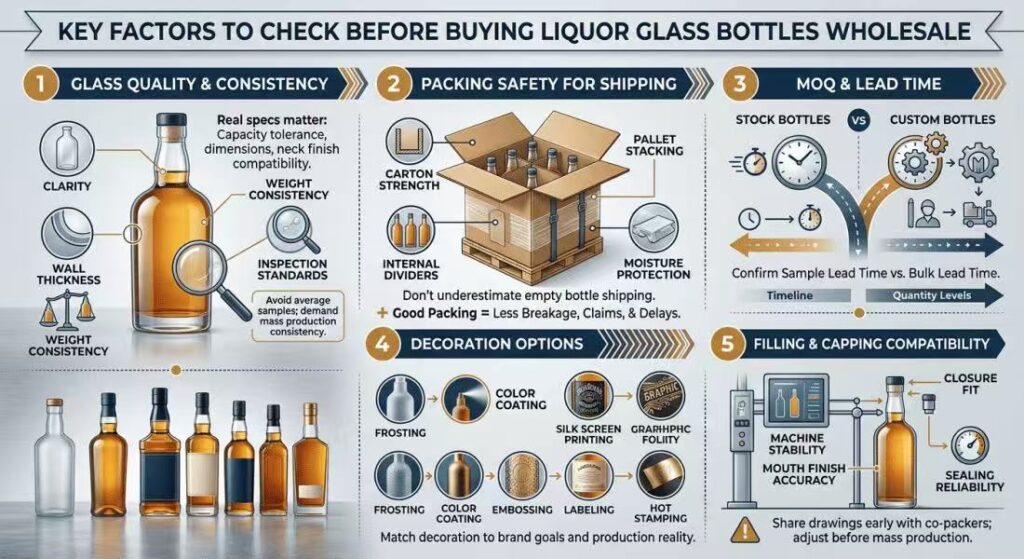
Glass quality and consistency
Good packaging starts with stable glass. You should look at clarity, wall thickness, weight consistency, surface defects, and inspection standards for bubbles or cracks.
This matters even more when you order bulk liquor bottles. If bottle weight jumps from carton to carton, your filled product weight, shipping estimates, and shelf look all become harder to control. Buyers sometimes accept average samples and then get surprised in mass production. Do not do that.
Ask for real specs, not only photos. Capacity tolerance, height, body diameter, neck finish, and verticality all matter. This is where liquor bottle dimensions stop being abstract and become a line-compatibility issue. If your filling and capping equipment is already fixed, those numbers need to match closely.
Packing safety for shipping
Glass can be strong in use and still fragile in transport. For export or long-distance delivery, check carton strength, internal dividers, pallet stacking, moisture protection, and loading stability.
Buyers ordering empty liquor bottles wholesale sometimes underestimate packing because the bottles are still empty. That is a mistake. Poor export packing means breakage, claims, replacements, and delayed launches. A slightly better packing method is often cheaper than one damaged shipment.
MOQ and lead time
Stock bottles and custom bottles do not follow the same timeline.
Stock bottles usually move faster and are easier for first orders.
Custom bottles need mold work, sampling, revisions, and production planning.
If speed matters most, start with existing molds. If brand differentiation matters more, plan extra time for custom spirits bottles. Also confirm sample lead time separately from bulk lead time. Those two schedules are not the same, and mixing them up creates false expectations.
Decoration options
Decoration is often what turns a standard bottle into something brand-ready. Common options include frosting, color coating, silk screen printing, embossing, labeling, and hot stamping.
Frosted liquor bottles are popular when you want a soft matte look and more texture on the shelf. Colored liquor bottles can support brand colors or create faster category recognition. Embossing helps when you want a permanent mark in the glass itself. Printing and hot stamping are useful when you need sharper graphics without relying only on paper labels.
Just keep the finish level honest. A complex decoration may look excellent and still be wrong if your volume is low or your launch timeline is tight. Match decoration to both brand goals and production reality.
Filling and capping compatibility
A bottle can look right and still fail on the line. Confirm machine filling stability, mouth finish accuracy, closure fit, sealing reliability, and label surface consistency.
If you work with co-packers, share drawings early. It is much cheaper to adjust packaging before mass production than to discover line problems after the goods arrive. This sounds obvious, and yet it is one of the most common bulk-order problems.
Where to buy wholesale glass bottles for liquor packaging
After you define the bottle, the next question is where to source it. Not every channel fits every buyer.
Buying from a manufacturer
Working with a liquor bottle manufacturer is often the most direct route for serious volume. You usually get better control over production, more stable supply for repeat orders, stronger customization support, and clearer technical communication.
If your project needs long-term supply, custom design, or consistent quality standards, a factory relationship is usually more practical than short-term spot buying. This is especially true when you expect reorders and do not want the bottle to change from batch to batch.
Buying from a trading company
Trading companies can be useful when you need broader sourcing options or mixed packaging items. They may offer convenience, especially in early comparison stages. The tradeoff is simple: you may have less direct control over production, and technical feedback can take longer.
That does not make trading companies useless. It just means you should know what you are trading away.
Buying through B2B platforms
Platforms such as Alibaba, Made-in-China, and Global Sources make supplier discovery easier. They are useful for shortlisting and first contact. But a platform profile is not proof of stable manufacturing. You still need to verify background, request samples, review capacity, and confirm packing standards before you place a bulk order.
Why many buyers end up with a direct manufacturing partner
For spirits packaging, small details matter. Neck finish, glass distribution, mold quality, decoration process, and export packing all affect the final result. That is why many brands eventually stop jumping between random sellers and build a stable relationship with a liquor bottle supplier that has real production capability.
If you are comparing options for spirits bottles wholesale, do not judge only by unit price. Judge by total project reliability: sample quality, communication speed, production stability, packing protection, and reorder consistency. A low quote is not a good deal if the second shipment does not match the first.
Why Smilebottles is a practical partner for liquor glass bottles
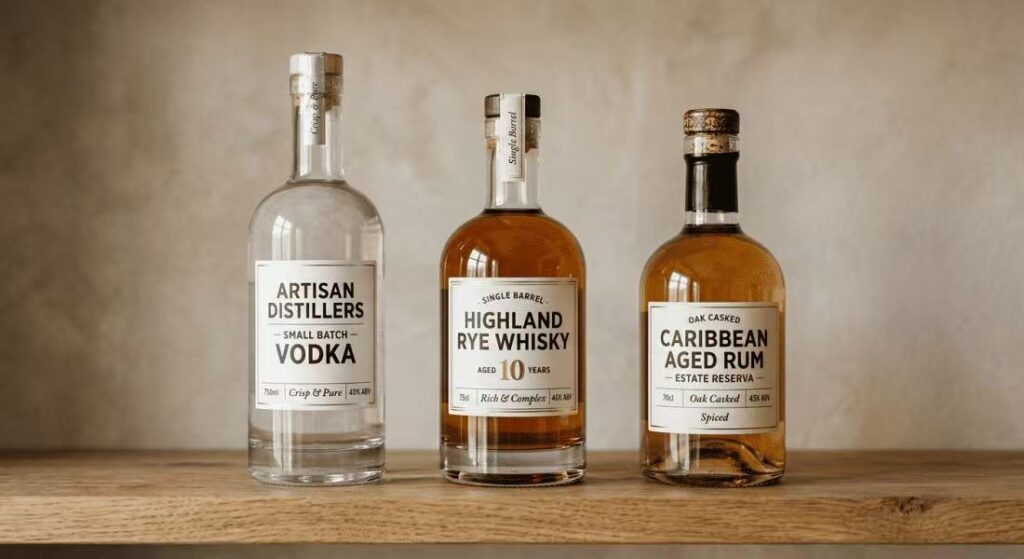
If you need a supplier that can handle both standard supply and customized packaging, Smilebottles works with buyers who need packaging for actual commercial use, not only catalog browsing. The point is not to push every customer into the most complicated project. The point is to help you choose a route that fits your current stage.
A wide range of liquor bottle designs
You can start from established sizes and styles, then decide whether a stock bottle is enough or whether custom work is worth the investment. That is useful if you are building a range that may include mini packs, standard retail bottles, and a few higher-end formats.
Customization support for spirits brands
Some projects only need a reliable stock bottle. Others need more. Smilebottles supports buyers who need structure customization and surface options for brand differentiation. If your launch depends on custom liquor bottles for private label or special edition work, it is better to discuss drawings, samples, and decoration methods early. That reduces revision cycles later.
Stable quality for bulk supply
Wholesale buyers care about what happens after the first order. Consistent glass quality, dependable packing, and clear production planning matter as much as a nice sample. For brands that reorder regularly, supply stability becomes part of the packaging value.
Support from sampling through shipment
A useful supplier should be able to move with you through the full path:
requirement confirmation
bottle shortlisting
sampling
revision if needed
bulk production
export packing and shipment coordination
That process matters even more when your order mixes needs, such as standard bottles plus frosted or printed versions.
Whether you are buying wholesale liquor bottles for a first launch or preparing a larger reorder, the packaging plan should stay grounded in your product, your market, and your filling setup.
FAQ: Frequently asked questions about wholesale liquor glass bottles
Q1:What is the most common liquor bottle size?
A1:In many retail markets, 750 ml is one of the most common choices. In some European markets, 700 ml is also widely used. The better size still depends on your destination market and sales channel.
Q2:Can I order custom liquor glass bottles with my logo?
A2:Yes. Many buyers use logo embossing, screen printing, labeling, or a fully custom mold. The right method depends on budget, volume, and how permanent you want the branding to be.
Q3:What is the MOQ for wholesale liquor bottles?
A3:MOQ depends on stock versus custom, and on whether decoration is involved. Stock options usually start lower. Custom molds and special finishes usually need higher volume.
Q4:Can bottles be supplied with caps, corks, or other closures?
A4:In many projects, yes. Coordinating bottles and closures together helps reduce fit problems between neck finish and stopper or cap.
Q5:Can I get samples before placing a bulk order?
A5:You should. Samples help you check appearance, weight, mouth finish, label surface, and closure fit before full production. Skipping this step to save a little time often costs more later.
Q6:How are liquor glass bottles packed for export?
A6:Export packing usually includes protective cartons, separators or dividers, and palletized loading. The exact method depends on bottle shape, glass weight, and destination requirements.
Q7:What is the lead time for stock and custom bottles?
A7:Stock bottles are faster. Custom bottles need extra time for mold work, sampling, approval, and production scheduling. Frosting, coating, printing, and other decorations also affect timing.
Q8:Are these bottles suitable for whiskey, vodka, rum, and other spirits?
A8:Yes. The same supply range can often support multiple spirits categories. What changes is the combination of size, shape, closure, and decoration used for each brand.
Conclusion
Start with your product and market. Use practical standard liquor bottle sizes when speed and cost control matter. Move into custom molds and special finishes when brand differentiation becomes more important. Check glass quality carefully before you commit to volume. Confirm packing methods if the bottles will travel long distances. And work with a supplier that can support both sample validation and repeat production.
Whether you need 50ml liquor bottles wholesale for sampling, 750ml liquor bottles wholesale for retail, or a broader mix of spirits bottles wholesale across whiskey, vodka, rum, and gin, the rule stays the same: choose packaging that protects the liquid and supports the brand with equal care.
If you are preparing to source liquor glass bottles wholesale for a new launch or a bulk reorder, Smilebottles can help you compare practical options and build a packaging plan around your real production needs. From standard supply to customized projects, the right bottle should make your product easier to fill, easier to ship, and easier to trust on the shelf.